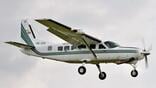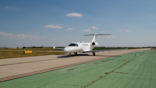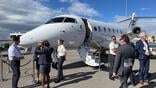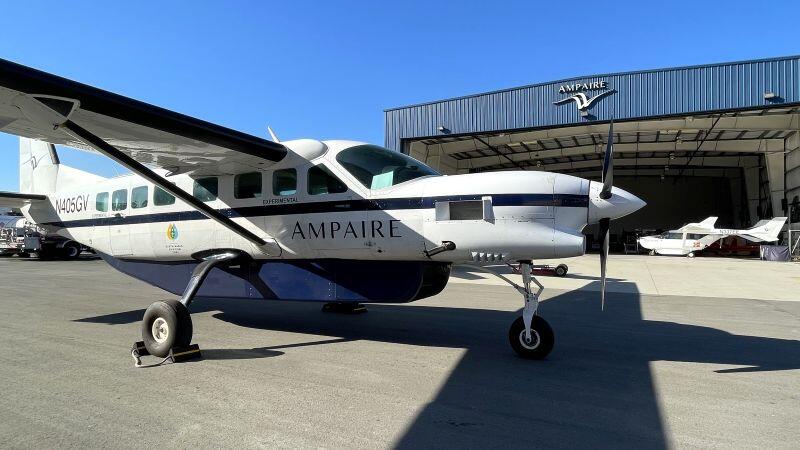
Ampaire is flight testing its integrated parallel hybrid-electric powertrain in the Cessna Caravan.
Hybrid-electric propulsion developer Ampaire has closed a $19 million Series B funding round with backing from International Airlines Group (IAG) and Alaska Airlines.
Taking total funding to $68 million, the new capital will be used to commercialize Ampaire’s technology, expanding its supply chain, manufacturing and operating capabilities, Ampaire co-founder and CEO Kevin Noertker says.
Based in Long Beach, California, Ampaire is developing integrated parallel hybrid-electric powertrains, beginning with the 570-kW AMP-H570. The startup is aiming for Part 33 engine certification in late 2027, followed by Part 23 supplemental type certification in the Cessna Caravan as the Eco Caravan.
Led by DiamondStream Partners, the Series B round included strategic participation by Alaska Star Ventures and IAGi Ventures, the corporate venture capital arms of Alaska Air Group and IAG.
Ampaire was part of IAGi’s Accelerator program in 2025 and worked with the airline group to adapt its hybrid-electric technology to auxiliary power units (APU) in existing and new aircraft to provide electric power with reduced fuel consumption.
“Ampaire is developing a line of APU products,” Noertker says. “Our work with IAG helps shape the application of our core hybrid-electric technology toward products relevant to commercial aviation.”
“We look forward to exploring how hybrid-electric APU solutions could be fitted to aircraft already in service today to reduce aircraft fuel consumption on the ground,” says Raza Ali, managing partner in IAGi Ventures.
Funding will be used to expand Ampaire’s engineering and operational teams, broaden commercial flights under the FAA’s eIPP integration pilot program, advance certification, ready suppliers, develop manufacturing capabilities and prepare for aftermarket support.
Flight tests of the Eco Caravan are demonstrating a consistent 54-57% reduction in fuel burn versus the Pratt & Whitney Canada PT6A-powered Caravan, Ampaire says, including the fuel used to recharge the batteries in flight.
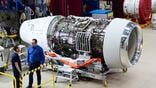
Built around a RED Aircraft turbodiesel aeroengine, the AMP-H570 burns 50% less fuel than the turboprop in cruise, Noertker says, with the saving increasing to 70% when electrical energy from the batteries is used to boost power for takeoff.

Related Content