
Aircraft Overview: Pilatus PC-12
Aircraft Overview: Pilatus PC-12
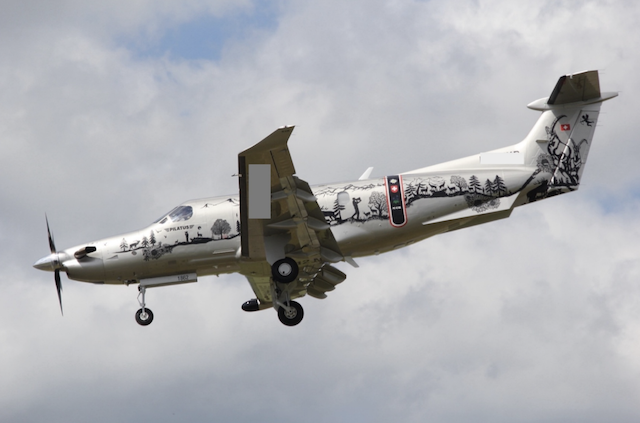
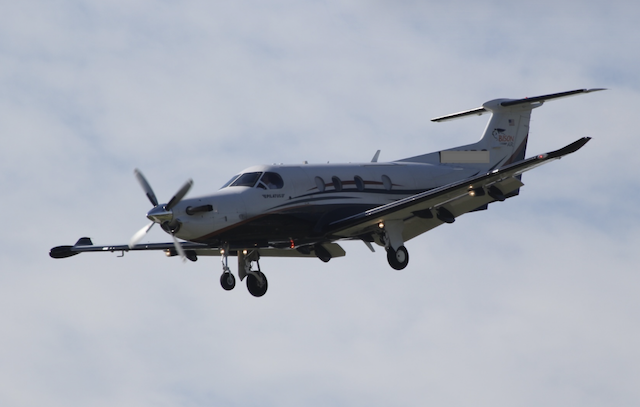
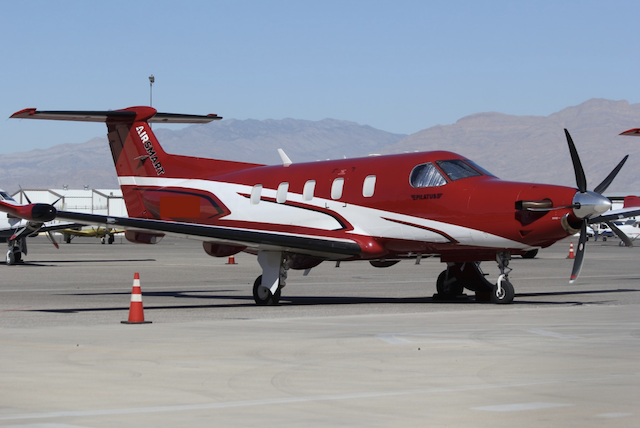
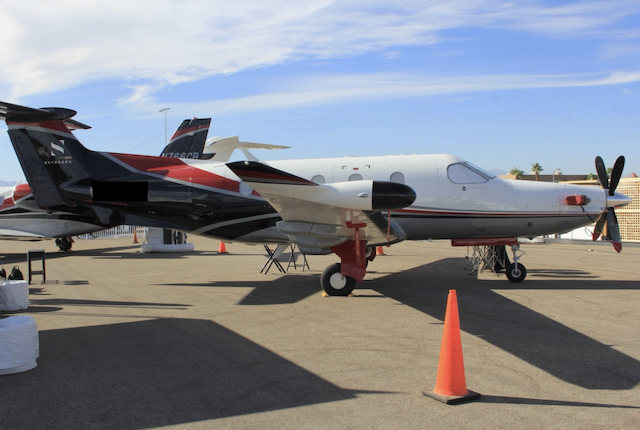
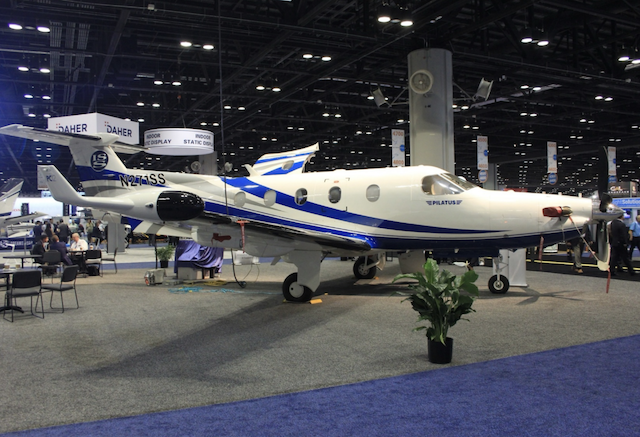
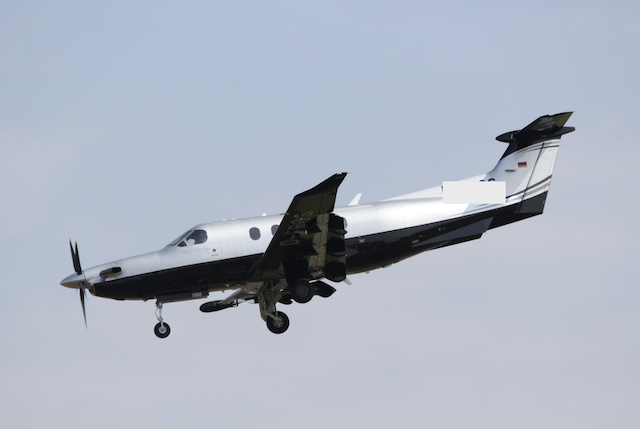
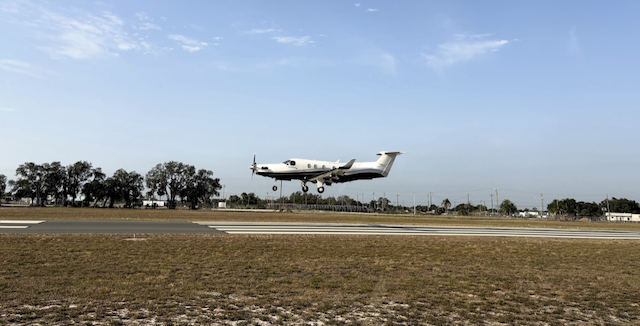
Pilatus PC-12
The PC-12 is a single-engine turboprop airplane produced by Swiss manufacturer Pilatus Aircraft, the current version of which is the PC-12 PRO, a commercial designation for the company’s PC-12/47G.
The first variant of the type, designated the PC-12, was certified in Switzerland on March 30, 1994.
Subsequently, Pilatus received approval for four additional variants—the PC-12/45, PC-12/47, PC-12/47E and the previously noted PC-12/47G—on June 4, 1996, Dec. 14, 2005, March 28, 2008, and Dec. 18, 2024, respectively.
Although the PC-12/47G was certified by the European Union Aviation Safety Agency (EASA) in December 2024, that version of the airframe was announced by Pilatus on March 14, 2025.
Cabin
Despite the differences between the variants of the PC-12, all five have a common maximum passenger seating capacity of nine and can be operated by one pilot.
Passengers on the PC-12 PRO are accommodated in a cabin that has a length of 16 ft. 11 in., a width of 5 ft., and a height of 4 ft. 9 in., as well as a volume of 326 ft.3
This PC-12 PRO also has a 34.3-ft.3 baggage compartment and a standard “pallet-sized cargo door” that has a height of 4 ft. 4 in. and a width of 4 ft. 5 in.
The available cabin layouts include a commuter configuration and six- and eight-seat executive cabins.
Additionally, the cabin can be configured to serve as an air ambulance and to carry cargo, with a passenger-cargo combi arrangement also possible.
Utilization Overview
Avionics
Pilots operate the PC-12 PRO using Pilatus’ Advanced Cockpit Environment (ACE) that is “based on” Garmin’s G3000 PRIME integrated flight deck.
From that avionics manufacturer, the PC-12 PRO incorporates three 14-in. touchscreen displays that are high resolution, two 7-in. touchscreen smart displays, an autothrottle and automatic flight control system, Synthetic Vision Technology (SVT) and SurfaceWatch.
Unlock the data behind the charts with Aviation Week Intelligence Network’s Fleet & Data Services. Learn more at aviationweek.com/bcaaircraftoverview.
For a comprehensive Program Profile including recent articles, program suppliers and current operators, please access via AWIN subscription here.
Mission and Performance
Operating limitations that are common to all PC-12 variants include a maximum operating speed (VMO) of 240-kts. calibrated airspeed (KCAS) and a 30,000-ft. maximum operating altitude.
The PC-12, PC-12/45, PC-12/47 and PC-12/47E are also limited to a maximum operating Mach Number (MMO) of 0.48 Mach, a limitation that the PC-12/47G—and PC-12/47E airframes marketed as the PC-12 NGX—increases to 0.49 Mach.
Furthermore, at flight level (FL) 220, the PC-12 PRO’s maximum cruise speed is 290-kt. true airspeed (KTAS).
Based on the maximum takeoff weight (MTOW), International Standard Atmosphere (ISA) conditions, sea-level altitude and a runway that is dry and paved, the PC-12 PRO is capable of a takeoff distance over a 50-ft. obstacle of 2,485 ft.
Assuming the same criteria except for the maximum landing weight, the landing distance over a 50-ft. obstacle is 2,170 ft.
Beyond those takeoff and landing distances, Pilatus also promotes the ability of the PC-12 PRO to operate from unpaved surfaces such as dirt, grass, and gravel, as well as in known icing conditions.
Also assuming the MTOW and sea-level altitude, the PC-12 PRO is capable of a 1,920 ft./min. rate of the climb, and can climb directly from sea-level altitude to FL250 in 19 min.
When carrying four passengers, being operated by one pilot and outfitted with an executive configuration—as well as assuming a National Business Aviation Association (NBAA) instrument flight rules (IFR) “reserve of 100 nm,” ISA conditions, operating at a long-range cruise at FL300 and with an 800-lb. payload—the maximum range of the PC-12 PRO is 1,765 nm.
When the number of passengers and the payload are increased to six and 1,200 lb., respectively—but with the other criteria remaining the same—the maximum range is reduced to 1,565 nm.
Variants
Powering all variants of the PC-12 is a Pratt & Whitney Canada PT6 turboprop engine that has a takeoff engine limitation of 1,200 shp.
The PC-12, PC-12/45 and PC-12/47 are equipped with the PT6A-67B engine, while the PC-12/47E is approved to be powered by either the PT6A-67P (PC-12 NG) or PT6E-67XP (PC-12 NGX).
Similarly, the PC-12/47G-based PC-12 PRO features the PT6E-67XP, which retains the same takeoff engine limitation as the previous PT6 engines approved for PC-12 variants.
In addition to its 10,450-lb. MTOW and 9,921-lb. maximum landing weight, Pilatus states that the basic operating weight of a PC-12 PRO is 6,703 lb.
When operated by one pilot and configured in a “6 executive + 2 configuration,” the PC-12 PRO’s maximum payload is 2,336 lb., a weight that is reduced to 1,087 lb. when that version of the type is carrying full fuel.
Aviation Week Network is home to market-leading data and intelligence products. Find out which database is best for your business.
www.aircharterguide.com/
www.aircraftbluebook.com
www.acukwik.com/Products
www.airportdata.com
www.fleet.aviationweek.com