
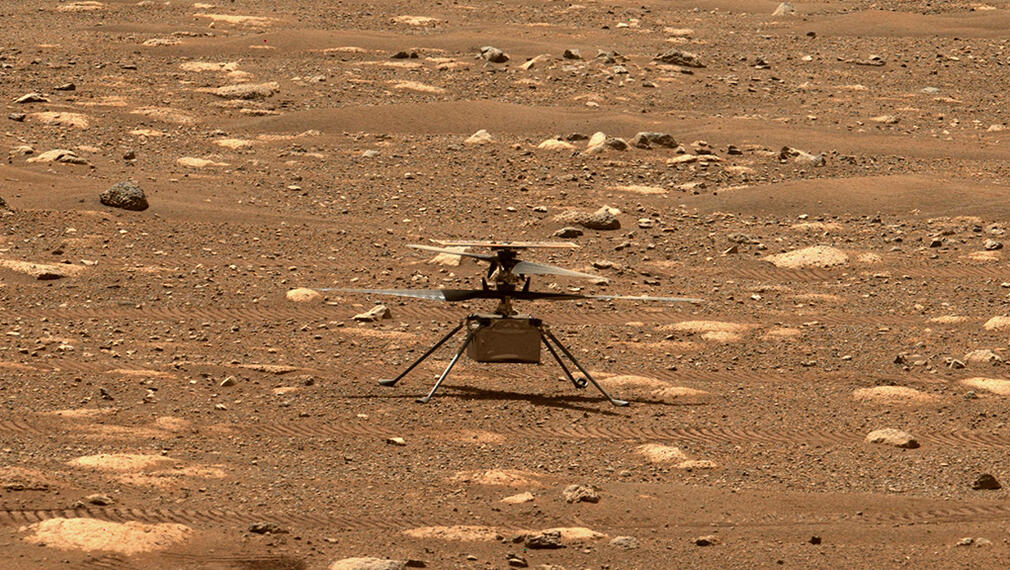




“How do we use aerial mobility in the future on Mars, to help not just robotic exploration, but to help human exploration?”
Ellen Stofan
Smithsonian


More Space Content From Aviation Week & Space Technology





Mar 03, 2014
More capable adversaries could jolt lengthy weapons development
Mar 03, 2014
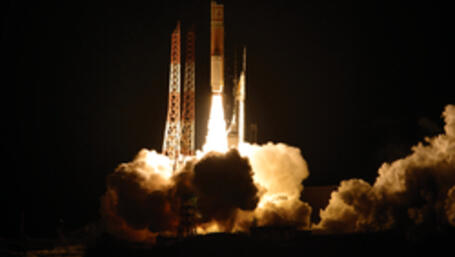
A Japanese H-IIA launcher lifts off Feb. 27 with the Global Precipitation Mission (GPM) Earth-science spacecraft onboard, setting up unprecedented coverage of rain and snowfall from a slot in the sun-synchronous “A-train” satellite constellation. Liftoff of the GPM “core observatory” came at 1:37 p.m. EST (3:37 a.m. Feb. 28 local time) from the launch site on Tanegashima Island in southeastern Japan, and the big rocket performed nominally.
Feb 26, 2014
Scaled Composites and Virgin Galactic are modifying the interior of SpaceShipTwo (SS2) to accommodate the final configuration of the rocket motor that will be used to power the space vehicle to suborbital space later this year. The modifications also include fitting the interior and passenger seats for the first time. Completion work on the cabin, and the upgrades to install the full-duration-capable Sierra Nevada RM2 motor, are expected to take several months and will pave the way to the fourth powered test flight (PF04) around mid-year.
Feb 24, 2014
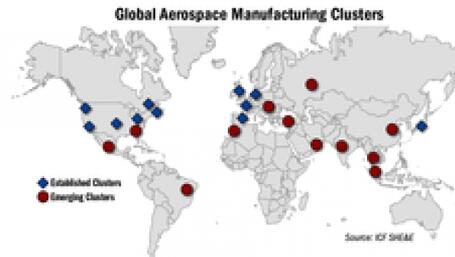
Why OEMs are flocking to the U.S., Mexico and Singapore
Feb 24, 2014
Despite reduced funding, France is still investing in the future
Feb 24, 2014
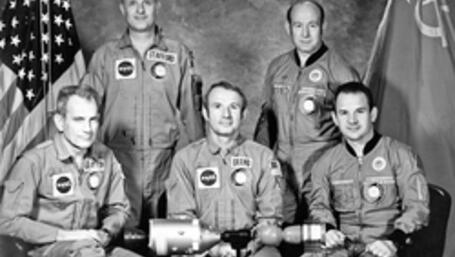
Valery Kubasov, the flight engineer on Soyuz 19, which docked with an Apollo spacecraft in Earth orbit in July 1975, died Feb. 19 in Moscow. He was 79. His death was announced on RSC Energia's website, which called him a “high-spirited instructor test cosmonaut.” No cause of death was given.

Feb 24, 2014
After first ISS mission, Orbital Sciences plans for growth

Feb 24, 2014
In the fraught atmosphere that wracked NASA and the spacefaring world after the Columbia accident in 2003, perhaps the sharpest condemnation stemmed from an off-the-cuff remark by the U.S. space agency's space shuttle program manager. Ron Dittemore said he did not seek imagery from classified reconnaissance satellites that might have revealed the extent of the launch-debris damage to the orbiter's left wing because nothing could have been done anyway. Sean O'Keefe, then the agency administrator, begged to differ.