
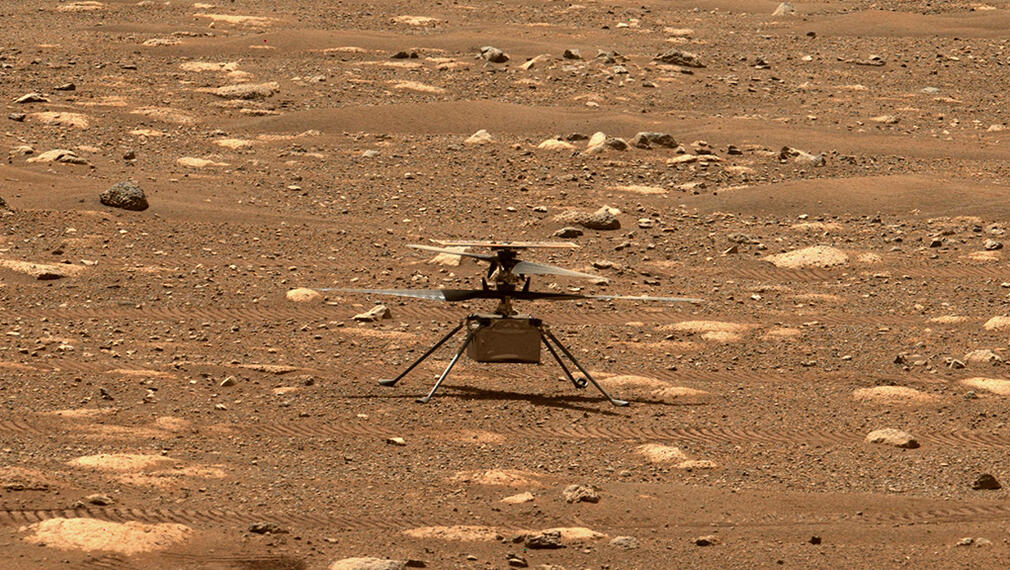
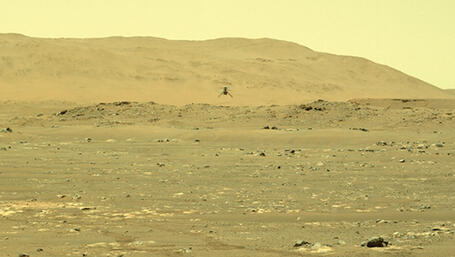

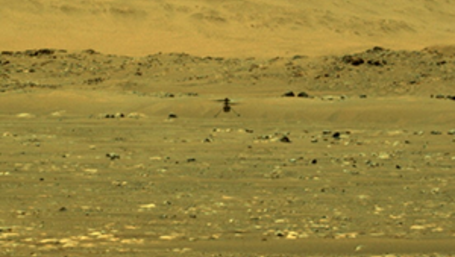

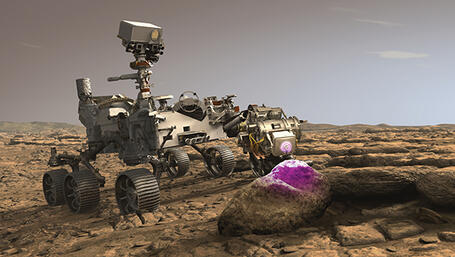
“How do we use aerial mobility in the future on Mars, to help not just robotic exploration, but to help human exploration?”
Ellen Stofan
Smithsonian

More Space Content From Aviation Week & Space Technology


Aug 06, 2025
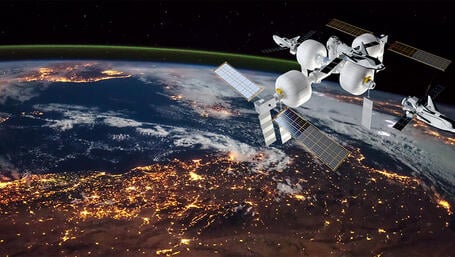
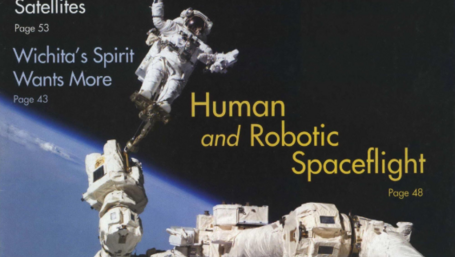
On the cover of the September 12, 2005 issue, is an illustration of combined human and robotic operations, space shuttle Discovery STS-114 astronaut Stephen Robinson is maneuvered at 220 mi. altitude on the International Space Station's robotic arm, which was developed in Canada by Macdonald, Dettwiler and Associates Ltd.

Aug 06, 2025
In this photo-feature published in the February 22, 1971 issue of Aviation Week & Space Technology, astronaut Alan B. Shepard, Apollo 14 mission commander stands beside the Modularized Equipment Transporter (MET) on lunar surface while he assembles hand tools during first extravehicular activity (EVA-1). Feb. 5.

Aug 05, 2025
The cover of the 22 June 1970 issue features the model of Orbiter-Shuttle concept developed at Manned Spacecraft Center is tested at 20-deg. angle of attack at simulated Mach 20 re-entry speed in helium tunnel at Langley Research Center.

Aug 05, 2025
Moving a satellite from the ground to orbit in hours offers a new edge in space deterrence.

Jul 29, 2025
Editors share what they heard at AIAA's showcase events in Las Vegas and their concerns about what the NASA cuts could mean for U.S. competitiveness in commercial aviation and space.

Jul 24, 2025
The U.S. may be losing ground in a global race to develop highly maneuverable spacecraft.

Jul 23, 2025
As components decrease in size, more capability can be packed into small spacecraft.

Jul 22, 2025
Join the National Air and Space Museum’s director Chris Browne and Aviation Week’s Joe Anselmo for a private tour of the revamped museum in Washington.