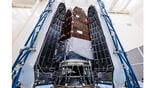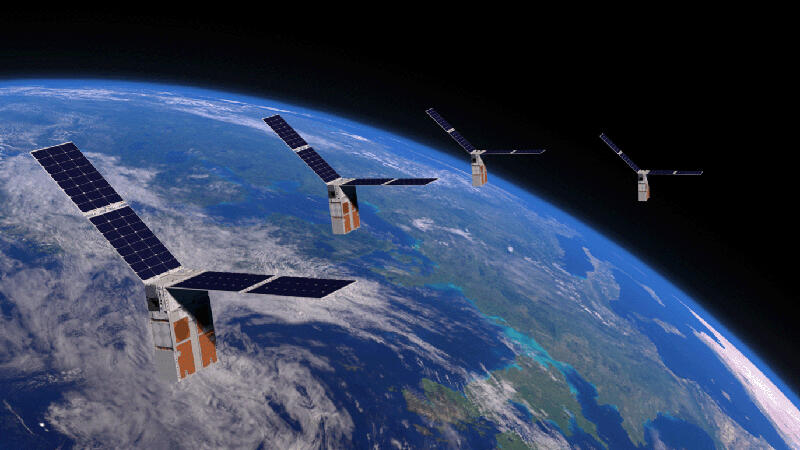
NASA sees potential value in cubesat swarms collecting data via distributed sensors.
Credit: NASA
NASA’s first small spacecraft missions were in 1972 and 1973, when it launched Pioneer 10 and 11. Those deep space probes weighed less than 600 kg (1,300 lb.) and explored the outer Solar System. In the decades since, NASA gradually increased its number of small spacecraft missions. But it was not...

Advantages Of Small Satellites Grow For NASA is available to both Aviation Week & Space Technology and AWIN subscribers.
Subscribe now to read this content, plus receive critical analysis into emerging trends, technological advancements, operational best practices and continuous updates to policy, requirements and budgets.
Already a subscriber to AW&ST or AWIN? Log in with your existing email and password.
Related Content