First Flight On Mars

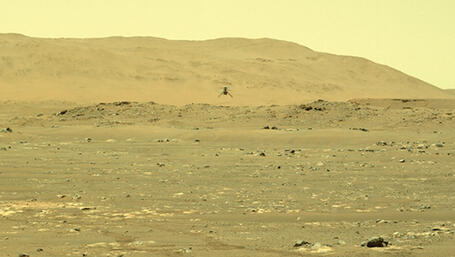
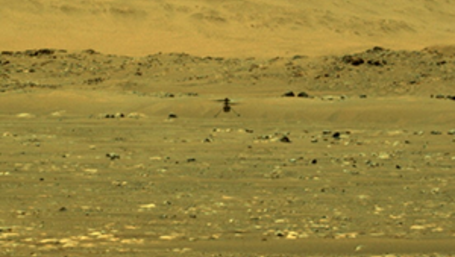
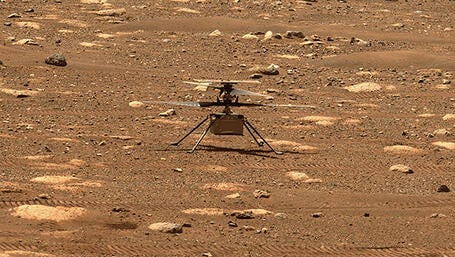
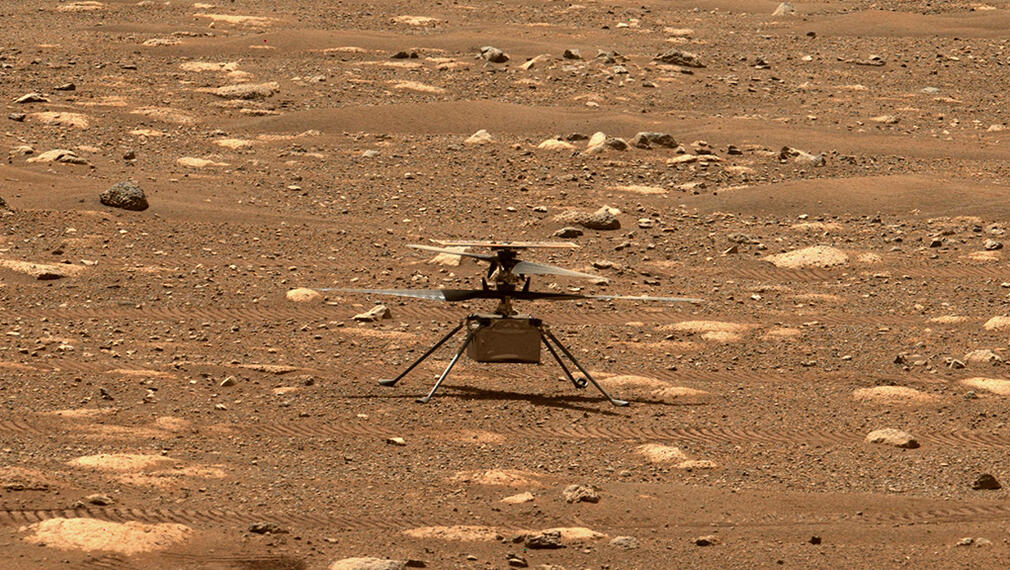
On April 19, NASA’s Ingenuity helicopter became the first aircraft to fly on another planet.

Our most recent package details the historic first flight of the 4-lb. robotic rotorcraft, which lasted 39.1 seconds, and its follow-up venture on April 22, and looks ahead to its future test program. The technology lays the groundwork for aerial exploration of Mars, an aeronautical feat given the air density of Mars is less than 1% of the density on Earth. See below for more.

“How do we use aerial mobility in the future on Mars, to help not just robotic exploration, but to help human exploration?”
Ellen Stofan
Smithsonian
Jul 06, 2026
As mission demands evolve, operators need more than portable devices. Discover how integrated avionics enhance awareness, connectivity, and mission effectiveness.
Jul 03, 2026
Rocket Lab is placing an $8 billion bet to take on SpaceX in another market.
Jul 01, 2026
Developers aim to launch new satellites with very-high-frequency radio payloads to enhance air traffic management.
Jun 30, 2026
As Washington’s Air & Space Museum turns 50, its director Chris Browne tells Aviation Week about its newest galleries and gives a sneak peek of what's on display ahead of their opening on July 1.
Jun 30, 2026
Sixty-one years after the U.S. launched its first and only reactor into orbit, space nuclear power and propulsion now appear central to U.S. space superiority.
Jun 29, 2026
Natalie Brattain is a 2026 20 Twenties winner and an undergraduate student in Aerospace Physiology at Embry-Riddle Aeronautical University. Her pioneering work focuses on protecting astronaut vision during long-duration spaceflight.
Jun 29, 2026
As satellites multiply and spacecraft become more maneuverable, concerns grow that space lacks the equivalent of air traffic control.
Jun 25, 2026
Victus Haze put the service’s rapid-response space concept to the test, launching and commissioning a satellite in record time.