This article is published in Aerospace Daily & Defense Report part of Aviation Week Intelligence Network (AWIN), and is complimentary through Jun 22, 2026. For information on becoming an AWIN Member to access more content like this, click here.
Just five years ago, prior to Russia’s invasion of Ukraine and when U.S. security commitments to Europe looked solid, projections for defense spending on the continent appeared flat.
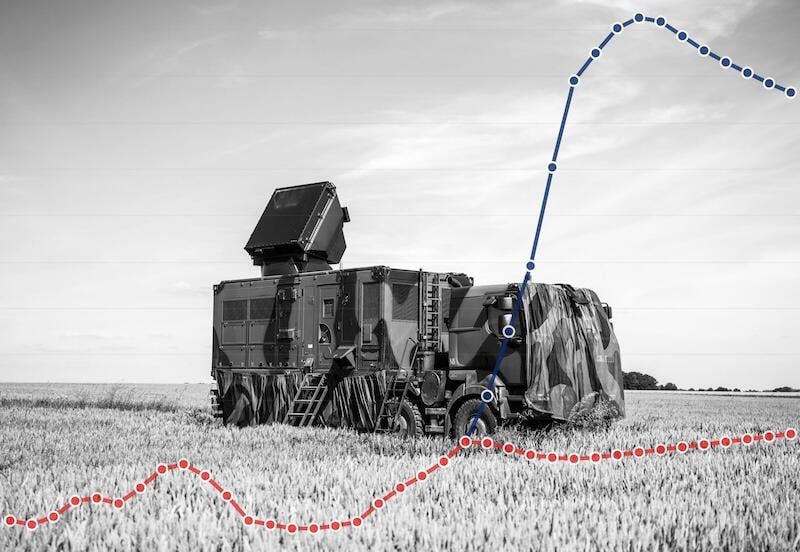
Aviation Week’s forecast for military expenditure in January 2021 showed governments in the region investing $1.1 trillion in the development and acquisition of military equipment between 2026 and 2036, with related spending growing at an average of 0.2% a year in real terms over the decade. Prospects for the European defense sector looked stagnant relative to the U.S., Asia and the Middle East, where budgets were growing faster and industrial and export policies were arguably more supportive of their domestic industrial bases.
Compared to that post-COVID pandemic malaise, prospects for the sector today are unrecognizable. European governments are now projected to spend $3 trillion on R&D and procurement over the coming decade—three times what was expected previously—and that total could rise further still. In June 2025 the continents’ NATO members agreed to raise core defense spending to 3.5% of GDP by 2035, but spending plans in the majority of countries do not yet reflect this commitment. A concerted push toward this goal has the potential to add hundreds of billions more in spending over the decade.
As a result, the European defense sector finds itself facing an unfamiliar challenge: Money is no longer the problem, but meeting skyrocketing levels of demand is. Crucially, a concerted effort is underway to ensure that as much of this money as possible flows toward local manufacturers. While critical short-term gaps have been filled by exporters, particularly in areas like munitions and air defense, policymakers at the national and supranational levels are focused on making the most of this opportunity to expand and transform the European defense sector.
Aviation Week data shows that of the $302.2 billion in major defense contracts announced by governments since the end of 2022, 69.9% by value have gone to local manufacturers.
The question now is: Can this continue while simultaneously improving European military capabilities on an expedited basis? While much of the new wave of funding has found its way to local companies, order backlogs and delivery timeframes are growing. Large tier 1 manufacturers may be able to make decisions to expand production capacity, but this is less straightforward further down the supply chain where companies are smaller, less well off, have less visibility into long-term demand and are starved of investment. Similarly, gaps have emerged in critical raw materials such as rare earth metals and energetics. Without expansion at all levels of the industrial base, attempts to grow capacity will be challenging.
Again, action has been taken to address these concerns. OEMs are expanding production where they can and investing in their supply chains, while national governments have become more interventionist in monitoring, mapping and directly supporting small and medium-sized enterprises. The European Commission is also firmly engaged in this process and has provided direct funding through initiatives such as the European Defense Industry Program (EDIP) and the Act in Support of Ammunition Production (ASAP). The commission has also proposed €131 billion ($154 billion) in funding for defense and space in the next Multiannual Financial Framework, which will run from 2028-2034—roughly five times the amount provided for 2021-27.
The recent escalation of tensions between Europe and the U.S. has in many ways bolstered this process, emphasizing the need for strategic and industrial autonomy in defense. American and other foreign companies are absolutely seen as a part of the potential short-term solution to Europe’s need for greater industrial capacity. Yet the phrase “ITAR-free”—referring to components not subject to U.S. International Traffic in Arms Regulations—has rarely been heard more frequently in government and industry circles.
Europe’s $3 trillion decade is a once-in-a-generation chance to rebuild the European defense industrial base and its competitiveness in global markets.
This briefing was put together using data and analysis from Aviation Week Intelligence Network's Defense Market Analyzer tool. To find out more, contact your customer representative or complete this form.