US sanctions that could kill off an airline
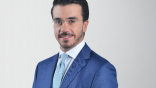
Most airline chief executives today think they have a hard enough job worrying about falling yields and rising fuel prices. The CEO of Syrian Arab Airlines is fighting to forestall nothing less than the total collapse of her airline due to political decisions made more than 9000km from her Damascus office. Alan Dron reports.
These are, according to Ghaida Abdullatif, “dark days” for Syrian Arab Airlines. Half her short-haul fleet is grounded because she cannot source the spare parts she needs to keep them in the air. Her only two long-range aircraft have not flown for months. Attempts to buy new aircraft are blocked. All due to US sanctions on the Syrian government.
Last July there appeared to be light at the end of the tunnel. President Obama’s Middle East special envoy, George Mitchell, met President Bashar Al-Assad in Damascus with an offer to ease the sanctions.
This move would particularly affect “requests to export…components related to the safety of civil aviation,” said a State Department spokesman at the time.
However, it appears to have been a false dawn, said Abdullatif. “The situation has not changed. We have six Airbus A320s but three of them are grounded.”
Syrian Arab refuses to compromise on safety. When an aircraft requires a maintenance check that cannot be performed under the sanctions, the airline feels it has no option but to withdraw it from service. Its rigorous approach was demonstrated recently by the airline passing the International Air Transport Association (IATA) Operational Safety Audit certification for the second time.
This growing shortage of aircraft has had serious effects on the airline’s route network.
“We have already cut back,” said Abdullatif. “We have suspended many destinations. We still fly to the UK, France, Germany, Italy and the Gulf area, but frequency has decreased.” Abdullatif has been able to lease one A320 to help fill the gaps in her schedules, but more aircraft are required.
To try to solve this problem in the short term, she is in discussions to lease Russian airliners that are not subject to the US embargo. “We are in the process of leasing two Tupolev Tu-204s for a year, and later we can purchase them,” she said.
This would not be the first time Syrian Arab has acquired Russian aircraft. During the 1970s, political ties between Moscow and Damascus saw the airline operating a mix of Tupolev Tu-134 and 154s, Antonov An-26s, Ilyushin Il-76s and Yakovlev Yak-40s.
Today, only a single Tu-134B-3 and two Yak-40s remain on strength, normally operating domestic sectors only.
Syrian Arab is one of the few remaining operators of the Boeing 747SP, the ‘hot rod’ version of Boeing’s behemoth that was designed to fly fast and high on long, thin routes. Never a cheap aircraft to operate even in its 1970s heyday, it is now “very expensive”, said Abdullatif. Like the Airbuses, both of Syrian Arab’s 747SPs have been removed from service awaiting overhaul. Early in 2009 the US granted a licence to allow repair of the 747SPs and the airline is in negotiation with Boeing to handle the work.
The airline is also reportedly looking at ATR 42s for its short-haul work. Despite reports appearing in the Damascus newspapers, the Franco-Italian manufacturer is saying nothing.
In the longer term, new aircraft are the answer to the carrier’s problems and it has a Memorandum of Understanding (MoU) with Airbus for 14 aircraft – a combination of more A320s and the new A350XWB – but progress depends on the lifting of the sanctions. A similar MoU with Boeing for a mix of 737s and 777s remains in abeyance for the same reason. “My hope for 2010 is to have export licences to purchase Boeings and Airbuses,” said Abdullatif, one of the world’s few female airline CEOs.
Her dismay at her airline’s situation and her sense of injustice at being caught up in a situation not of her making, comes across strongly during conversation. “We are a commercial organisation. We carry passengers of all nations, not only Syrian people. Sanctions on Syrian Air are not fair; we have a clean record. We have never done anything, but we are suffering.”
On top of her unique problems, she also has the difficulty faced by many other full-service airlines in the region of low-cost carriers starting to make incursions into her home market. Several now operate into Damascus, Aleppo and Latakia.
The airline’s future will depend on the actions of the US government in coming months. Abdullatif is on record as saying the airline may have to cease operations completely if the situation does not improve.
“I hope that these dark days for Syrian Arab Airlines will be finished soon,” she said. She must be hoping that the darkest time comes just before the dawn.
[Sidebar]
Obama holds the key to survival
The heart of Syrian Arab’s problem is the poor state of relations between Syria and the United States. The US has for many years accused the Syrian government of involvement in international terrorism and procuring weapons of mass destruction, and in 2004 President George W Bush introduced economic sanctions against Damascus.
Those sanctions included a block on all US exports to Syria apart from humanitarian items. Not only did new aircraft and spare parts fall under this ban, but also US goods that might be used in other nations’ products that could, in turn, be exported to Syria.
Any aircraft containing more than 10 per cent of US components is affected, which affects the other main commercial aircraft supplier, Airbus, most of whose aircraft have US-supplied engines and other components.
In theory, these sanctions have never covered aircraft components necessary for safety. In practice, say Syrian government officials, many requests from US companies to supply such items were refused by the Bush administration.
At the time of President Obama’s offer to ease sanctions last July a senior administration official who spoke on the condition of anonymity to the New York Times added: “We are going to look at these waivers, especially on airplane spare parts, and our predisposition is going to be, view them favourably, as opposed to the prior administration’s policy.”
That promise has not yet been fulfilled.
Related Content