This article is published in Aviation Daily part of Aviation Week Intelligence Network (AWIN), and is complimentary through Jul 20, 2026. For information on becoming an AWIN Member to access more content like this, click here.
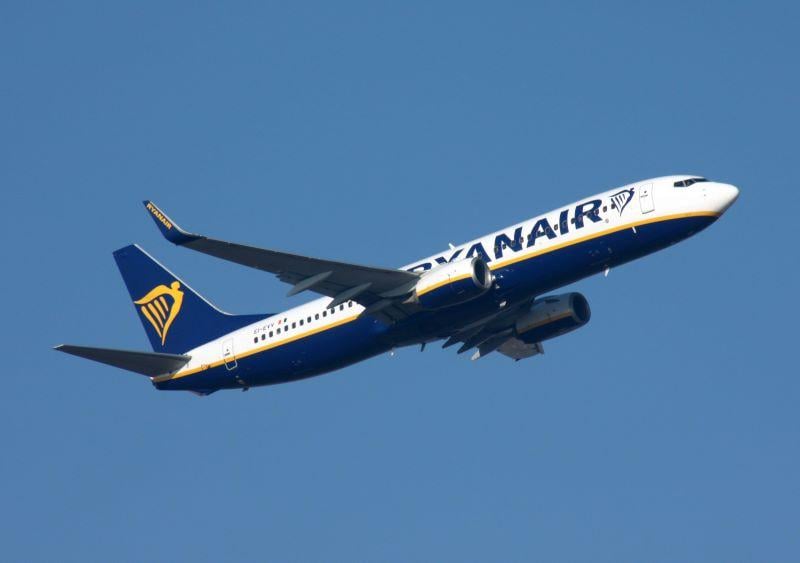
Ryanair Boeing 737-800
A passenger on a Ryanair flight being operated by Malta Air from Greece to Germany was reportedly partially sucked out of a window after the transparency blew out in flight July 10.
The incident occurred shortly after the flight took off from Thessaloniki Airport in Greece, bound for Memmingen Airport in Germany.
Passengers reported hearing a bang, followed by the breaking of a window. According to eyewitnesses who spoke later to Greek broadcaster ERT, the decompression left the passenger sitting next to the broken window wedged in the window frame, with his head and shoulders in the airflow.
According to Munich newspaper Suddeutsche Zeitung, other passengers told the German Press Agency DPA that fellow passengers held on to the man until he could be dragged back into the cabin.
The aircraft—a Boeing 737-800—returned immediately to Thessaloniki, landing around 20 min. after the incident.
Malta Air is a wholly owned subsidiary of Ireland-based Ryanair Holdings, which is also the parent company of Buzz, Lauda, Ryanair and Ryanair UK.
According to a statement from Ryanair, the flight returned, “when a passenger window dislodged inflight ... The aircraft landed normally, and passengers returned to the terminal. One passenger requested and received medical assistance on the ground in Thessaloniki.”
A replacement aircraft was brought in to operate the delayed flight to Memmingen, located around 80 mi. west of Munich.
The European Union Aviation Safety Agency (EASA) said it was “aware of the B737-800 (9H-QEU) event on flight FR-1879 operated by Malta Air on behalf of Ryanair on July 10 and is ready to support the expected investigation into this event.”
EASA added that is in contact “with the FAA as state of design of the aircraft as well as the engine manufacturer. We will follow the situation closely as more information emerges and take any continued airworthiness action needed to ensure safety.”