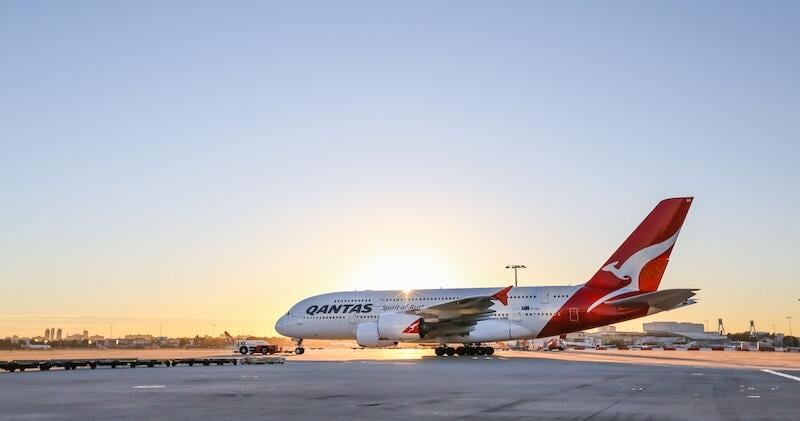
Qantas has added a mandatory post-maintenance tool check-in verification to keep items from being left in aircraft or other potentially risky places following incidents that exposed gaps in its protocol.
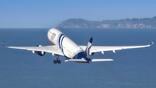
The most recent incident, detailed in a new Australian Transport Safety Bureau (ATSB) report, took place at Sydney International Airport. A four-person team, composed of one licensed aircraft maintenance engineer (LAME) and three AMEs, was assigned several tasks, including work on the air conditioning system of an Airbus A380 that just arrived from Los Angeles.
AME 1 went to Qantas' on-airport tool crib and signed out materials to do the work, including a toolbox and screw guns. These were linked to the specific task of changing an air generation unit (AGU) heat exchanger sensor. A work light was signed out against the tail number, VH-OQK.
Getting to the AGU required crawling into the wing through a belly access panel. AME 1 and AME 2 entered the wing and performed the work, with AME 1 passing materials to AME 2. Once the sensor was in place, both technicians exited the wing so the system could be tested. AME 2 turned the work light off on the way out.
The functional test, done from the flight deck with the LAME's help, hit a roadblock when the auxiliary power unit (APU) failed. The technicians then fixed the APU issue and tested the air conditioning, which passed.
AME 2 and AME 3 returned to the aircraft's underside to reinstall the panel. They checked the opening with a flashlight to ensure no tools were left behind but did not see the work light. AME 1 returned the task-specific tools as required but did not realize the work light was missing.
The LAME signed off on the job, and the aircraft returned to service.
Two days later, Sydney's tool crib operator reviewed an unreturned tool report and realized the light was unaccounted for. The operator questioned AME 1, who said the light may still be onboard VH-OQK. Qantas quickly located both the aircraft—which had just completed a roundtrip to Dallas/Fort Worth—and the light.
“No adverse consequences, structural damage or system disruptions resulted from the work light remaining in the wing,” ATSB said.
Qantas' standard operating procedures require technicians to make sure all tools are accounted for when they finish assigned tasks. LAMEs are required to verify all tools used for a job are returned before the work is certified as complete.
But the procedures are dependent on human performance, with no safety net to help correct unintentional deviations that are more prevalent in unpredictable environments, such as troubleshooting aircraft faults.
“Maintenance tasks are often conducted in challenging environments and under operational pressures, and human performance can vary accordingly,” ATSB said. “Tool control systems and procedures must therefore be designed to account for this variability, incorporating robust checks and safeguards capable of detecting and recovering from errors, particularly during routine or repetitive tasks where the likelihood of oversight may increase.”
Qantas has changed its procedures, adding new steps before aircraft are returned to service. Among them is “a mandatory pre-clearance check to confirm all tooling is accounted for following maintenance,” the airline told Aviation Week. This will help flag unreturned tools sooner than in previous procedures, which saw tool reports reviewed daily or when shifts concluded.
The January incident came three years after another Qantas A380 flew 34 cycles with a fan-turning tool, used in borescope inspections, in its engine. ATSB found work schedules and the job's duration over multiple shifts contributed to that incident. Investigators also flagged tool control gaps in that incident, which did not result in any aircraft or engine damage.

Related Content