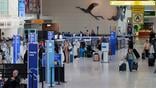
The U.S. Transportation Security Administration (TSA) is allowing approved non-passengers to have access to the post-security airside area of terminals at 13 airports, easing a restriction that has been in place for 25 years.
The TSA’s “Gateside” program allows members of the PreCheck trusted traveler program to apply for a one-day pass to move through security checkpoints without a flight ticket at the 13 airports spread throughout the country. “Participants can use the program to accompany family members and loved ones to the gate, greet arriving passengers, enjoy airport dining and shopping, or experience the terminal without taking a flight,” TSA said in a Sept. 9 statement unveiling the program.
Following the 9/11 terrorist attacks in 2001, the U.S. government restricted non-ticketed persons from going through security checkpoints to airside areas of terminals. Prior to 9/11, family members and friends routinely accompanied passengers to boarding gates or greeted passengers as they arrived at the gate area.
In a frequently asked questions section on its website explaining Gateside, TSA describes the rollout to 13 airports as “the initial phase” of the program. “TSA is adding airports in a phased approach to expand access to the program,” the agency said.
Non-passengers need to apply for a Gateside pass 1-3 days prior to the day they want entry. They must be members of PreCheck or other trusted traveler program with a known traveler number. Approval by TSA will allow the person to move through a PreCheck lane at a security checkpoint on the designated day. There is no charge for a Gateside pass.
Airports participating in the Gateside program include Columbus, Ohio; Dallas-Fort Worth; Detroit; Indianapolis; Las Vegas; Little Rock, Arkansas; Los Angeles; Mesa, Arizona; Oklahoma City; Omaha, Nebraska; Salt Lake City; San Diego; and Wichita.
Allowing non-passengers to access post-security airside areas at airports has been trialed in the U.S. For example, Pittsburgh International Airport (PIT) had a program in place prior to the pandemic to allow non-ticketed members of the public access to the secure airside area of the airport.
In conjunction with TSA, PIT could issue a “myPITpass” to non-passengers enabling them to go through standard lanes at security checkpoints and access the airport’s shops and restaurants between 9 a.m. and 5 p.m. Monday-Friday. The program, the first of its kind in the U.S. post-9/11, was instituted in 2017 but suspended during the pandemic and has not returned as the airport has engaged in major terminal construction projects.
Seattle-Tacoma International Airport (SEA) currently has a program, also operated in conjunction with TSA, in which up to 300 non-passengers daily can receive an “SEA Visitor Pass” to move through checkpoints to airside areas.
TSA noted that airlines issue post-security gate passes “in very limited instances”—including for accompanying a minor, a person with disabilities or a member of the military—that allow for passage through standard checkpoint lanes.
The introduction of the Gateside program and plans to expand it indicate TSA aims to allow non-passengers to gain airside access on a routine basis at airports across the country.
TSA said Gateside pass “availability may be limited during peak times ... dditionally, each participating airport sets limits on the number of passes issued for each day.”
Figures for the cap at given airports were not provided.
The agency said those with Gateside passes “may be asked to leave, have their Gateside pass revoked or be subject to civil or criminal penalties for violation of federal or local airport security requirements.”
Children can be added to an adult’s Gateside pass. The pass is only active for one day, but non-passengers can exit the airside area and re-enter through PreCheck security lanes on the same day.

Related Content