Mammoth Receives 777-200LRMF Freighter Approval From FAA

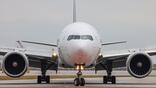
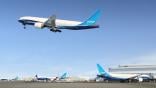
Mammoth 777-200LRMF cargo modification.

Passenger-to-freight conversion specialist Mammoth Freighters has received supplemental type certificate (STC) approval from the FAA for its Boeing 777-200LRMF cargo modification.

The converted 777-200LRMF (Long Range Mammoth Freighter) is certified with a payload of 231,000 lb. and a range of 4,800 nm. The first delivery is expected soon to Qatar Airways Cargo through Jetran, a Texas-based leasing company which has also received orders for the converted 777 variant from DHL and Ethiopian Airlines.

Mammoth, which is also poised to begin certification ground and flight tests of a parallel 777-300ERMF modification program, eventually hopes to convert the majority of the 61 777-200LRs produced by Boeing—the last passenger version of which was delivered in 2021. Boeing’s current 777F freighter production aircraft is based on a combination of the 777-200LR fuselage and 777-300ER wing.

Certification of the -200LRMF is meanwhile expected to accelerate the regulatory approval process for the broadly similar Mammoth 777-300ERMF conversion, assembly of which is due to be completed in May. The STC for the -300ERMF modification, which will clear the aircraft for a payload capacity of 216,000 lb. and a 4,800 nm range, is expected before the end of 2026.

Conversion work on the initial -200LRMF has been carried out on one of five modification lines at Aspire MRO in Fort Worth, Texas. Mammoth freighter modifications are also underway on two lines at STS Aviation Services UK Limited in Manchester, England, with additional expansion “planned in the Asia-Pacific region,” the company added.

While Mammoth has a backlog of around 35 freighter conversions, industry analysts say the supply of suitable airframes for modification will remain a challenge. “Feedstock will be hobbled by the fact that Boeing has been unable to deliver the 777-300ER successor from its stable in the form of the 777-9,” says Tom Crabtree, MD of Transport Research Advisory.

Compounding the feedstock issue is the overall fall-off in widebody deliveries which have yet to recover to pre-pandemic levels. “Between them, Boeing and Airbus were delivering between 320 and 350 large passenger widebody aircraft per year on average from 2014 to 2019. Those numbers fell below 150 in 2020 and, not surprisingly, they fell below 100 in 2021, largely due to the production problems on the 787,” Crabtree said.

Combined Airbus and Boeing passenger widebody deliveries have since recovered to 179 in 2025 and are forecast to reach around 200 in 2026. “They are predicted to finally exceed 300 by 2028, but there is some risk to that forecast,” Crabtree said. “They’re all fighting for the same resources, and they’re just not there,” he added.

Guy Norris

Guy is a Senior Editor for Aviation Week, covering technology and propulsion. He is based in Colorado Springs.