This article is published in Aviation Daily part of Aviation Week Intelligence Network (AWIN), and is complimentary through Aug 11, 2026. For information on becoming an AWIN Member to access more content like this, click here.
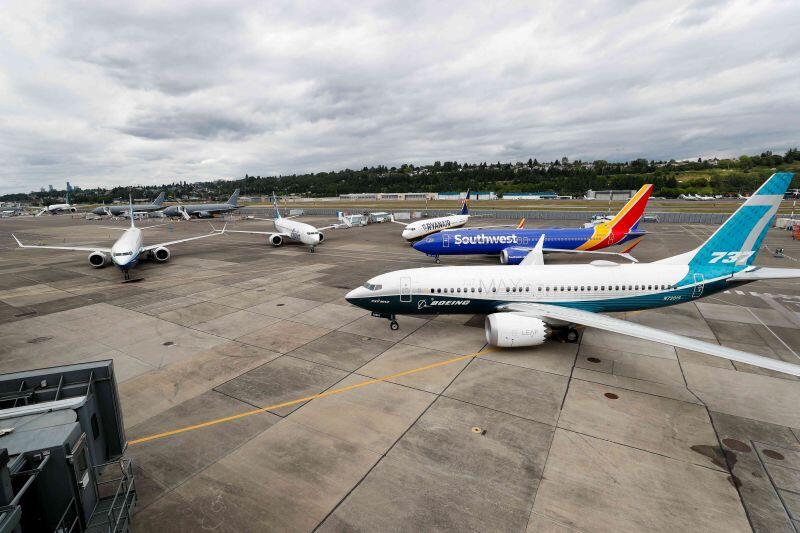
Boeing 737-7 and other MAX family members
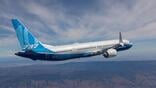
The FAA has granted an amended type certificate for the Boeing 737-7, paving the way for deliveries of the penultimate MAX derivative to get underway in early 2027 and marking a key milestone on the company’s long path to industrial and financial recovery.
First flying in March 2018, the 737-7 certification program was delayed by new FAA requirements and an engine anti-ice (EAI) redesign issue. The same hurdles have also delayed the 737-10, which first flew in June 2021.
For the moment Boeing is pursuing just FAA certification for the 737-7, rather than joint European Union Aviation Safety Agency (EASA) certification, as U.S.-based Southwest Airlines currently remains the principal future operator of the model with 269 orders. The aircraft are scheduled to replace Southwest’s fleet of over 270 737-700s, some of which are now more than 20 years old.
Certification flight testing for the 737-7 was completed after 686 total flight test hours were accumulated on 441 test flights, in addition to 349 total ground test hours.
“The multi-year journey to this milestone has been long and winding,” says Boeing Commercial Airplanes president and CEO Stephanie Pope, in a letter to employees. “Our team has had to navigate various challenges, an extended pandemic, and the transition to new certification processes as lawmakers put in place new requirements to strengthen airplane safety.”
“The process took time as our team adjusted to the new expectations, developed engineering solutions and completed rigorous safety assessments and human factors reviews,” Pope adds. “The tens of thousands of hours of work have been worth it ... for Boeing, for our customers and for commercial aviation. We have learned important lessons that we are already applying to the 737-10 and that are accelerating our work as we complete the 737 MAX airplane family and then the 777X programs.”
Commenting on the certification award and revised processes, the FAA notes that approval for the 737-7 “reflects years of sustained work to resolve complex technical issues and complete a thorough review of the airplane’s design and supporting safety analyses. Throughout the process, the FAA performed or directly reviewed significant work involving flight controls, system safety assessments, human factors, flightcrew alerting, and other novel, complex, or safety-critical areas, while also requiring testing, design changes, and additional analysis where necessary.”
The regulator also adds that it required Boeing to incorporate improvements which addressed issues and concerns raised by the NTSB and also the U.S. government’s Aircraft Certification, Safety and Accountability Act, some of which were driven by the fallout from two 737-8 accidents in 2018 and 2019. The updates primarily addressed changes to the flight-control software, flightcrew alerting system, and the redesigned EAI system.
The FAA adds that its safety inspectors “will remain on site at Boeing production facilities across the country to closely monitor the manufacturing process, including observing and assessing Boeing’s Safety Management System (SMS) and safety culture.”
News of the 737-7 certification comes as flight tests of the 737-10, the final member of the MAX family, also conclude. The campaign for the stretched derivative logged 976 flights totaling more than 2,060 flight hours and about 1,040 ground test hours.
Boeing says that with 737-10 flight testing complete, “the program now shifts to closing the remaining development assurance reviews (DAR) and system safety assessments and submitting final deliverables to the FAA for regulatory review. DAR 3 is finished; DAR 4 is 60% complete, while system safety assessments were 32% complete as of the end of July.”