Bird Strike Damage Led To Air France A350 Airspeed Incident, BEA Says
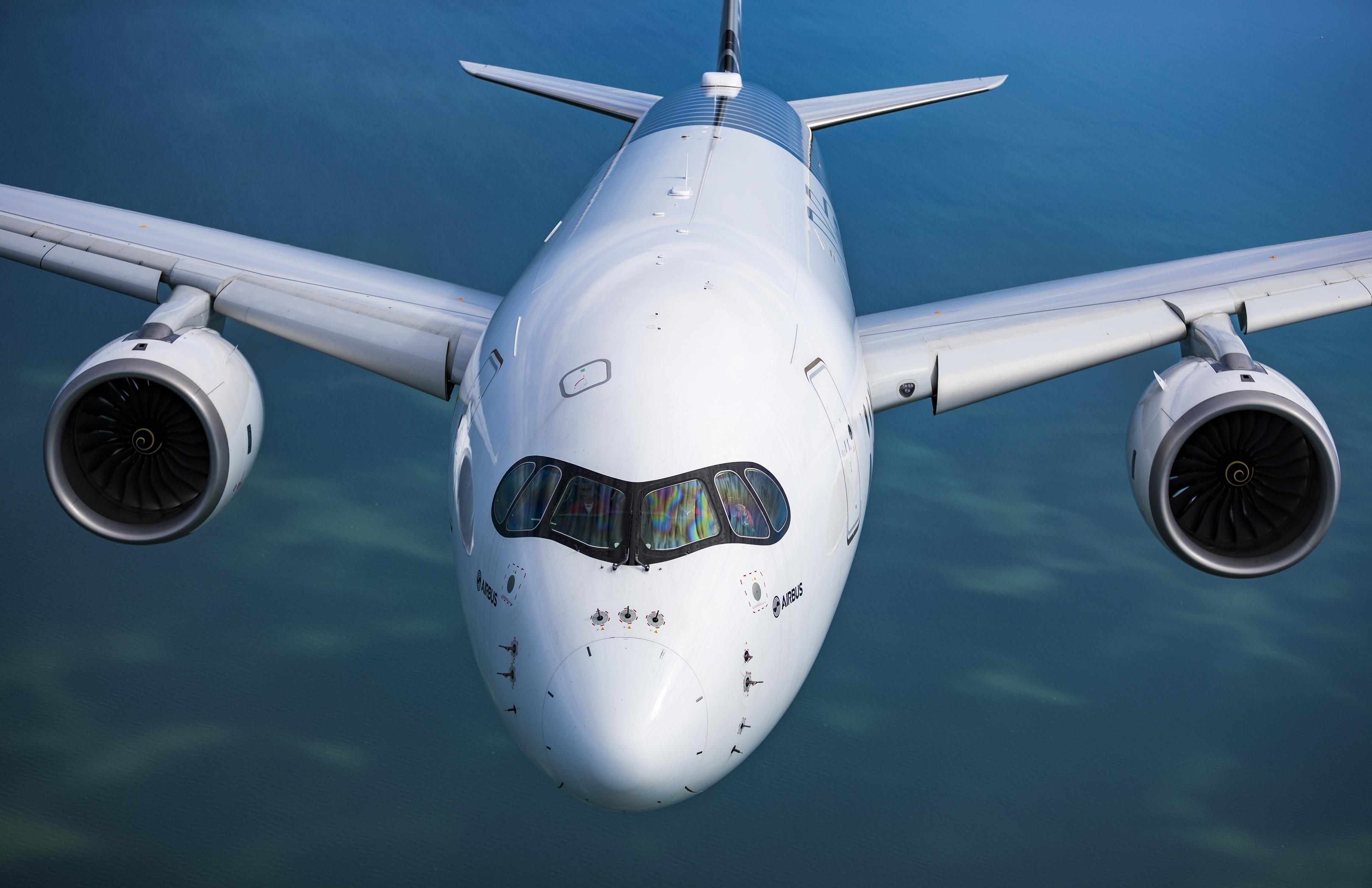
LYON—Investigators at France’s Bureau of Enquiry and Analysis for Civil Aviation Safety (BEA) say insufficient radome maintenance after a bird strike probably caused airspeeds to become unreliable on an Air France-operated Airbus A350, as the radome collapsed and generated a particularly high workload for pilots until landing.
In the May 28, 2023, incident, the crew maintained high safety margins, thanks to effective teamwork and despite imperfect knowledge of some advanced systems, the final report by France’s air accident investigation bureau emphasizes. Airbus and Air France have since modified pilot and maintenance manuals. The report also shows how higher level of redundancies on latest-generation commercial aircraft can help crews in challenging circumstances.
The incident started with a weather radar failure. Minutes after takeoff from Osaka, Japan to Paris, the A350-900’s crew had to cope with faults that led them to apply the procedure for total loss of weather radar. Informed by Air France’s operations center of thunderstorm clouds along their route, they decided to turn back to Osaka. The cockpit crew comprised the captain and three copilots, two of whom were relief pilots for the long flight.
At the beginning of their descent, they heard a thud and a loud aerodynamic noise followed. Seeing fluctuating engine speeds, differences between altitudes on primary flight displays, and an airspeed source rejected, they declared pan-pan.
Preparing for an overweight landing, they received clearance to fly at a lower altitude to burn as much fuel as possible before touchdown. Meanwhile, the flight control system temporarily switched to alternate law, meaning flight envelope protection was still available but might be less effective than in normal law, depending on the fault.
The pilots, who considered the aircraft might have lost a section of the radome—the tip of the fuselage’s nose section, which houses the weather radar—or a probe, then observed unstable indicated airspeeds. At that point, changes in the aerodynamic shape of the nose section, where pitot probes are attached, was disturbing airspeed measurement. The crew applied the unreliable airspeed procedure and declared a Mayday.
As the aerodynamic noise and vibration was increasing, and the pilot flying felt a slightly unstable dynamic performance, the crew decided to bring forward the configuration change. They extended the flaps, slats and landing gear. They thus assessed the performance of the aircraft in approach configuration well before the final approach.
Seeing marked differences between the speeds displayed on the primary flight displays, the crew switched the air data source to “backup,” which is independent from pitot technology and the air data reference system. The A350’s New Air and Inertia Automatic Data Switching (NAIADS) system provides the backup speed. It relies on angle of attack and weight or static probes located in the engines.
The crew did not fully comply with the unreliable speed procedure, investigators say. Switching to and maintaining backup speed must be followed by cutting off all three air data reference systems. Nevertheless, this action did not compromise safety, the report says.
The crew also decided to disconnect the autothrottle, autopilot and flight director and remain in manual mode until landing. In fact, all three systems were still available, and the crew disconnected them because they ignored NAIADS’ details, the investigators note. “Given the conditions of the day and the four-pilot crew, manual piloting of the aeroplane remained compatible with the available resources,” they say. “The strategy of keeping the automatic systems is still to be privileged as it preserves the crew’s resources.”
The lack of knowledge of the complex NAIADS system details may find its origin in the flight crew operating manual. Its description may be difficult to comprehend, the report says. Moreover, simulator training relating to NAIADS was far from operational conditions. Thanks to the A350’s NAIADS system, the unreliable airspeed procedure is different from the method on the A330, despite the possibility to hold a dual A330/A350 rating, which all pilots on board held, the report adds.
Finally, as the crew was preparing for the overweight landing, they faced an extra calculation challenge. The planned weight, 248 metric tons, was high above the 210 metric ton maximum on the pitch/thrust table. The crew had to extrapolate, which meant extra effort.
Nevertheless, the crew successfully managed a considerable workload. “The presence and commitment of three experienced co-pilots on board, whose roles were clearly established by the captain, enabled high safety margins to be maintained,” the investigators say.
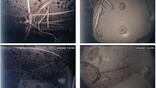
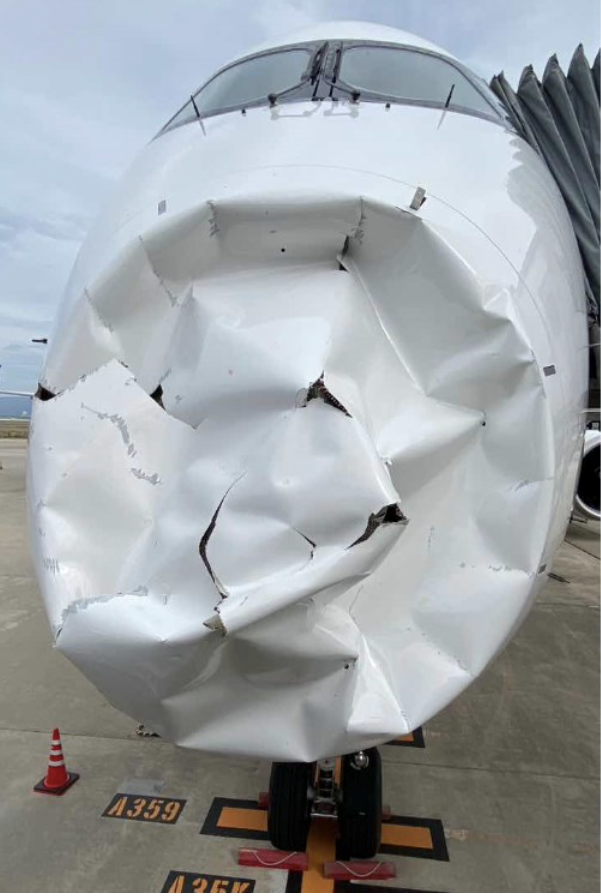
The landing took place without further incident, and the radome was found in place, complete and substantially damaged. Ultraviolet ray examination detected organic residue from a bird strike at the top left of the radome. That portion of the radome was removed and sent to the Natural History Museum in Paris for DNA analysis of the residue, which was found to be from a falcon. “It is very likely that this strike caused a debonding of the inner skin that spread radially and aft-ward on the radome until it completely collapsed,” the BEA says. Before the collapse, it was already preventing movement of the radar antenna.
The bird strike was probably one a separate crew operating the A350 reported a month before the incident. During several flights preceding the occurrence, weather radar faults occurred. Air France’s maintenance center requested a visual inspection of the inner surface of the radome. However, the maintenance technician only carried out a visual inspection of the outer surface and tested the radar antenna, which had been replaced the day before. Airbus documentation confirms an internal radome inspection was required in this case, the BEA points out.
Updating its maintenance procedures in 2024, Airbus highlighted the systematic and mandatory character of inspections on the inner surface. For crews, the airframer updated the flight crew techniques manual on the unreliable airspeed procedure, adding a paragraph on the specific case of radome collapse. It also updated the pitch/thrust table with values corresponding to weights higher than -210 metric tons. Meanwhile, Air France produced bulletins for pilots about the NAIADS system.

Related Content