LYON—France’s air accident investigation bureau BEA has refocused its efforts toward those investigations from which it hopes to gain the most insights, dropping correspondence inquiries.
The reallocation of resources comes as incidents and accidents in light aviation remain frequent, meaning those deserving in-depth investigations should be carefully chosen. Meanwhile, events in commercial aviation are rare and require thorough analysis for safety lessons to emerge. Moreover, the International Air Transport Association has repeatedly voiced concerns that final investigation reports are coming late, if at all, thus falling below International Civil Aviation Organization standards and creating a wide-ranging safety issue.
In 2025, BEA investigators did not open any so-called Category 3 probes, which were considered of relatively small importance and had been conducted by exchange of correspondence. BEA did not investigate approximately 40 accidents that damaged certified aircraft with a maximum takeoff weight (MTOW) lower than 2,250 kg (4,956 lb.), in compliance with an exemption in a 2010 EU regulation, BEA’s annual report says, adding it usually investigated them by correspondence. It did not investigate eight fatal accidents. BEA excluded rare aircraft types and accidents for which initial information suggested investigators would find few relevant elements to collect and analyze, it added.
“BEA can thus better allocate resources to those events from which it hopes to draw the best safety lessons, especially by studying weak signals,” executive director Pierre-Yves Huerre said in the agency’s annual report. “The new policy illustrates our willingness to publish investigation reports in a swifter way and increase the number of targeted and actionable publications.”
Category 1 investigations, which BEA describes as major, include those accidents where, in a fixed-wing aircraft with a MTOW greater than 5,700 kg, at least one occupant was killed, or the aircraft was destroyed. Category 2 investigations result in simplified reports that nevertheless may include safety lessons or recommendations.
As a result of the elimination of Category 3, BEA opened 68 investigations in 2025, down from 95 in 2024. A number of experts are still working on the Sept. 21, 2025, near-miss at Nice airport, Huerre noted, in which an approaching Nouvelair Airbus A320 came within feet of a lined-up easyJet A320, a serious incident that sparked extensive media scrutiny.
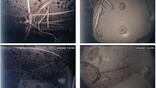
Meanwhile, BEA has continued to invest in laboratory equipment. The avionics and flight recorders department has benefited from better capacities in data extraction and decoding, image processing and audio recording transcription. The engine department now has a field emission gun scanning electron microscope, which enables investigators to better conduct or direct some highly technical analyses, BEA adds.
The agency’s workforce stood at 85 employees as of December 2025, up from 83 one year earlier. In addition, the number of local first-information investigators (which the executive director may rely on, depending on local events) increased to 129, from 113.

Related Content