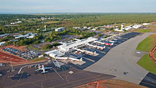
What’s On The Horizon For: Cam Ranh International Airport
During Routes World 2025 in Hong Kong, Cam Ranh International Terminal Joint Stock Company’s Deputy General Director told Routes about its successful growth in airline partnerships and expansion plans.
Strategically located on Vietnam’s south-central coast, Cam Ranh International Airport (CXR) serves the resort destinations of Nha Trang and Cam Ranh. One of Southeast Asia’s fastest-growing airports, CXR handled 9.7 million passengers in 2019. After the pandemic, the airport has steadily recovered, welcoming 4.4 million passengers in 2024—about 70% of pre-pandemic levels.
The international passenger terminal, operated by Cam Ranh International Terminal Joint Stock Co. (CRTC), opened in June 2018. Today, more than 30 airlines operate at CXR, connecting Vietnam to major markets including China, South Korea, Russia, Kazakhstan, Uzbekistan, Thailand, Malaysia and Poland.
Since 2024, CXR has welcomed 17 new international airlines, with momentum continuing into 2025 through partnerships with new entrants including Scoot, Thai VietJet Air and Parata Airlines.
Earlier this year, the airport celebrated the inaugural direct flight from Busan, South Korea, operated by Vietnam Airlines. The daily service brings the total number of direct flights from major South Korean cities to Cam Ranh to 19.
More News And Analysis From Routes World 2025
Scoot has also announced new services to Da Nang, Kota Bharu and Nha Trang, which will launch progressively from October to November 2025. Subject to regulatory approvals, the carrier plans to expand further during the winter 2025-26 season with new routes to Medan and Labuan Bajo in Indonesia, and Okinawa, Japan.
The low-cost subsidiary of Singapore Airlines has also increased frequencies to meet demand across multiple destinations including Jakarta, Clark, Manila, and Perth.
Matthew Tan, deputy general director at Cam Ranh International Terminal Joint Stock Co. (CRTC), told Routes that much of the airport’s recent success stems from converting charter flights into scheduled services. During the first eight months of 2025, more than 70% of passengers at CXR traveled on scheduled flights, compared with just 30% before the pandemic.
Tan said this shift will remain a key focus for the airport’s air service development strategy, particularly in strengthening connectivity with South Korea and China.
Another priority for CXR is continued investment in passenger facilities. Enhancements to retail, food and beverage offerings are among several initiatives designed to elevate the overall travel experience and help the airport achieve a 5-Star Skytrax rating.
With strong market demand and renewed momentum, the terminal plans to expand capacity from 4.5 million to between 8 million and 10 million passengers by 2030, ensuring it can accommodate future growth while enhancing service quality.
Reflecting on Routes World 2025, Tan said: “The event is a great networking opportunity to meet so many airlines in one place, and we really enjoyed this opportunity to be connected with all these likeminded professionals in Hong Kong.”
To communicate its latest developments, unserved route opportunities and event attendance to potential airline partners, CXR utilize its Routes 360 membership.
Related Content