This article is published in Air Transport World part of Aviation Week Intelligence Network (AWIN), and is complimentary through Oct 24, 2026. For information on becoming an AWIN Member to access more content like this, click here.
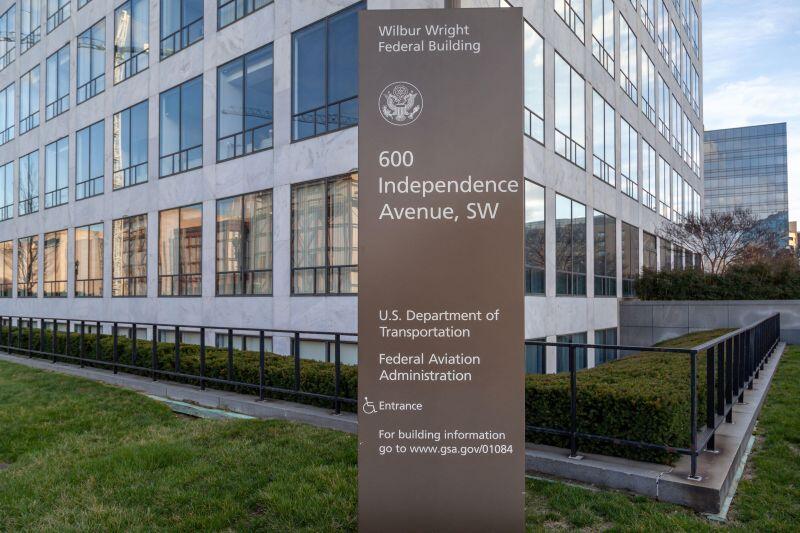
U.S. Transportation Department building.
WASHINGTON—The U.S. Transportation Department (DOT) has awarded nearly $12 million to 14 communities seeking to add, restore or support regional air service, targeting specific gaps in connectivity.
The grants, awarded through the Small Community Air Service Development Program (SCASDP), cover projects ranging from new hub connections and restored routes to marketing campaigns and an air service study.
DOT received 60 applications from communities in 32 states and territories. Of the 56 proposals deemed eligible, 14 were selected for grants totaling $11.98 million. The eligible applicants collectively sought almost $49 million.
Most awards fund revenue guarantees and marketing intended to reduce the financial risk for airlines launching routes. The projects targeted connections to major hubs including Chicago, Denver, Detroit, Houston, Los Angeles, New York, Salt Lake City, San Francisco and Washington.
OAG Schedules Analyser data show the selected airports collectively offered approximately 3.61 million departure seats during summer 2026, up 8.9% from 3.32 million in summer 2023. Departures increased 15.9% to almost 43,900 over the same period, indicating much of the growth came through additional frequencies using smaller aircraft. Average capacity per departure fell from 87.6 to 82.3 seats.
Traverse City Cherry Capital Airport (TVC) recorded the largest absolute increase among the 14 airports, adding almost 123,700 summer seats between 2023 and 2026. Capacity rose 40.1% to about 432,200 seats. Despite that growth, TVC lacks nonstop service west of the Rocky Mountains. A $750,000 grant supports a revenue guarantee and marketing for proposed daily United Airlines flights to either San Francisco International Airport (SFO) or Los Angeles International Airport (LAX). United provided a letter supporting the application.
Grand Junction Regional Airport (GJT) in Colorado also recorded strong growth, with summer capacity increasing 27.7% to about 243,700 seats. The airport’s $950,000 award supports proposed United service to Houston George Bush Intercontinental Airport (IAH), linking western Colorado more directly with the Texas energy sector.
Tallahassee International Airport (TLH) in Florida received the largest individual award at $1.5 million. The funding supports the proposed restoration of IAH service, which ended in 2021. Although TLH capacity was 7.2% above summer 2023 levels, the airport said the network lacked westbound hub connectivity. United and SkyWest Airlines supported the application.
Four communities received $1 million each. Cedar Rapids Eastern Iowa Airport (CID) wants daily service to one of the three major New York airports, while Wichita Dwight D. Eisenhower National Airport (ICT) in Kansas is targeting Charlotte Douglas International Airport (CLT), North Carolina, or New York.
Baton Rouge Metropolitan Airport (BTR) in Louisiana is pursuing daily service to Chicago O’Hare International Airport (ORD), while Jackson-Medgar Wiley Evers International Airport (JAN) in Mississippi wants to restore the airport’s former ORD route.
None of those proposed airport pairs received regular service during summer 2026, according to OAG data. JAN was also one of only two airports among the 14 where capacity declined materially from 2023, falling 20.1% to approximately 440,000 departure seats.
Arnold Palmer Regional Airport (LBE) in Latrobe, Pennsylvania, experienced the sharpest contraction. Capacity fell 90.8% from about 73,200 seats in summer 2023 to fewer than 6,800 in summer 2026. The airport lost the remaining scheduled service when Spirit Airlines ceased passenger operations in May. LBE received $850,000 to help restore LCC service to Florida and Myrtle Beach, South Carolina. The application included confidential support from an airline.
Central Wisconsin Airport (CWA) in Mosinee received $950,000 to pursue the restoration of flights to Detroit Metropolitan Wayne County Airport (DTW). The airport’s regular summer 2026 network comprised service to Chicago and Minneapolis, while the DTW route had been absent since Delta Air Lines ended service in 2022.
Other awards included $800,000 for Flagstaff Pulliam Airport (FLG) in Arizona to restore Denver International Airport (DEN) service or add Salt Lake City International Airport (SLC), and $800,000 for Augusta Regional Airport (AGS) in Georgia to support daily ORD flights.
Coastal Carolina Regional Airport (EWN) in New Bern, North Carolina, received $750,000 for proposed daily Washington Dulles International Airport (IAD) service. EWN capacity grew 28.2% from summer 2023, helped by Breeze Airways routes to Hartford, Connecticut, and Orlando, Florida. However, CLT remained the airport’s only network-airline hub connection.
Purdue University Airport (LAF) in West Lafayette, Indiana, was the only recipient for which funding solely supported an existing route. The $250,000 grant funded marketing for United Express service to ORD, which returned in 2024 after a 20-year absence. OAG data showed the route provided 16,300 departure seats during summer 2026.
Dutch Harbor Airport (DUT) in Alaska received $375,000 for a regional study examining the conditions required to improve the affordability, reliability and long-term sustainability of air service.
All 14 recipients committed local resources to their projects, while nearly all provided airline support letters, implementation timetables and evidence of public-private partnerships.
Revenue guarantees could subsidize service for no more than three years. DOT said grants involving revenue guarantees would remain open for five years, allowing communities time to secure an airline partner and launch service. Marketing grants would run for four years and study grants for three.

Related Content