Russia-China Air Travel Market Poised For Growth Under New Visa Rules
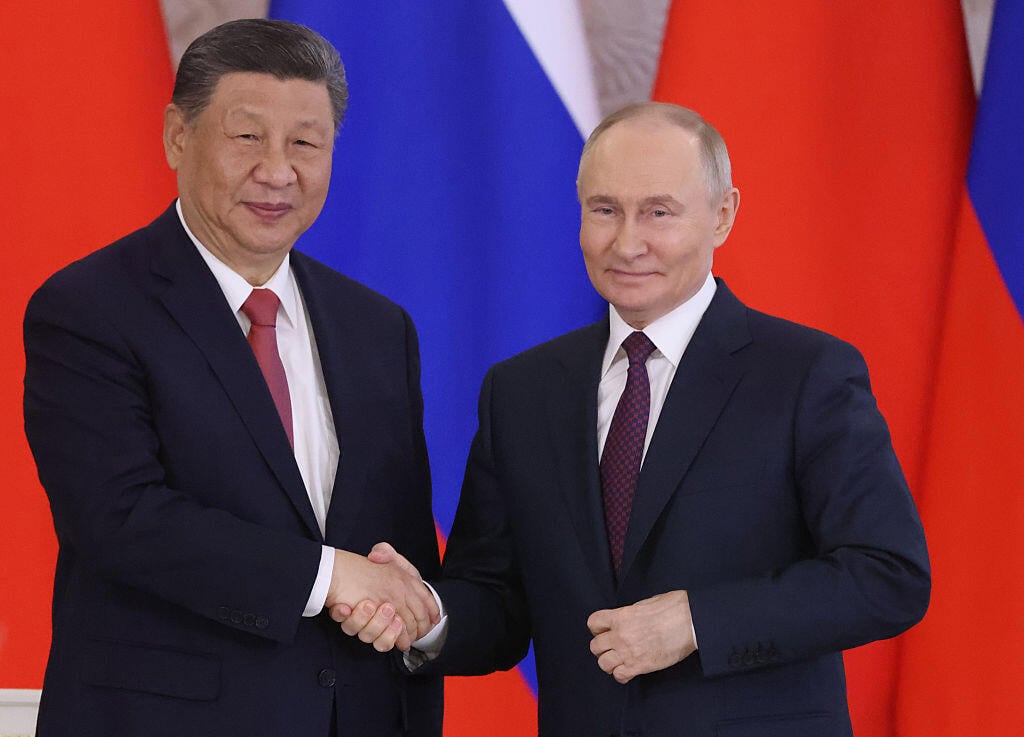
As Chinese President Xi Jinping and Russian President Vladimir Putin meet, visa relaxations by Beijing are expected to spur inbound traffic from Russia.
China’s decision to relax visa rules for Russian citizens—allowing stays of up to a month—is expected to fuel further growth in the aviation market between the two countries, which is already one of Russia’s strongest remaining international corridors.
From Sept. 15, holders of ordinary Russian passports will be able to enter China without a visa for up to 30 days for tourism, business or family visits. The policy will apply for an initial one-year period.
The announcement, made by China’s Foreign Affairs Ministry during Russian President Vladimir Putin’s visit to Beijing, underscores China’s aim of facilitating cross-border travel as part of what officials call the “comprehensive strategic partnership of coordination for the new era.”
Although most major international airlines suspended operations to Russia in February 2022 following the Western sanctions imposed after Moscow’s full-scale invasion of Ukraine, air travel between Russia and China has continued, with Sino-Russian relations strengthening.
The visa change is expected to drive further expansion in air traffic. OAG Schedules Analyser data shows 428,800 two-way seats between Russia and mainland China in September 2025—up 2.5% from the same month last year.
Although total capacity remains just under September 2019 levels—before the pandemic and the war in Ukraine—China has emerged as one of the few major international markets where Russia has been able to rebuild and expand service.
China is now Russia’s third-largest outbound market by seat capacity, behind Turkey and Uzbekistan. A total of 55 nonstop routes are scheduled this month, compared with 51 a year ago. Beijing-Moscow remains the largest city pair, followed by Moscow-Shanghai and Moscow-Guangzhou.
Capacity growth has been driven largely by Chinese carriers, which have significantly expanded their share of the market. In September 2019, they collectively accounted for 38% of Russia-China capacity, offering about 175,000 two-way seats. For September 2025 that share has climbed to 62% and 266,200 seats.
Aeroflot, while still the largest Russian operator, has cut its overall Russia-China capacity by 19% compared with pre-pandemic and pre-war levels. Nevertheless, it has expanded its footprint to 20 nonstop routes, up from seven in September 2019, adding new services from St. Petersburg and Kazan to Sanya.
Chinese airlines have also been active in adding thinner routes during 2025, especially to Russia’s Far East. Air China has launched new services from Beijing Capital to Irkutsk and Vladivostok, while China Southern added Harbin-Vladivostok.
The additional nonstop links are also driving Russia-China tourism growth. According to the Russian Economic Development Ministry, mutual visits totaled 2.7 million in 2024, with traffic rising 20% year on year in the first quarter of 2025. Russian tourists accounted for 1.5 million trips to China last year, with the island of Hainan a popular leisure destination. Conversely, Chinese travelers made 1.2 million trips to Russia, making them the largest source market for inbound tourism.
The introduction of visa-free travel is likely to spur demand. In the first half of 2025 alone, China recorded 13.64 million visa-free entries across all markets, up 54% year on year. With Russians now able to stay up to 30 days without a visa, airlines may see further demand for both leisure and VFR travel.
Alongside the Russia-China expansion, Russia may soon gain new air links in South Asia. On Sept. 2, the country’s Transport Ministry said it is studying the launch of nonstop flights to Pakistan. Aeroflot previously served Karachi, and Pakistan International Airlines listed Moscow Sheremetyevo among its destinations, but there have been no nonstop connections for more than 15 years.