JetBlue Airways, Level and Etihad are each adding long-haul links over the coming weeks, connecting points in the Americas with destinations in Europe and the Middle East.
Boston-Milan Malpensa
JetBlue Airways is expanding its transatlantic network from Boston with the launch of daily seasonal service to Milan Malpensa, adding competition to a market that only regained nonstop service last year.
Flights between Boston Logan International Airport (BOS) and Milan Malpensa Airport (MXP) will begin on May 11, operated daily with Airbus A321neo aircraft. The move will make JetBlue the second carrier in the market alongside Delta Air Lines and further expands the airline’s European footprint from its largest focus city.
U.S. Transportation Department data shows that Alitalia previously served the Boston-Milan market nonstop before ending flights in March 2008. The carrier’s LCC subsidiary Air One briefly took over the route, operating 5X-weekly flights in summer 2008 before suspending service that October. The city pair then went unserved for more than 15 years until Delta launched its seasonal service in May 2025.
According to OAG Schedules Analyser data, JetBlue will offer almost 2,000 two-way weekly seats once flights commence. Delta will also resume its 4X-weekly service on May 17 using A330-300s. Combined, the two airlines will provide nearly 4,200 two-way weekly seats, with JetBlue accounting for about 46% of capacity.
Underlying demand supports JetBlue’s entry. Sabre Market Intelligence data indicates that O&D traffic between Boston and Milan totaled 70,400 two-way passengers in the 12 months to June 2025, up from 64,500 in the previous 12 months. Only 7% of passengers traveled nonstop during that period, reflecting the limited duration of Delta’s initial service, while Paris, Munich and Zurich were the largest one-stop connecting points.
JetBlue is betting that a combination of point-to-point demand and feed from its broader Boston network can sustain daily narrowbody service. The airline serves 77 nonstop destinations from BOS and has steadily built a transatlantic portfolio that now spans nine European points for summer 2026, including London Heathrow, London Gatwick, Paris Charles de Gaulle, Amsterdam, Dublin, Edinburgh, Madrid, Barcelona and Milan.
In summer 2026, JetBlue plans to offer 238,800 departure seats from Boston on transatlantic routes, up from 188,948 in summer 2025. It will account for 9.4% of all BOS-Europe seats, behind Delta at 25%. Overall at BOS, JetBlue will be the second-largest carrier by capacity this summer with a 24.6% share, compared with Delta’s 27.3%.
Barcelona-Lima
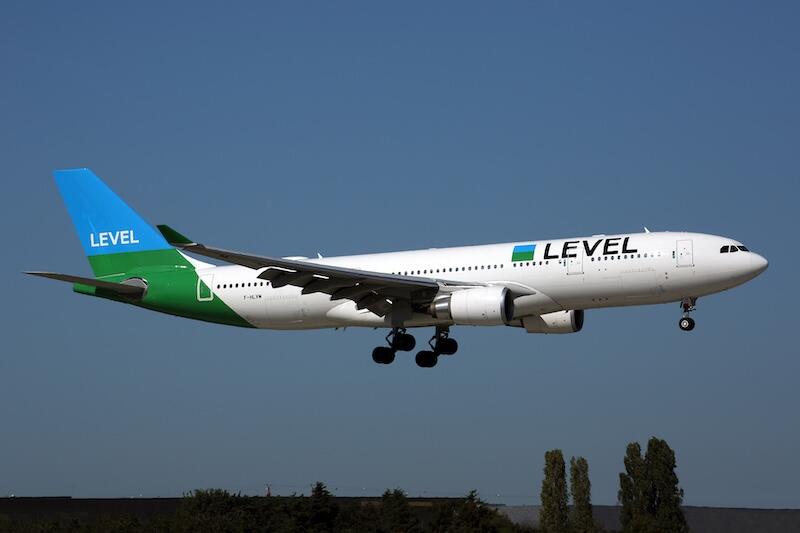
Level is expanding its long-haul footprint from Barcelona with the launch of nonstop service to Lima, becoming the only airline to connect the cities nonstop.
The Barcelona-based carrier will begin 3X-weekly flights between Barcelona El Prat Airport and Lima’s Jorge Chavez International Airport on June 3. Operated on Wednesdays, Fridays and Sundays with Airbus A330-200 aircraft, the route will add 1,866 two-way weekly seats.
The Spain-Peru market is currently focused on Madrid-Lima, where Iberia, Air Europa, LATAM Airlines Group and Plus Ultra Líneas Aéreas collectively provide about 22,300 two-way weekly seats. Level’s sister carrier Iberia leads the market with a 44% capacity share, operating double-daily Airbus A350 flights, while Air Europa and LATAM deploy Boeing 787s and Plus Ultra operates A330-200s.
Level’s entry will give it roughly an 8% share of the overall Spain-Peru market and introduce nonstop competition from a second Spanish gateway.
More News And Analysis From Routes Americas 2026
Sabre Market Intelligence data shows that Spain-Peru O&D traffic reached 601,200 two-way passengers in the 12 months to June 2025, up 12.1% year on year. While Madrid-Lima accounted for about 64% of traffic, Barcelona-Lima was the second-largest city pair, generating approximately 86,800 two-way passengers despite the absence of nonstop service.
That volume suggests a material base of O&D demand that has been connecting primarily via Madrid. The introduction of direct service is likely to stimulate incremental traffic, particularly in the VFR segment, which is structurally strong between Spain and Peru due to deep historical and cultural ties.
Level is also leveraging partnership feed on both ends of the route. In Lima, onward connectivity to 17 domestic Peruvian destinations strengthens the value proposition for inbound European leisure traffic. In Barcelona, connections across more than 75 destinations in Europe, North Africa and the Middle East via Vueling enhance the route’s catchment beyond Catalonia.
The timing aligns with infrastructure expansion in Peru. Lima’s new 210,000-m2 (2,260,420-ft.2) terminal, designed to handle up to 30 million passengers annually initially and rising to 40 million by decade’s end, significantly increases capacity. A second runway, opened in April 2023, has further improved operational resilience.
Abu Dhabi-Charlotte
Etihad Airways will begin 4X-weekly Boeing 787-9 flights between Abu Dhabi’s Zayed International Airport and Charlotte Douglas International Airport (CLT) on March 20, increasing the airline’s network to six U.S. destinations in the summer 2026 schedule.
Charlotte will join New York John F. Kennedy, Chicago O’Hare, Washington Dulles, Boston, Los Angeles and Atlanta, which launched in July 2025. The airline also serves Toronto Pearson in Canada, while flights to Calgary will begin in November.
The latest move is notable not only because it establishes Etihad’s first presence in the southeastern U.S., but also because it positions the carrier in one of the country’s fastest-growing metropolitan regions.
From a network standpoint, the choice of Charlotte reflects both local demand and the strength of the wider southeastern catchment. CLT is a major hub for American Airlines, anchoring one of the largest domestic networks in the U.S., although Etihad no longer maintains a codeshare relationship with the carrier following the partnership’s termination in 2018.
Without a commercial tie-up, Etihad will primarily rely on local traffic and its own connecting flows over Abu Dhabi. The carrier has been increasingly focused on flows between North America and the Indian subcontinent, the Middle East and Asia. Charlotte provides access to a large catchment in North and South Carolina and surrounding states, markets that currently require connections—often via U.S. hubs or European gateways—for travel to the Gulf and beyond.
According to OAG Schedules Analyser data, the new service will be Charlotte’s only nonstop link to the Middle East. While the airport has strengthened its transatlantic portfolio in recent years—serving eight European destinations, including a new Athens route launched by American Airlines in summer 2025—it has not yet secured other direct service to the Gulf region. Etihad’s entry therefore fills a geographic gap in the airport’s long-haul map.
The Charlotte launch also forms part of a broader ramp-up in Etihad’s North American capacity. The airline plans to offer approximately 1.09 million two-way seats on North American routes in summer 2026, up from 904,000 in summer 2025 and 785,000 in summer 2024.

Related Content