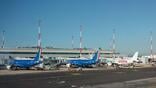
With U.S. routes at record levels and airlines adding fresh capacity, Rome Fiumicino Airport (FCO) is turning its attention to Asia and beyond, pursuing new links to the biggest destinations not yet directly connected as part of a broader strategy to expand its intercontinental reach.
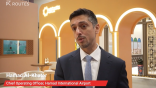
“Our strategy is focused on consolidating Fiumicino’s role as a leader in central-southern Europe for both long-haul and short/medium-haul connectivity,” says Federico Scriboni, aviation business development director of Aeroporti di Roma.
North America remains the cornerstone, with a record 21 U.S. destinations served in summer 2025. But Asia is viewed as the next growth market, with unserved destinations such as Manila, Colombo, Osaka, Kuala Lumpur and Mumbai at the top of the list. Africa and South America are also firmly in the airport’s sights, with Johannesburg, Cape Town, Lima and Santiago de Chile singled out as priorities.
“At the same time, short and medium-haul markets—above all, Europe—remain central to our development, representing the biggest segments in terms of volumes and connectivity,” Scriboni adds.
More News And Analysis From Routes World 2025
Hub carrier ITA Airways will be also a strategic driver of this expansion. Following Lufthansa Group’s acquisition of a 41% stake, ITA is in the process of integrating into Star Alliance, with full membership expected in early 2026.
FCO closed 2024 with 49.2 million passengers, its highest-ever total and an increase from the pre-pandemic peak of 43.5 million. Growth this year is being further driven by new routes across long-haul markets. Among them, Delta Air Lines and United Airlines added Minneapolis and Denver; Cathay Pacific returned with service from Hong Kong; ITA launched Bangkok; and Oman Air began flying from Muscat. Additionally, American Airlines added Miami, while Norse Atlantic began Los Angeles service.
However, Aeroporti di Roma acknowledged that fleet shortages and geopolitical instability continue to constrain airline expansion, particularly in long-haul markets. But Scriboni adds: “The opportunities are broad. Rome Fiumicino remains confident about the future, well positioned to sustain growth and to strengthen its role as the major intercontinental gateway in central-southern Europe.”

Related Content