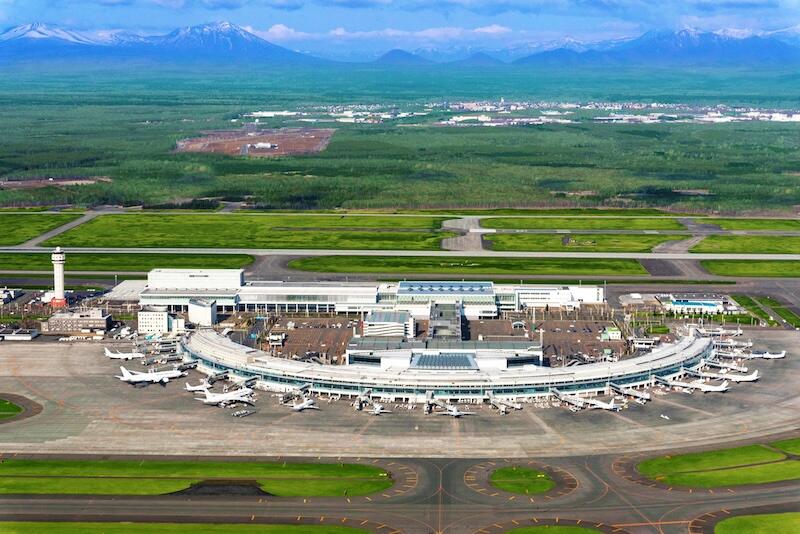
New Chitose Airport.
HONG KONG—Japan’s Hokkaido Airports is focusing on Southeast Asia while laying the groundwork for long-haul expansion to North America, the Middle East and Europe as it pursues a strategy to position New Chitose Airport (CTS) as a growing international gateway.
Kenjiro Karahashi, managing director for aviation business development at Hokkaido Airports, says the return of Qantas to CTS later this year is a major win that will restore direct Sydney-Sapporo service after a six-year hiatus.
The route will tap into strong demand from Australia, where Hokkaido’s winter appeal has long attracted ski travelers. According to Karahashi, Australia–New Chitose O&D traffic grew by 148% year over year in fiscal 2024, with a 180% spike in February alone.
At the same time, CTS has seen rapid growth from Southeast Asia, where passenger traffic has surged 155% in the past 12 months. This growth has been matched by new operational capacity, with weekly flights increasing 162% year on year—equivalent to eight additional cities and more than 100 extra flights—following coordinated efforts with ground handlers, fuel suppliers and government agencies to resolve bottlenecks.
More News And Analysis From Routes World 2025
Karahashi says Hokkaido Airports intends to consolidate its East Asian network and build more depth in Southeast Asia while laying foundations for longer-haul connectivity. “We are now focusing on expanding to Southeast Asia further, with the future plans to extend routes to the Middle East and North America,” he tells Routes.
Europe remains on the radar as well—although Karahashi acknowledged that the closure of Russian airspace has curtailed some direct services, such as Finnair’s suspended Helsinki–Sapporo route. He said Hokkaido remains “optimistic about the recovery of demand from Europe” and is exploring indirect solutions through East Asian and Middle Eastern hubs until nonstop services are viable again.
In the short term, the airport is prioritizing underserved Southeast Asian markets such as Malaysia and Vietnam, with an eye to converting seasonal winter operations into year-round services. Karahashi adds that demand is also rising in Hokkaido’s summer “green season,” which is increasingly drawing East Asian visitors who once associated the island mainly with winter sports.