Mainland China’s aviation market entered the second quarter (Q2) of 2026 in a period of stabilization, with domestic capacity plateauing at record levels while international flying continues a gradual recovery shaped by geopolitics, fuel costs and shifting travel demand.
According to OAG Schedules Analyser data, domestic capacity in China reached about 835 million seats in 2025, almost unchanged from 2024, confirming that the domestic market—already the world’s second largest after the U.S.—has largely stabilized after the post-pandemic rebound.
International capacity, however, continued to recover, rising to about 86.3 million departure seats in 2025, up from 75.9 million in 2024 and nearly double the level recorded in 2023, although still below the roughly 103 million seats offered in 2019.
Growth has continued into 2026. In Q2 2026, domestic capacity reached about 219 million seats, up from about 204 million a year earlier, while international capacity rose to about 22.8 million seats from 21 million in Q2 2025.
Despite the recovery, international capacity growth is being reshaped by geopolitical tensions and shifting demand patterns. One of the most notable changes has been a sharp decline in China-Japan air service. Two-way capacity between the countries fell to about 3.2 million seats in Q2 2026, down from 6.6 million a year earlier, as Chinese airlines significantly reduced service. China Eastern Airlines’ capacity is down 47%, Air China by 61% and China Southern Airlines by 61%.
More News And Analysis From Routes Asia 2026
Carriers have redeployed capacity to other markets across Asia instead. South Korea is now China’s largest international market by capacity, overtaking Japan. Capacity has also grown strongly to Southeast Asia, particularly Thailand, Malaysia, Singapore and Vietnam, reflecting both leisure demand and business travel recovery across the region.
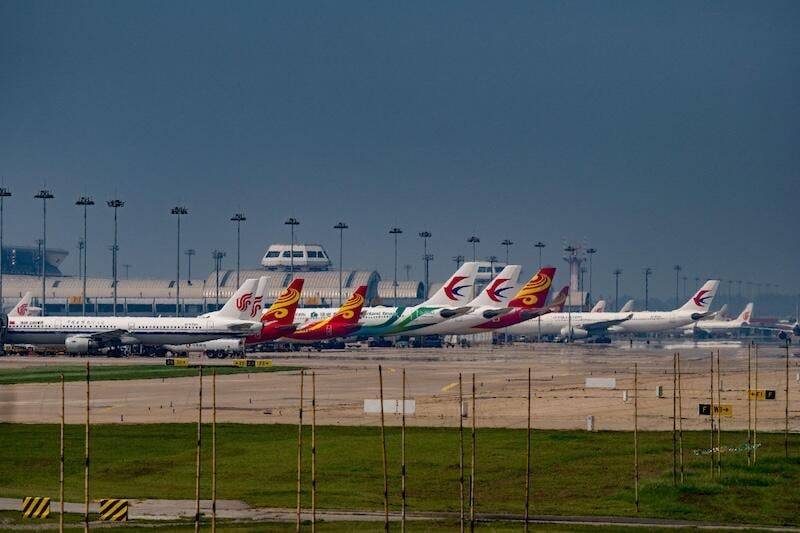
At the airline level, the market remains dominated by China Southern, China Eastern and Air China, which continue to be the three largest airline groups in the Chinese market by capacity. Major hubs continue to be Guangzhou, Shanghai Pudong and Beijing Capital, which are still the largest airports by seat capacity.
However, the industry’s financial recovery remains fragile despite strong traffic volumes. According to a report from HSBC, surging jet fuel prices—driven by disruption in global oil markets due to the Middle East conflict—are expected to significantly compress airline margins, particularly as Chinese airlines are often unable to fully pass higher fuel costs onto passengers. The report also warned that higher fares could push travelers toward China’s extensive high-speed rail network, limiting airlines’ pricing power and profitability.
As a result, while traffic and capacity continue to recover, profitability across the sector remains under pressure, with analysts expecting losses to continue into 2026 before a potential return to profitability in 2027.

Related Content