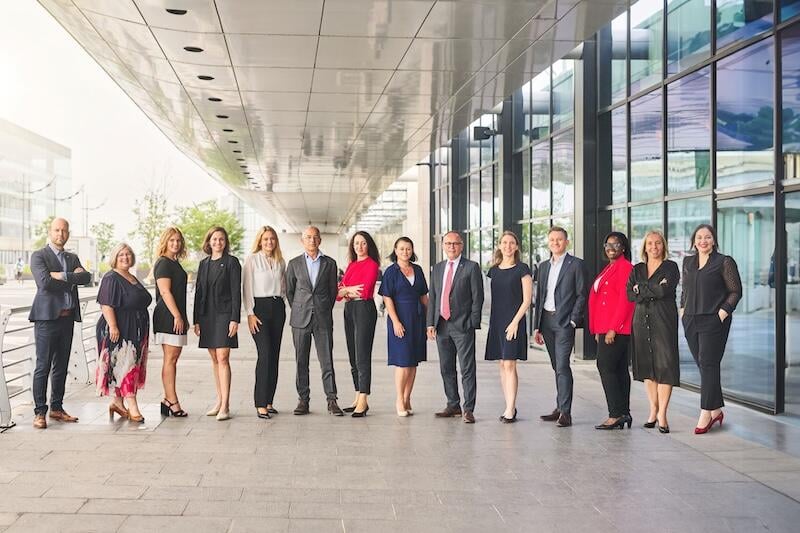
Brussels Airport’s aviation development team.
HONG KONG—After adding eight new airlines and 15 passenger destinations in the past two years, Brussels Airport (BRU) is focusing on unserved long-haul markets as it prepares for its next phase of growth through a €3.5 billion ($4.1 billion) investment plan.
Léon Verhallen, director of aviation development at Brussels Airport Company, says recent additions have strengthened both intercontinental and European connectivity. That expansion included the arrival of Singapore Airlines, Juneyao Air, Thai Airways, Widerøe and Norwegian in 2024, followed by Cathay Pacific, Transavia France and SmartWings this year.
On the network side, new routes have linked Brussels to Singapore, Nairobi, Shanghai, Bangkok, Atlanta and Hong Kong, as well as European points such as Bergen, Tromsø, Krakow, Bari and Bordeaux.
Looking ahead, the airport is targeting unserved global gateways, particularly in the U.S., India and Latin America. “Several major global gateways remain unserved, including Delhi, Sao Paulo, Riyadh, Boston, Miami, Philadelphia, Houston and destinations on the U.S. West Coast,” Verhallen tells Routes.
More News And Analysis From Routes World 2025
He adds that there are also opportunities to further strengthen Brussels’ existing Sub-Saharan African network in cooperation with home carrier Brussels Airlines. Within Europe, BRU sees potential in markets such as Italy, Poland and Romania, where demand for direct connectivity to the Belgian capital remains underserved.
However, Verhallen acknowledges that supply chain issues in the aircraft and engine industry continue to weigh on airline growth plans. “While airlines are eager to seize growth opportunities, they are often confronted with delayed aircraft deliveries or unplanned maintenance, which can slow the pace of network expansion,” he says.
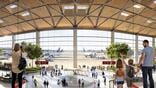
The route ambitions come as BRU embarks on its most significant infrastructure investment in decades. “One of the key opportunities ahead is our recently launched HUB3.0 program, the largest investment at Brussels Airport in the past 30 years,” Verhallen says.
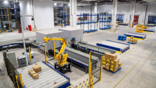
The program includes a new arrivals and departures terminal, an intermodal hub and a new hotel, alongside projects such as an expanded baggage system, additional passenger capacity at Pier B and the rollout of new self bag drop units.
Preparatory work will begin in fall 2025, with site demolition set for 2026. Construction of the intermodal hub, terminal and hotel is slated to start in early 2027, with completion expected in 2032.