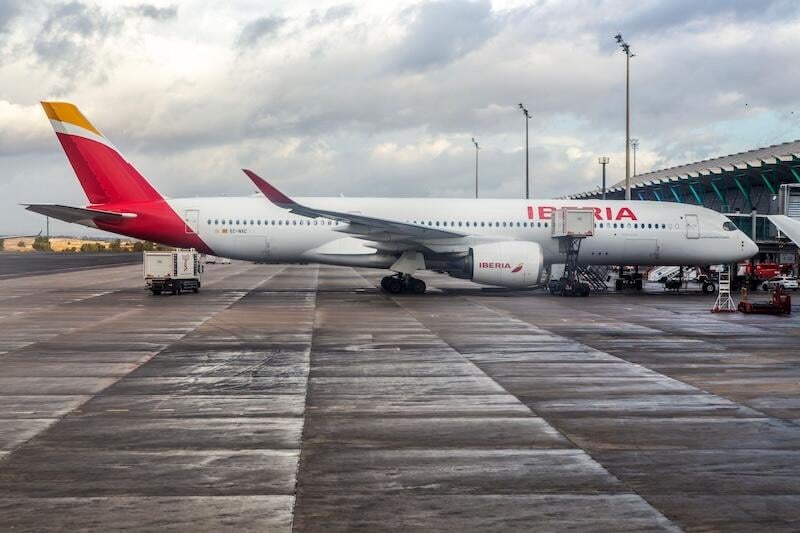
Spanish flag carrier Iberia will suspend flights to Cuba in June, citing the country’s “exceptional situation” in which jet fuel has run out and the Caribbean island faces a severe energy crisis.
Iberia, which operates 3X-weekly flights between Madrid-Barajas Airport (MAD) and Havana’s José Martí International Airport (HVN), will reduce service on the route to 2X-weekly in May. The carrier will suspend the route in June at least until November.
Iberia said it will continue to sell MAD-HVN tickets for flights from November onward and hopes to restart the route in November “provided that conditions allow it.”
Iberia cutting service to HVN is another blow for Cuban tourism, which has plummeted since February. Multiple Canadian airlines dropped service to Cuba in February—cutting off a major source of the country’s tourism business—and other airlines from around the world have been reducing or suspending flights to the island.
Following a Jan. 3 U.S. military raid in Caracas, Venezuela, that extracted Nicolás Maduro—the former Venezuelan president is now in prison in the U.S. awaiting a criminal trial—new leadership in the country agreed to U.S. President Donald Trump’s demand that Venezuela stop exporting fuel to Cuba, eliminating the country’s main source of energy. Trump has also threatened to penalize any other country that ships oil to Cuba with tariffs and sanctions.
HVN ran out of jet fuel in February and Iberia is making refueling stops in Santo Domingo, Dominican Republic, in order to serve the MAD-HVN route. Beyond the lack of jet fuel, Cuba is experiencing widespread electricity blackouts. The situation has “significantly affected demand” to Cuba, Iberia said.
Iberia said passengers will still be able to travel to HVN by transferring to Copa Airlines codeshare flights from Panama City.
Based on current schedules, three carriers are slated to continue flights on the MAD-HVN route through the summer. According to OAG Schedules Analyzer data, Iberia is currently operating 882 two-way weekly seats on the route. In total, four airlines are currently offering 2,867 weekly two-way seats on the MAD-HVN route, down from 9,992 two-way weekly seats in January.
Air China operates fifth-freedom service between MAD-HVN, an extension of flights between Beijing and MAD. The carrier currently offers 586 two-way weekly seats on the route, according to OAG data. Air Europa operates 967 two-way weekly seats between MAD and HVN, while Spanish charter carrier World2Fly offers 432 two-way weekly seats on the route.
Even with Iberia dropping service, combined scheduled two-way weekly seats on the route by the three remaining airlines are planned to rise to 5,398 in June. It is highly uncertain if that level of service between MAD and HVN is realistic if the fuel blockade continues, especially since carriers are forced to make refueling stops to make flying the route possible.
Generally, air service to the island has decreased in recent weeks, but there are still 39,999 total two-way weekly seats being operated to and from HVN, according to OAG data. That figure is nearly cut in half from 74,888 two-way weekly seats operated to and from HVN for the week of April 21, 2025.
Canadian airlines Air Canada, WestJet and Air Transat, each of which served multiple Cuban destinations and accounted for a sizable share of the island’s international traffic, all suspended service to the country indefinitely in February.
The Cuban government has confirmed media reports that U.S. officials traveled to the island for talks earlier in April, but there has been no public indication from the Trump administration that the fuel blockade will be eased.
The governments of Brazil, Mexico and Spain issued a joint statement on April 18 expressing “deep concern over the serious humanitarian crisis facing the Cuban people” and called for “the adoption of the measures necessary to alleviate this situation.” The countries, which did not cite the U.S. by name, said they would coordinate a “humanitarian response to relieve the suffering of the Cuban people.”

Related Content