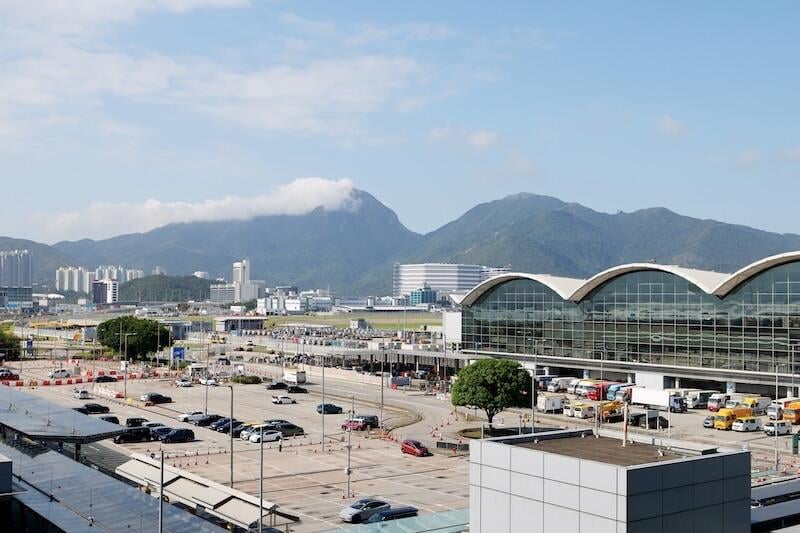
Hong Kong International Airport.
Hong Kong International Airport (HKG) is targeting new connections to Central Asia, the Middle East and Africa as its expanded runway capacity creates room for network development.
Cathay Pacific’s planned Almaty service represents an initial step in strengthening passenger connectivity with Central Asia, said Ricky Chong, Airport Authority Hong Kong route development general manager. The airline plans to launch the route on Jan. 9, 2027, operating 3X-weekly.
“Central Asia is currently a ‘blue ocean’ market for HKG,” Chong told Routes. The airport sees growing economic ties and trade flows as supporting services to emerging markets, alongside further expansion in established regions.
“For mature markets, our focus is on expanding connectivity with the Chinese mainland, Southeast Asia, South Asia, Europe and North America,” Chong added. Those markets contribute business, leisure, VFR and cargo demand, as well as connecting passengers through Hong Kong.
More News And Analysis From Routes World 2026
Recent network additions include Delta Air Lines’ daily Los Angeles service, launched in June 2026. Greater Bay Airlines also commenced Surabaya, Indonesia, flights in September, initially operating 2X-weekly, with plans to increase to 4X-weekly.
To support airline business cases, the airport emphasizes access to the Greater Bay Area through its cross-border ferry and ground transport connections. That network broadens the potential passenger catchment beyond Hong Kong’s local population.
“Supported by [HKG's] extensive intermodal connectivity network, including cross-boundary ferry and land transport services, airlines are able to access a catchment area that extends well beyond Hong Kong's local population, thereby enhancing route demand and network viability,” Chong said.
Cargo is another component of the airport’s pitch, particularly for airlines considering long-haul or emerging-market services. Chong said proximity to manufacturing and e-commerce centers in the Greater Bay Area creates opportunities to supplement passenger revenue with belly freight.
Additionally, the commissioning of Hong Kong’s three-runway system in 2024 provides the infrastructure foundation for further expansion. Chong said the system increases the airport’s long-term capacity by about 50%, enabling it to accommodate up to 120 million passengers and 10 million metric tons of cargo annually.
“This additional capacity strengthens our ability to support growth not only in mature markets and on traditional trunk routes, but also in emerging markets,” he said.

Related Content