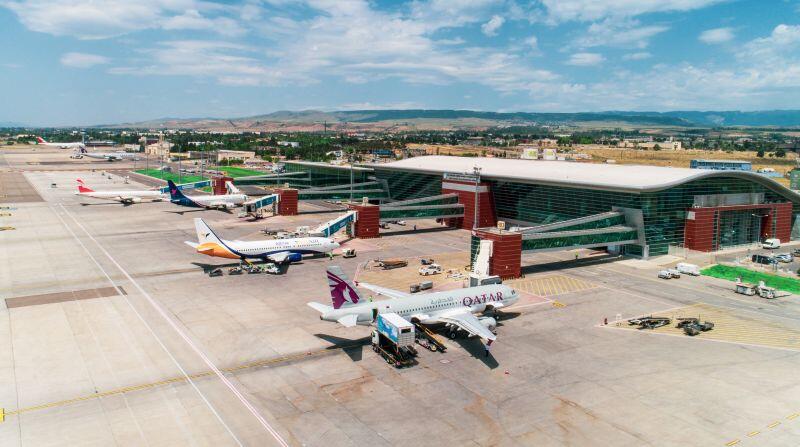
RIMINI, Italy—Georgia is pushing ahead with plans to grow its role as a crossroads for air travel between Europe and Asia, supported by new airline service and infrastructure expansion in Tbilisi.
The country has seen several new airline entrants and route launches over the past 18 months, while authorities are pursuing long-haul growth and major airport expansion projects to accommodate rising demand.
“Georgia has continued to strengthen its position as an emerging aviation and tourism destination at the crossroads of Europe and Asia,” Salome Jaoshvili, head of the commercial department at United Airports of Georgia told Routes.
The momentum has been driven by new entrants including British Airways, Edelweiss, Air Serbia, easyJet and Transavia France, all of which launched service during 2025. Norwegian is also preparing to enter the Georgian market during 2026 with flights from Copenhagen.
“These routes have already demonstrated strong market performance, with potential for further expansion,” Jaoshvili said.
A key priority for Georgian aviation authorities is strengthening connectivity with Asia, particularly China, as the country seeks to diversify inbound tourism and build broader long-haul links.
“The introduction of a visa-free regime for Chinese citizens in 2023, combined with ongoing efforts to develop direct air connectivity, has created a strong foundation for unlocking new inbound tourism flows,” Jaoshvili added.
That strategy is already beginning to translate into new service. China Eastern Airlines is scheduled to launch 3X-weekly Shanghai Pudong-Tbilisi flights on July 15 using Airbus A330-200 aircraft, adding to existing Chinese connectivity from Air China and China Southern Airlines via Urumqi.
More News And Analysis From Routes Europe 2026
Georgia is also targeting growth opportunities in India, Japan and the Middle East, while continuing to strengthen links with underserved European markets.
“Priority focus is placed on Europe, particularly on identifying unserved routes or underserved high passenger traffic destinations, where there is clear demand but limited or no direct connectivity,” Jaoshvili said.
Recent additions include Eurowings flights from Cologne/Bonn and FlyArystan routes linking Batumi with Aktau and Astana in Kazakhstan.
The growth in traffic is now driving infrastructure investment. Tbilisi International Airport (TBS) handled more than 5.4 million passengers during 2025, up 13.7% year-on-year, and the airport is already operating at maximum capacity.
In January, Georgia’s government and operator TAV Airports signed an agreement to invest approximately $150 million in the next phase of TBS’s expansion, while extending the operator’s concession through the end of 2031.
The project will increase the airport’s annual capacity to 10 million passengers and add 19,500 m² to the terminal, alongside additional aircraft stands, aerobridges and commercial space. Completion is targeted for 2028.
Georgia is also planning a second major gateway near Tbilisi. Vaziani International Airport, scheduled to open by the end of 2031, is expected to eventually handle up to 20 million passengers annually.

Related Content