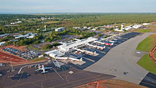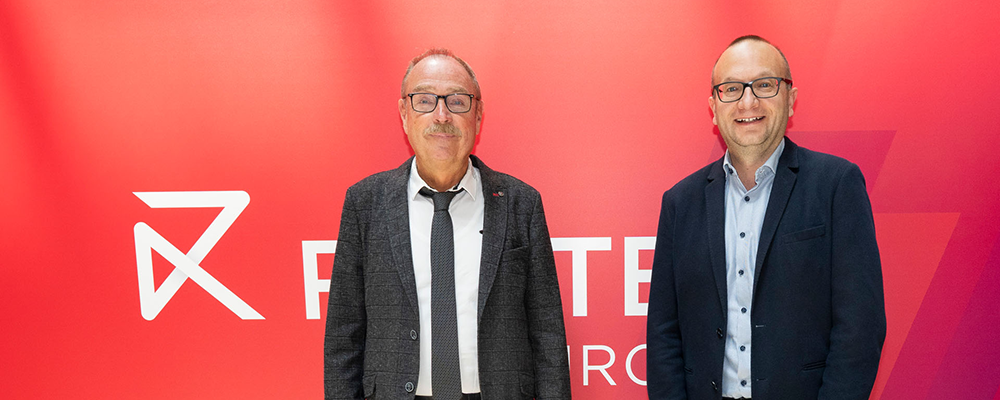
Münster/Osnabrück Airport’s Head of Aviation Business Development, Mathias Richter, and Aviation Business Development Manager, Detlef Döbberthin, explore core target markets for regional growth and the strategic airline partnerships driving success.
What is some recent route success at Münster/Osnabrück Airport?
LEAV Aviation has based an aircraft at Münster/Osnabrück Airport (FMO) since the end of April. The young German airline deliberately chose FMO as its base due to its strong catchment area and 24/7 opening hours, which allow for optimal and flexible flight planning. Routes to Heraklion, Fuerteventura and Rhodes have been launched; the latter two destinations are new additions to FMO’s schedule. Flights to Mallorca will be introduced in autumn.
How have new airline partnerships supported your air connectivity?
Ryanair returned to FMO in 2018. First under the Laudamotion brand and then, two years later, under the Ryanair brand. As part of a long-term partnership, the carrier has grown continuously since then and now serves six routes, four of which are year-round.
What makes FMO attractive to airlines?
FMO can offer airlines two main USPs. Firstly, the airport's unrestricted 24/7 opening times are rare in Germany. This gives airlines full operational flexibility and increased aircraft utilisation. Night-time flights are also very popular with leisure travellers, as they arrive very early at the destination and depart very late from the destination, allowing them to spend more time at their holiday destination.
Secondly, there is our catchment area. There are more than 3.4 million inhabitants in the core catchment area, and 11 million inhabitants within 90 minutes' driving time. Our catchment area covers not only north-west Germany, but also the east of the Netherlands. As the Dutch border is less than an hour's drive away, around 15% of our passengers are Dutch. Due to the planned increase in air passenger tax for medium-haul flights from around €30 to €48 (+60%) in the Netherlands in 2027, FMO could be an attractive alternative.
Which markets are you currently targeting and how will these support your strategic goals?
As an airport, we are focusing on expanding our destination portfolio, with numerous unserved route opportunities across all geographic markets. Key opportunities certainly lie in southern Europe, where there is strong demand for leisure travel.
Some of the Canary and Greek islands have been served from Münster/Osnabrück for decades, but are currently not served. Additionally, e.g. Faro, Thessaloniki and Southern Italy would complement our portfolio perfectly. In Central and Eastern Europe as well as the Eastern Mediterranean, we see strong VFR demand in relation to our large and diverse international population.
How does Routes 360 support your strategy?
Routes 360 provides smaller airports like Münster/Osnabrück with ideal support for their digital B2B marketing activities. Through their various channels, we, as the airport, can effectively promote our unique selling points, share updates, and advertise route opportunities directly to the route development community.
What has been the most beneficial part of attending Routes Europe 2026?
There are many reasons to attend Routes Europe 2026. Firstly, we will meet with several of our existing airlines to discuss current route performance and exchange initial ideas for 2027. Secondly, we will meet with airlines that we have met at route development conferences in recent years, to continue discussions about potential route projects and their current status.
Last but not least, networking within the route development community is a very important part of Routes Europe. Overall, it is a highly productive and efficient event for catching up with industry partners.
Routes Europe 2026 is taking place in Rimini, Italy, bringing together a qualified audience of route development decision-makers from across the region and beyond.
Related Content