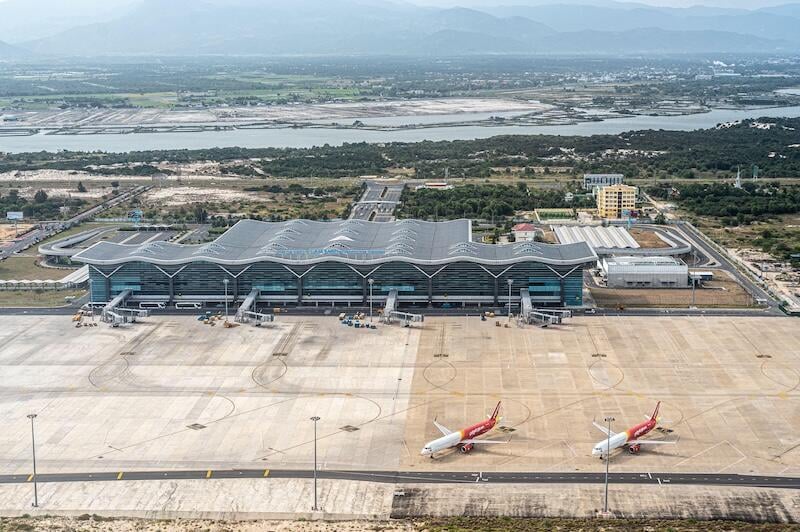
Cam Ranh International Airport, Vietnam.
Cam Ranh International Terminal (CRTC) is targeting a broader mix of international markets as it positions for the next phase of growth.
The Vietnam-based operator of Cam Ranh International Airport’s (CXR) Terminal 2 in Nha Trang, Vietnam, says its near-term focus is on rebuilding capacity from China, expanding connectivity with Russia and the CIS, and developing new long-haul opportunities in markets such as Japan, Australia and India.
These efforts are being supported by an expanded incentive framework and closer alignment with the Khanh Hoa Tourism Development Strategy 2026-2030, which aims to attract 20.5 million visitors by the end of the decade—about half of them from international markets.
“Our roadmap for sustainable growth is built upon a dual approach: fortifying established strongholds while aggressively pursuing high-potential emerging markets through incentive frameworks and close collaboration with local authorities,” says Pham Thanh Son, general director of CRTC.
More News And Analysis From Routes Asia 2026
To support future demand, the airport plans to launch Phase 2 of its terminal expansion in 2026, increasing capacity to 8 million passengers annually by 2030 and providing additional headroom for airline growth.
The move builds on recent momentum. In 2025, CRTC added 13 new airlines, nearly doubling the number from a year earlier, and introduced 14 new city links. The expansion generated about 320,000 incremental annual passengers and strengthened connectivity across Northeast Asia, Southeast Asia and Central Asia. Overall, international traffic reached 4.69 million passengers in 2025, up 7% year on year.
Early 2026 has already seen further network gains, including new services from Bangkok and Phnom Penh, while the airport continues to leverage partnerships to stimulate demand and improve route performance. A Singapore-Cam Ranh service operated by Scoot, for example, has seen load factors rise significantly following joint marketing initiatives, prompting a frequency increase.
Looking ahead, Son says CRTC will continue refining its incentive programs, expanding digital marketing—particularly in China—and working with airline partners to balance network growth with long-term route sustainability.

Related Content