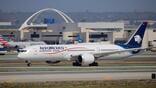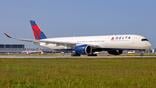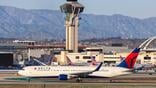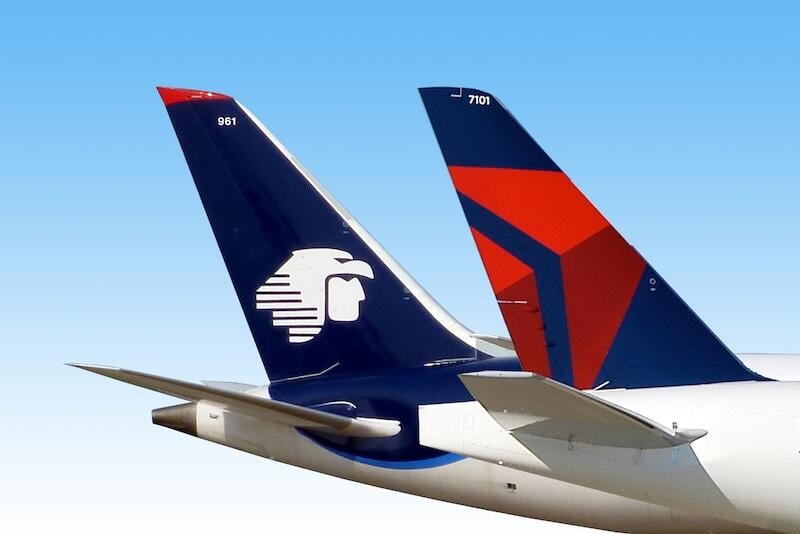
Delta Air Lines and Aeromexico can continue coordinating flights between the U.S. and Mexico after a federal appeals court overturned a U.S. Transportation Department (DOT) order ending their antitrust-immunized joint venture (JV).
The decision, issued on Aug. 20, represents a significant win for the SkyTeam partners and overturns a September 2025 order that claimed the partnership distorted competition in the U.S.-Mexico market.
Although the court did not determine that the JV is pro-competitive or reject DOT’s concerns about conditions at Mexico City’s Benito Juárez International Airport (MEX), it found that the department’s analysis was deficient and applied its standards inconsistently.
In an opinion by Hon. Elizabeth Branch, the 11th Circuit Court of Appeals judge writes the DOT “did not reasonably explain why it conducted a far more limited market analysis in this case than it has always done in the past.” The court had previously stayed the DOT order while it considered the airlines’ legal challenge.
Grupo Aeromexico welcomed the latest decision, saying that it will enable the airlines to continue “providing enhanced connectivity, a broader network, more convenient service options and increased competition for customers traveling between Mexico and the United States.”
A spokesperson for Delta added: “For nearly a decade, Delta’s joint cooperation agreement with Aeromexico has provided greater choice, more seamless travel and increased connectivity for consumers while supporting U.S. jobs and economic growth. We appreciate the 11th Circuit’s careful review and remain focused on ensuring our customers, employees and communities continue to benefit from this longstanding partnership.”
The appeals court said the DOT conducted a broad assessment of the U.S.-Mexico market and 1,687 individual city-pair markets when it approved the JV in 2016. But when the agency sought to withdraw approval nine years later, it relied primarily on competitive and regulatory conditions at MEX without updating its country-level or city-pair analysis.
The court added that the DOT’s final order did not provide updated figures for airline market shares, forecast how competition would change if the JV continued, or conduct a city-pair share-shift analysis.
“Accordingly, the final order was arbitrary and capricious because DOT drastically departed from its uniform practice of analyzing country-pairs and city-pairs without a reasonable explanation of why such analyses were not necessary in this case,” the court said.
It also found that the DOT acted inconsistently by making Open Skies compliance a condition for maintaining antitrust immunity in Mexico while approving similar partnerships serving Tokyo Haneda despite restrictions there.
“Even if DOT is correct that Mexico, unlike Japan, has not productively collaborated with the United States on aviation issues, DOT made Open Skies a necessary step for approval of this joint venture while it was not necessary for the two similar joint ventures in Japan,” the court said. “Because DOT did not treat like cases alike when it held the petitioners and the U.S.-Japan joint venture applicants to different standards for approval, the final order was arbitrary and capricious.”
In its September 2025 ruling, the DOT had argued that the unwinding of the JV was necessary because of “ongoing anticompetitive effects in U.S.-Mexico City markets that provide an unfair advantage to Delta and Aeromexico as two predominant competitors and create unacceptable actual and potential harm for stakeholders, including consumers.”
The agency cited a series of interventions by Mexico’s government, including slot confiscations, restrictions on all-cargo operations at MEX, and successive reductions in allowable aircraft movements that the DOT said were imposed without clear justification.
Following the Aug. 20 judgement, a spokesperson for the DOT said: “The department is committed to protecting competition and achieving the best outcomes for the traveling public. Even as we review the Court’s decision and consider all available legal options, we will continue to work with the Mexican government to ensure it fulfills its obligations and treats all U.S. carriers fairly. We are encouraged by recent conversations with the government of Mexico and look forward to Mexico’s full compliance with the agreement.”
OAG Schedules Analyser data for August 2026 shows Delta and Aeromexico are offering a combined 731,335 scheduled seats between the U.S. and Mexico, accounting for 20.4% of capacity. Treated as a single entity, the partnership ranks second behind Mexican ULCC Volaris, which holds 24.5% of the market. American Airlines accounts for 18.5%, followed by United Airlines at 16.3%. Aeromexico individually holds 12.3% and Delta 8.1%.
The Aeromexico-Delta partnership, launched in 2017, allowed the carriers to coordinate scheduling, pricing and revenue sharing across transborder routes under metal-neutral terms. Delta also holds a 20% stake in Aeromexico.

Related Content