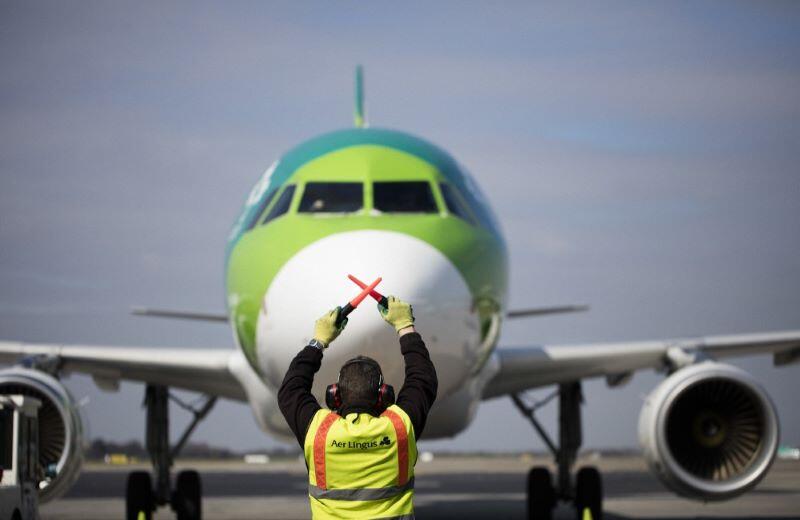
Aer Lingus will discontinue three U.S. routes and make its Dublin-Seattle service summer seasonal as part of a broader network restructuring that also includes changes to four European destinations.
The Irish carrier will end flights from Dublin Airport (DUB) to Denver International Airport (DEN) after Sept. 28, Minneapolis-St. Paul International Airport (MSP) after Oct. 24 and Las Vegas Harry Reid International Airport (LAS) after Dec. 3.
Dublin-Seattle-Tacoma International Airport will cease operating year-round after Oct. 24 and return on a summer-only basis. Within Europe, Dublin-Split, Croatia, will be discontinued, while Frankfurt, Hamburg and Malta will become summer seasonal. Aer Lingus says passengers affected by the changes would be offered reaccommodation or refunds.
The long-haul cuts remove three relatively recent additions to the airline’s network. DEN launched in May 2024 as a 4X-weekly Airbus A330 service and was the only nonstop connection between Colorado and Ireland. Minneapolis resumed in April 2024 after a four-year absence, having first been introduced in July 2019. Las Vegas followed in October 2024 with 3X-weekly A330-300 flights.
Analysis of OAG Schedules Analyser data shows Aer Lingus is offering about 2.34 million two-way seats between Europe and the U.S. during the summer 2026 season, broadly flat compared with 2.35 million a year earlier. Its share of the overall Europe-U.S. market is approximately 3.6%. The carrier’s U.S. network from Dublin comprises 19 destinations during summer 2026, including newer services to Nashville, Indianapolis, Raleigh-Durham and Pittsburgh, each of which is operated using A321XLR equipment.
The OAG data shows that Aer Lingus is scheduled to offer about 57,900 two-way seats between DUB and DEN during summer 2026, down 37% from approximately 92,000 in summer 2025. The route is operated without nonstop competition, meaning its withdrawal will leave Denver without a direct link to Ireland.
Icelandair could be among the indirect beneficiaries. It offers connections to Dublin and other European destinations through Reykjavik and is scheduled to provide about 112,500 seats between Denver and Iceland during summer 2026, up 11% year over year. United Airlines and Lufthansa Group carriers could also capture connecting traffic over their respective U.S. and European hubs.
On the DUB-MSP sector, Delta Air Lines launched seasonal flights in May 2024, days after Aer Lingus announced plans to restore the route. OAG data shows Delta is scheduled to offer about 100,500 two-way seats in the market during summer 2026, compared with approximately 75,100 for Aer Lingus.
The Irish airline’s exit will therefore leave Delta as the only nonstop operator between Minneapolis and Dublin. Delta has increased capacity on the route by about 13% compared with summer 2025, while Aer Lingus capacity is up by around 5%. Icelandair may also compete for some connecting demand from Minneapolis—although its scheduled MSP-Reykjavik capacity has declined by 5% this summer.
Las Vegas is the smallest of the three discontinued markets in the OAG summer data, with Aer Lingus offering about 13,700 two-way seats during the season. While no other airline connects LAS nonstop with Ireland, the airport has extensive European service from airlines including British Airways, Virgin Atlantic, KLM, Discover Airlines, Air France, Condor and Edelweiss.
Aer Lingus’ Las Vegas service had originally been introduced as a winter-seasonal route, targeting leisure demand and offering connections across the airline’s European network through DUB.
Seattle is a more established and larger market. Aer Lingus is scheduled to operate about 102,700 two-way seats on the route during summer 2026, down 11% year over year. Although the service will continue during the summer, the removal of winter flying will leave passengers reliant on connecting options for part of the year.
The latest changes follow Aer Lingus’ decision earlier this year to close its Manchester long-haul base, ending flights to New York JFK, Orlando and Barbados. The operation had opened in 2021 as an attempt to build a point-to-point transatlantic business outside Ireland but lasted less than five years.
The Aer Lingus network changes also come after Ireland on July 16 enacted the Dublin Airport Passenger Capacity Act 2026, legislation that gives Transport Minister Darragh O’Brien the power to amend or revoke the airport’s long contested 32 million annual passenger cap. The cap has been a source of friction between airlines, airport operator Dublin Airport Authority and regulators, with carriers arguing it has constrained growth and investment at the country’s main international gateway.

Related Content