This article is published in Aviation Daily part of Aviation Week Intelligence Network (AWIN), and is complimentary through Jul 09, 2026. For information on becoming an AWIN Member to access more content like this, click here.

Southwest Studies 737-7 Fleet Counts After Market Conditions Change

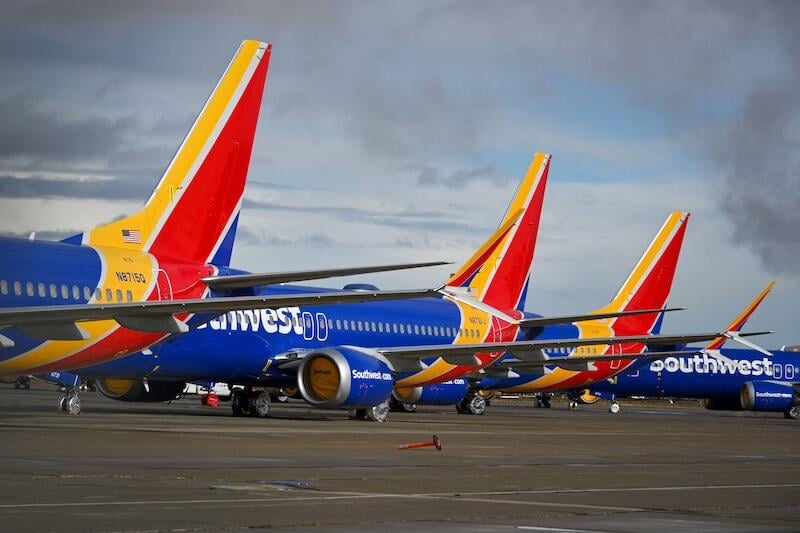
southwest tail fins
Credit: Image of sport/Alamy
RIO DE JANEIRO—As Southwest Airlines awaits delivery of its first 737-7, the mission profile of the aircraft for the carrier has not changed, but the number of -7s in its fleet could differ from initial expectations.
 
FAA Administrator Bryan Bedford recently said he expects the remaining variants of the 737 MAX to be certified by year-end, with the -7 gaining approval first followed by the -10. Previously, Southwest, which is the launch customer for the 737-7, stated it was optimistic its first aircraft would arrive later this year and enter into service during early 2027.
 
Southwest COO Andrew Watterson explained to Aviation Week during an interview at the IATA AGM that, “I don’t think much has changed on how we’ll use it [the 737-7] … how many with the ultimate mix of bigger versus smaller aircraft, that may have changed from when we first ordered it.”
 
The carrier’s 737-700s and the 737-7s that are replacing those narrowbodies are smaller gauge, and “you like those high-frequency business markets, those still exist, but they’re less numerous than they were pre-pandemic,” Watterson said.
 
As Southwest’s average stage length has grown, the carrier is operating fewer frequencies per route, “which means at the margin you prefer more of the -8s and less of the -7s,” he explained.
 
Aviation Week’s Fleet Discovery Database shows Southwest has 255 737-7s and 208 737-8s in its orderbook. Noting there still will be hundreds of 737-7s in the fleet, Watterson explained as Southwest looks five years into the future, “the mix may be different than it would have been if we had not had the pandemic.”
 
Southwest has flexibility in its orderbook, and fleet mix is a question on its mind, but it is a question the carrier doesn’t have to answer for a number of years, Watterson explained.
 
The company’s CEO Bob Jordan recently stated Southwest could possibly launch long-haul flights in the next few years. Watterson noted one of the lessons Southwest learned post-pandemic is, “We could have been faster to modify our offering to our customers, and it’s been quite successful, what we’ve done.” 
 
Changes Southwest has introduced during the last couple of years include assigned seating and an extra legroom product. After those products were launched in late January, Southwest recorded an uptick in bookings from both existing and new customers, describing an “acceleration” of the latter in its corporate channels.
 
But the carrier also learned not to get behind customer needs, Watterson said. As a result, there are three things the carrier has openly discussed—“lounges, more premium in our domestic fleet and then transoceanic service,” Watterson said.
 
“There’s a risk of not doing those things and there’s a risk of doing those things, so you want to study them well so that’s why we’re public about it,” he added.
 
He also noted “there’s no rush” to “go do a transoceanic service, but you have to understand what your customers want.”
 
“We’re a repeat purchase business,” Watterson explained, and Americans engage much more in long-haul travel now than prior to the pandemic, he observed. Before COVID-19 it was much more of a milestone event. But now it is a “much more regular portion” of Americans’ travel journeys, and the carrier is committed to studying the possibility of long-haul service.
Lori Ranson

Lori covers North American and Latin airlines for Aviation Week and is also a Senior Analyst for CAPA - Centre for Aviation.