This article is published in Aviation Daily part of Aviation Week Intelligence Network (AWIN), and is complimentary through Jun 13, 2026. For information on becoming an AWIN Member to access more content like this, click here.

Shift From Gulf Hubs Is Clear Since War, But Airlines Remain Resilient

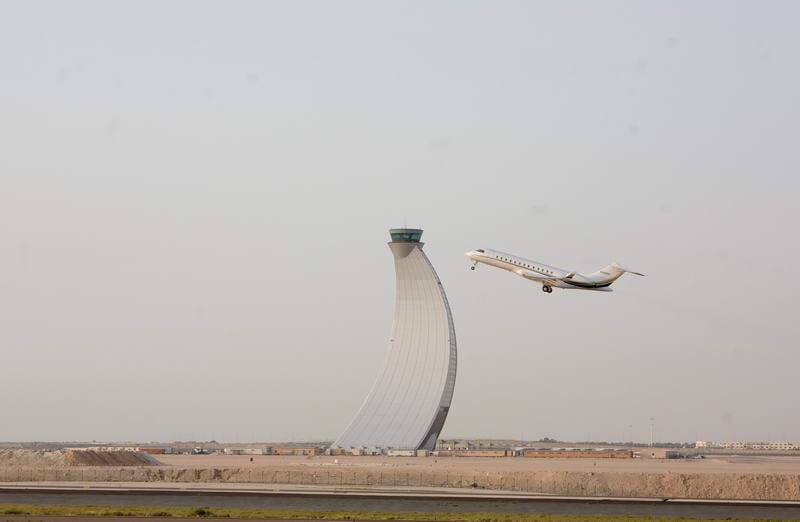
Abu Dhabi International Airport
Credit: Abu Dhabi Airports

RIO DE JANEIRO—Airlines in Africa and the Middle East have seen steep declines in demand for air travel since the war in Iran broke out, but they are also showing resistance to long-term impacts.

Before the war, IATA forecasted that airlines in both regions would have a strong 2026, experiencing faster growth than the global average, IATA regional VP Africa and Middle East Kamil Al-Awadhi said in a June 6 briefing at the outset of the IATA AGM in Rio de Janeiro.

The long-term outlook for each region spanning 2024-2050 remains strong. IATA predicts passenger growth for African carriers in that timeframe will be between 3.2% and 3.9%, while Middle East airlines will see growth in the 2.5% to 3.5% range. That compares well with growth predictions for North America, a more mature market, in the same period, which are estimated to be between 2.7% and 3%.

However, in the near-term, the war has led to a shift away from Middle East hubs and a significant decrease in demand for transit traffic through them, while demand grew elsewhere.

“The fundamentals remain intact, particularly for Africa, where the opportunity is driven by demographics, connectivity gaps, and economic development,” Al-Awadhi said. “But the war in the Middle East had a direct, but uneven, impact across the two regions.”

In particular, Mid-East carriers saw a dramatic drop in passenger demand, which was down 46.6% in April versus the same period in 2025.  African carriers, meanwhile, reported a 2.8% year-on-year increase in total demand for April, but that was still a huge drop compared to March’s demand growth of 18.5%.

Year-on-year passenger demand drops since Iran war, region by region. Credit: IATA

“The impact of the war was immediate and tangible across four areas: airspace closures, rerouting, increased flight times and costs,” Al-Awadhi said. All regions have seen much higher jet fuel costs, but in Africa, those are higher than elsewhere.

“Despite all this, both regions demonstrated remarkable resilience,” Al-Awadhi said.

In the Middle East, airlines, governments and air navigation service providers responded with high levels of coordination, rapid rerouting, regulatory flexibility and cross-border cooperation that helped maintain connectivity.

“A defining feature of the [Gulf area] response was cross-border operational flexibility. Airlines were able to reroute flights and temporarily operate from airports in neighboring countries, ensuring continuity for both passengers and cargo,” Al-Awadhi said, citing an example of Saudi Arabia’s rapid accommodation of airlines like Kuwait Airways, Jazeera Airways and Gulf Air to enable continued operations.

Karen Walker

Karen Walker is Air Transport World Editor-in-Chief and Aviation Week Group Air Transport Editor-in-Chief. She joined ATW in 2011 and oversees the editorial content and direction of ATW, Routes and Aviation Week Group air transport content.