This article is published in Aviation Daily part of Aviation Week Intelligence Network (AWIN), and is complimentary through Jun 13, 2026. For information on becoming an AWIN Member to access more content like this, click here.

PAL CEO Talks Outlook And Joining Oneworld

oneworld meeting at IATA AGM 26

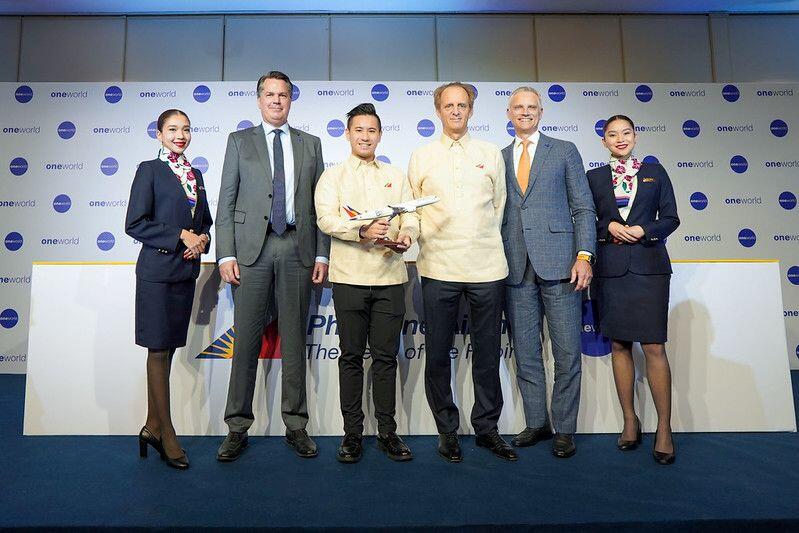
Two PAL flight attendants stand either side of (from left) oneworld CEO Olé Orvér, PAL Holdings president Lucio Tan III, PAL CEO Richard Nuttall and American Airlines CEO and oneworld chair Robert Isom. 

Credit: Kurt Hofmann

RIO DE JANEIRO—The oneworld global alliance is expanding its presence in Asia with Philippine Airlines (PAL) planning to join next year.

“I hope to integrate Philippine Airlines into oneworld sometime in 2027 so we can officially have them as part of our offering to customers,” oneworld CEO Olé Orvér told ATW during a media briefing at the IATA AGM in Rio de Janeiro. PAL serves 29 destinations within the Philippines plus 40 international cities.

“This is indeed a proud day for our alliance. [PAL] beautifully complements our network in South-east Asia,” American Airlines CEO and oneworld chair Robert Isom said.

Oneworld currently has 15 airline members, including Asian carriers Cathay Pacific, Japan Airlines, Malaysia Airlines and SriLankan. Orvér believes PAL gives the alliance a hub in a part of the world where it was not as strong as in other places and provides a new brand offering. “It is a perfect fit for us,” he said.

For the Manila hub, which is relatively constrained, “we are concentrating more on upgrading the size of our aircraft and flying more intercontinental flights,” PAL CEO Richard Nuttall said. “In terms of the growth, we estimate that will be around 4% to 5% as we go forward.”

PAL Holdings president Lucio Tan III added, “This is a transformation moment for Philippine Airlines, which is celebrating its 85th anniversary this year.”

Separately, Nuttall talked about PAL’s market status and outlook. He said high fuel prices and geopolitical events had affected air travel demand, so PAL has made some slight route adjustments and reduced capacity by about 15%. “This is not structural; it is temporary,” he said. “Unfortunately, you have to keep fares a little bit higher, otherwise you lose money on every flight you fly. Keeping the fares up is covering half the fuel costs, which varies by route.”

He also said the airline had deferred about $100 million in planned capital expenditure, but this would not be a long-term deferral.

“The airline is in a good space; we have had four or five good years. We have access to funding if needed, but we not going to take it unless we need it,” he said. Manila authorities have also granted the airline a waiver for 20 slots in Manila for this summer.

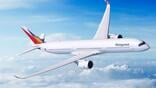
In terms of fleet, the Airbus A350-1000 has become the lead aircraft in PAL’s long-haul network, New -1000s are arriving “pretty much on time,” with five more expected to arrive this year.

On the narrowbody side, “The 13 A321neos we have on order are sliding a little bit, but we don’t mind that too much at the moment. That allows the engine to mature a little bit,” Nuttall said.

Of the eight A321neos already in the fleet, two are grounded related to Pratt & Whitney GTF engine issues, but one of those is expected to return to service shortly.

In terms of network, PAL will return to Doha on July 1 after a suspension because of the war in Iran. “We haven’t made a decision on Dubai yet. The Middle East is around 7% of the carrier’s total capacity. It affects us, but it is not massive. It’s manageable, but not ideal. The real negative thing is the high fuel price,” Nuttall said.

Kurt Hofmann

Based in Austria, Kurt covers European air transport for ATW.