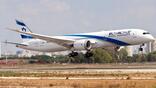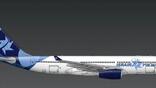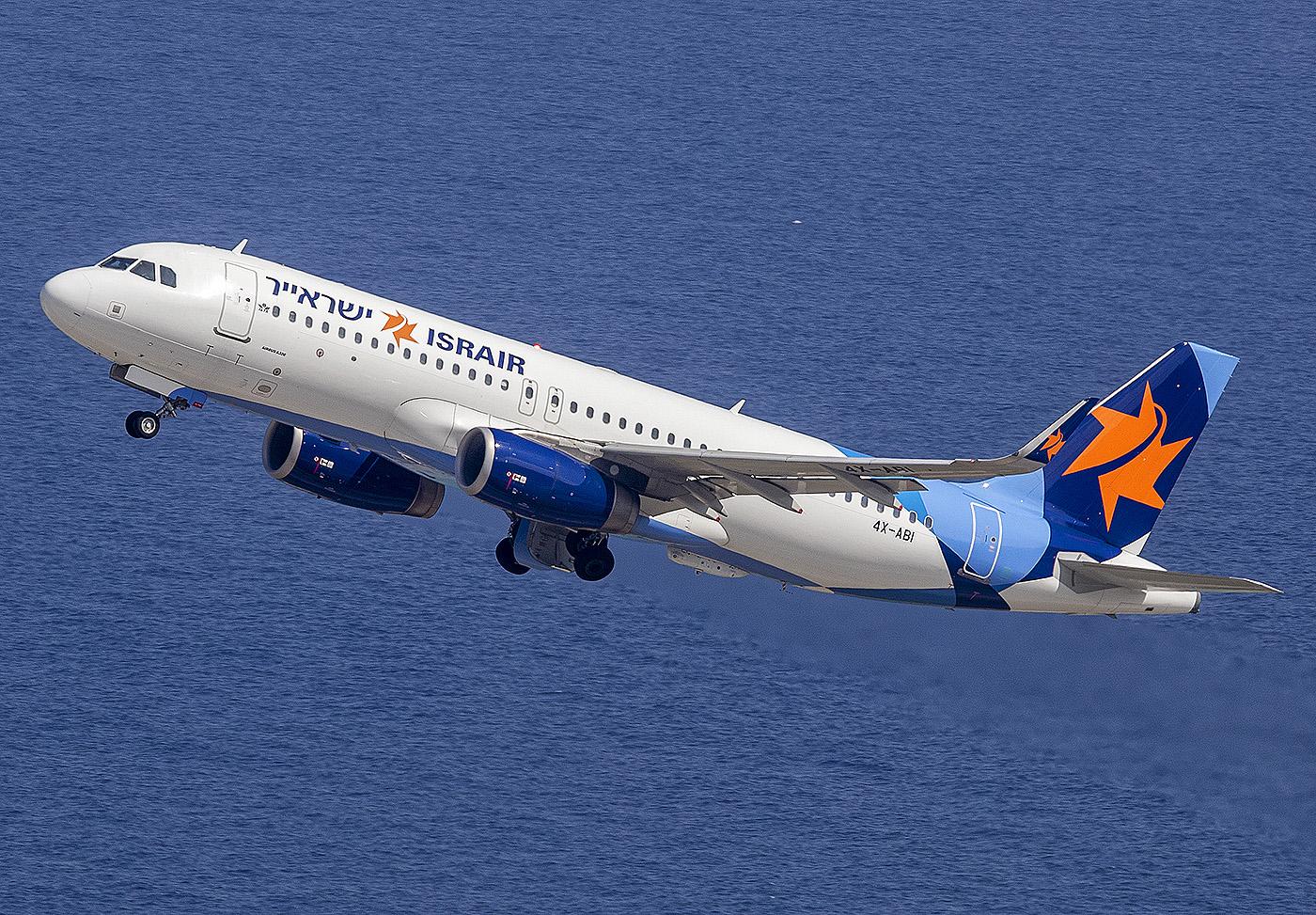
Israir Airlines plans to return to the U.S. market on Sept. 16 after securing the final regulatory approvals needed to begin flights between Tel Aviv and New York John F. Kennedy International Airport (JFK).
The launch will mark the Israeli carrier’s first U.S. service since 2009. The airline applied to the U.S. Transportation Department in March 2025 for authority to operate 6X-weekly roundtrips between Tel Aviv’s Ben Gurion International Airport (TLV) and the New York area using Airbus A330-200 aircraft. However, its booking system shows the route will initially operate 3X-weekly, increasing to 4X-weekly from mid-October.
Israir Group CEO Uri Sirkis told Aviation Week in January that Miami is also on the airline’s radar alongside New York. The carrier has taken delivery of two A330-200s as the first stage of a plan to build a six-aircraft widebody fleet.
Israir’s return to the U.S. adds another competitor to a New York-Tel Aviv market that has recovered more quickly than the wider U.S.-Israel network. Delta Air Lines resumed daily JFK-TLV flights on Sept. 6 using A330-900neo aircraft. The restart followed what Delta described as a review of the regional security environment.
El Al Israel Airlines, Arkia Israeli Airlines and Delta currently serve JFK-TLV, while El Al and United Airlines operate between Newark Liberty International Airport (EWR) and TLV. Israir will therefore become the fifth airline in the wider New York-Tel Aviv market and the fourth at JFK.
OAG Schedules Analyser data shows airlines are offering approximately 168,200 two-way seats between the U.S. and Israel during September 2026, down 2.2% from about 172,000 a year earlier. The total remains 17.7% below the roughly 204,300 seats offered in September 2023, immediately before the Oct. 7 attacks and subsequent regional conflict. However, the OAG schedule does not yet include Israir’s newly approved service, meaning actual September capacity could rise once its flights are incorporated.
El Al remains the largest operator in the overall Israel-U.S. market, offering approximately 113,700 seats across services to Boston, JFK, Newark, Los Angeles and Miami. That gives the airline a 67.6% capacity share. United ranks second with about 26,700 seats, followed by Arkia with 14,500 and Delta with 13,200.
Although Delta has resumed service to Tel Aviv, American Airlines will keep its Israel flights suspended until March 2027, while Air Canada has extended its suspension until mid-January. United, meanwhile, plans to resume 3X-weekly San Francisco-Tel Aviv service from March 28, 2027, complementing its Newark operation.
Alongside the JFK route, Israir recently confirmed the launch of a weekly Tel Aviv-Marrakech, Morocco, route and plans for a 3X-weekly service to Madrid from Oct. 25. The move comes as traffic at TLV continues to rebound. The airport handled 2.4 million passengers in July, up 36% year over year, including 2.3 million international passengers, an increase of 37.2%. International aircraft movements rose 26.8% to 15,409.
In July, Israel Airports Authority issued a public tender for the expansion of TLV’s Terminal 3, signaling confidence in the long-term recovery of the country’s aviation sector. The project will add a new eastern passenger terminal spanning about 50,000 m² (538,000 ft.²) and a two-level underground facility of around 20,000 m² to house baggage handling and security screening systems.

Related Content