This article is published in Aviation Daily part of Aviation Week Intelligence Network (AWIN), and is complimentary through Jul 17, 2026. For information on becoming an AWIN Member to access more content like this, click here.
LONDON—The takeover battle for EasyJet has intensified after U.S. private equity firm Apollo Global Management eclipsed rival bidder Castlelake with a £5.7 billion ($7.6 billion) proposal, prompting the UK airline’s board to switch its support to the new offer.
The July 10 proposed cash offer values EasyJet at £7.15 per share, topping Castlelake’s latest £6.90-per-share bid, which the airline’s board had agreed in principle to support only days earlier. EasyJet said it is now "no longer minded to recommend" the Castlelake proposal and would be minded to recommend Apollo’s bid should a firm offer be made on the agreed terms.
Apollo’s proposed offer appears designed to address concerns raised during the Castlelake process about EasyJet’s future ownership, structure and potential breakup. “Apollo believes in EasyJet’s existing strategy of evolving and strengthening the low-cost carrier model, most notably through upgauging the fleet, enhancing the ancillary and loyalty offering, and scaling [EasyJet] Holidays into a structurally differentiated earnings stream,” the company said.
The approach could prove important in winning shareholder support following speculation that Castlelake planned to break up the business, with analysts pointing to the value of the airline’s fleet, Airbus orderbook, slots at constrained airports and growing holidays business.
The Apollo proposal represents an 81% premium to EasyJet’s closing share price of £3.94 on May 28, the last business day before the start of the Castlelake offer period, and an 80% premium to the airline’s 90-day volume-weighted average share price. Castlelake had raised its offer five times with its July 4 proposal valuing EasyJet at about £5.5 billion, following earlier bids of £5.60, £6.00, £6.25 and £6.50 per share.
EasyJet said Apollo’s proposal offers “an attractive combination of value, strategic alignment and long-term stewardship of the business.” However, the airline stressed that the announcement does not amount to a firm offer under UK takeover rules and that “there can be no certainty” that a binding bid will be made.
The Apollo proposal could also prove attractive to EasyJet founder Stelios Haji-Ioannou, whose family retains a stake of more than 15%, by allowing eligible shareholders to remain invested after the airline is taken private. Apollo also said it intends to leave unchanged the existing brand license agreement with EasyGroup, under which Haji-Ioannou receives royalty payments.
Additionally, the firm has pledged to “take all necessary steps” to secure the regulatory approvals required for the transaction, including compliance with EU ownership rules. Although EasyJet is a British airline, it must continue to meet EU requirements that European carriers remain majority owned and effectively controlled by European investors.
OAG Schedules Analyser data shows EasyJet is Europe’s second-largest carrier by seat capacity in summer 2026, with a 6.9% share of seats from and within the region. Its slot portfolio is particularly valuable, led by London Gatwick, where EasyJet’s 196 daily slot pairs account for about 46% of the airport’s capacity. The airline also holds important positions at Amsterdam, Geneva, Lisbon, Milan Linate and Malpensa and Paris Orly.
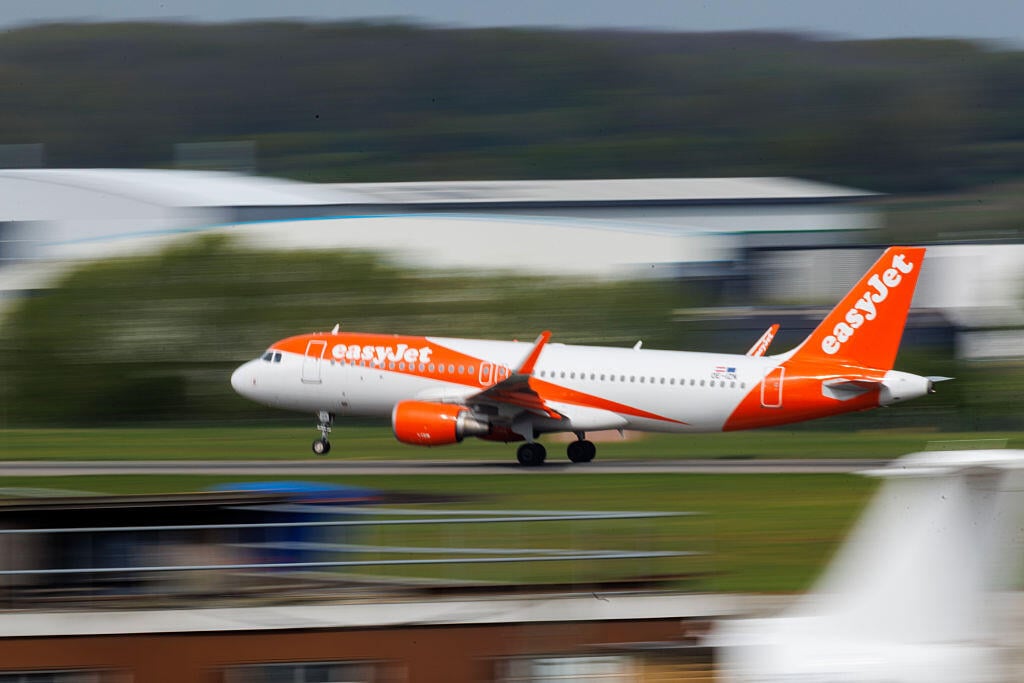
The fleet is another major attraction. As of March 31, EasyJet operated 356 aircraft, including 97 A320neo-family aircraft, 180 A320s and 79 A319s. Of the total fleet, 208 aircraft were owned. The airline is accelerating retirement of its A319s by 2029 as part of a broader upgauging strategy, with 17 aircraft deliveries planned in the remainder of fiscal 2026, followed by 30 in 2027 and 43 in 2028.
Apollo has until Aug. 7 to make a firm offer for EasyJet, while Castlelake has until Aug. 3.