DAE Sets Sights On 1,300-Aircraft Fleet After Macquarie Integration
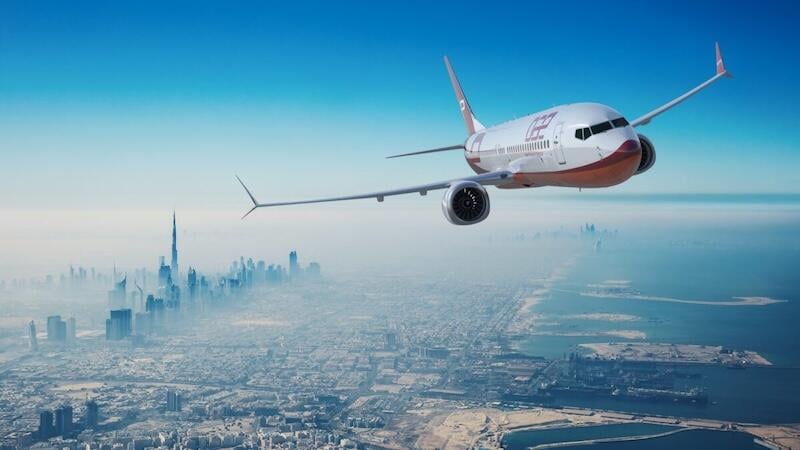
Dubai Aerospace Enterprise (DAE) will complete its $9 billion Macquarie Air Finance integration by the end of November, paving the way for growth to around 1,300 owned, managed, committed and mandated aircraft over the next three to five years.
DAE closed its acquisition of Macquarie Air Finance in late July, growing its fleet to 983 aircraft (716 owned, 120 managed and 147 committed), with an average passenger aircraft age of 7.4 years.
“After closing Macquarie, we’ve now doubled the size of our company in the last 18 months,” DAE CEO Firoz Tarapore told a Nov. 10 investor call. “On an owned-asset basis, we’re now the second largest lessor globally, and on a managed-asset basis, we are the third largest lessor globally.”
Tarapore said he is not chasing rankings, but greater scale opens up new possibilities.
“We set an internal target of four months to complete the integration. It is now 3.5 months in, and I’m very happy to report that the integration is on schedule,” Tarapore said. “We fully expect to be completely done in the next few weeks.”
Alongside the Macquarie Air Finance acquisition, DAE has received two substantial investor capital mandates, paving the way for an additional $14 billion in aircraft assets over the next three to five years.
“We see our owned and managed fleet growing from the current 800 plus to approximately 1,300 aircraft over the next three to five years,” he said. “Our entire organization is singularly focused on successfully delivering that outcome.”
This means DAE’s focus will be on “flawless execution,” growing the portfolio and getting used to its expanded size, rather than further acquisitions—unless a particularly attractive deal comes up.
“We don’t have anything on the horizon,” Tarapore said. “At some point there are diseconomies of scale at play. We are continuously evaluating where that level might be. But, when you operate in our business, which as you know is a secular uptrend business, staying static is not an alternative.”
Aircraft trading is still very active, with a good balance of narrowbody supply and demand, and “very, very firm” demand for widebodies. “Deliveries from OEMs are now on a predictable cadence,” he said. And, despite high fuel prices and airspace restrictions, airlines are managing to balance capacity and pricing, albeit at lower profit. “Airlines around the world have, in general, been very proactive and have negotiated that quite well,” Tarapore said.
For the nine months ended Sept. 30, DAE’s total revenue rose 13% to $1.44 billion, up from $1.28 billion a year earlier. Leasing revenue rose 22%, while DAE Engineering revenue dropped 51% because of the Middle East conflict.
Pre-tax profit before exceptional items was up 9% at $371 million, and liquidity grew to $5.6 billion from $3.4 billion. These results included two months’ contribution from the Macquarie Air Finance business.

Related Content