This article is published in Air Transport World part of Aviation Week Intelligence Network (AWIN), and is complimentary through Jun 20, 2026. For information on becoming an AWIN Member to access more content like this, click here.

Airlines Bet Big On Sports Sponsorships To Connect To Modern Consumers

Arsenal Football Club

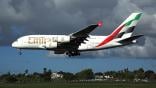
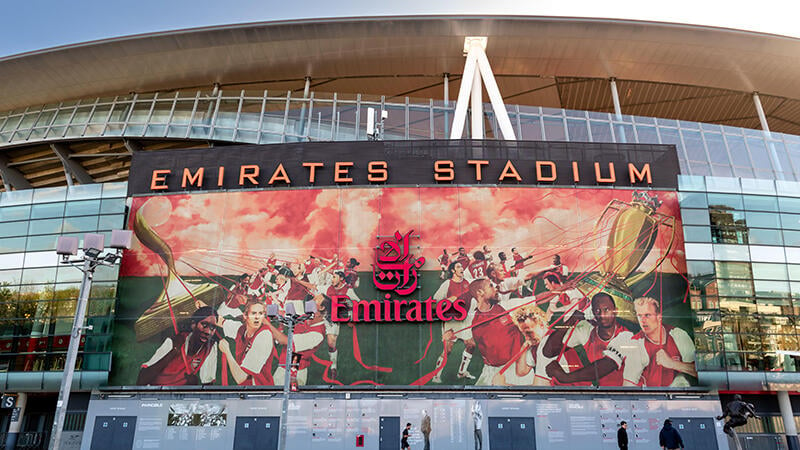
Emirates Airline’s sponsorship of the Arsenal Football Club is one of the longest standing and most lucrative in all of professional sports.

Credit: Yau Ming Low/Alamy

Emirates Airline in 2004 signed a £100 million ($180 million) sponsorship agreement with English Premier League soccer club powerhouse Arsenal, a deal that included its brand appearing on uniform shirts and naming rights to the team’s then under-construction stadium in north London. The following year, the Dubai-based carrier placed what was the largest order for the Boeing 777. In 2007, a year after the 60,000-seat Emirates Stadium opened, Emirates became the first airline to fly the Airbus A380.

The 2000s were the decade when Emirates transformed into one of the world’s premier airlines. Dubai Airport (DXB) expanded significantly, the carrier had sizable fleet growth and added 46 destinations, more than doubling its network compared to the start of the decade. As important as those factors were, it’s unlikely Emirates could have become what it is today without the Arsenal deal, which has been renewed multiple times, and subsequent sports sponsorships, including agreements with La Liga soccer team Real Madrid and the National Basketball Association (NBA) in the US.

The brand-name recognition gives Emirates access to a massive world audience, helping make the Middle East airline the industry’s most successful global connector and DXB the world’s second busiest airport after Atlanta’s Hartsfield-Jackson. Emirates served more than 55 million passengers in 2025.

Delta Aircraft
Delta Air Lines bills itself as “New York’s hometown airline.” In 2019, the airline dedicated a Boeing 757 to New York Yankees pitcher and Hall of Fame inductee Mariano Rivera. Credit: Astrid Stawiarz/Getty Images

Airlines around the world have invested billions of dollars in sports sponsorships, creating partnerships in which teams, leagues and stadiums become intertwined with the carrier’s brand. Airlines gain extraordinary brand exposure—going well beyond traditional advertising—and access to the demographic most likely to purchase flight tickets, according to Joel Maxcy, a professor of sports business at the LeBow College of Business at Drexel University in Philadelphia.

This has been especially valuable for Emirates and fellow UAE carrier Etihad Airways, which sponsors north England star soccer team Manchester City based at the Etihad Stadium, simply known as The Etihad.

“Without that sort of penetration into markets in Europe and the United States, people wouldn’t really know who those airlines were or much about them,” Maxcy told ATW. “But when they’re so prominent in sponsoring football in the Premier League, which everybody knows about, and sports in the US, that gives them a lot of credibility.”

Premier League soccer games are watched by hundreds of millions of people globally each week during the season in more than 180 countries, reaching far beyond the UK and Europe. For example, more than 2.5 million people in the US viewed an April match between Arsenal and Manchester City.

TARGET AUDIENCE

Maxcy said there is overlap between sports fans—who often pay for expensive game tickets and travel to follow teams—and airlines’ target audience.

“Airlines know the type of people who watch sports,” Maxcy explained. “Their market research does a pretty good job of calculating that. It’s largely a group of people that has fairly significant disposable income and airlines are targeting people with disposable income. One thing that’s also become unique about sports, especially televised sports, is it remains appointment viewing. So unlike Netflix movies that you can stream when you want to watch, if a Premier League game is on at one o’clock on a Sunday afternoon, people will watch it live.”

Corporate names have become ubiquitous on the jerseys of the world’s top soccer clubs, but no Premier League team has had a sponsor’s name emblazoned across players’ chests as long as the 20 years that “Emirates” has been featured on Arsenal’s shirts. Emirates Stadium in London has become one of the world’s most recognized sports venues, known to soccer fans around the world as The Emirates.

AZUL aircraft
Azul has become the official airline partner of the Brazilian Football Confederation. Credit: Azul

“Sometimes in sponsorships, it’s about timing and opportunity,” Emirates’ EVP corporate communications, marketing and brand Boutros Boutros told ATW. “In 2004, when the Arsenal deal came to our table, the club had outgrown their old haunt in Highbury [London] and were building a new home. Emirates therefore had the opportunity to sign up … Now, 20 years later, Emirates is woven into the fabric of [London] and the psyche of football fans … Our brand association with Arsenal, the sport and the UK is instant.”

Emirates is also a long-time sponsor of a major English soccer knockout tournament, the FA Cup. The Emirates brand is not only highly visible at all matches leading up to the May final, but at that final, which this year will pit Chelsea against Manchester City at the famous Wembley Stadium in London, Emirates president Tim Clarke is routinely a Cup presenter and guest in the royal box.

Emirates has also invested heavily in sports in the US, including the US Open golf tournament and previously baseball’s Los Angeles Dodgers—a sponsorship swiped away by All Nippon Airways in 2024 after Japanese superstar Shohei Ohtani joined the team. Emirates sponsors the NBA Cup, a professional basketball tournament that culminates in December during the holiday season. Fans know it as the Emirates NBA Cup or increasingly as just the Emirates Cup.

Emirates’ association with the popular NBA goes beyond just the Cup. During the final stretch of an April televised NBA playoff game in Atlanta between the hometown Hawks and the New York Knicks, an “Emirates Fly Better” sign was highly visible at center court behind the action, while two more Emirates signs were featured behind the players at both ends of the court. A television viewer could not watch the exciting back and forth without constantly seeing an Emirates logo.

When the game ended, Amazon Prime’s television audience was immediately taken to the start of another playoff game in Minneapolis—with Emirates logos projected on the floor at each end of the court.

“You can’t look away,” Embry-Riddle Aeronautical University’s associate professor of commercial airlines-professional selling, marketing strategy and branding Scott Ambrose said.

“There’s more authenticity from the standpoint that it’s not a contrived commercial. It’s part of the arena and it’s there in the background. I think people register that connection more intuitively than a traditional advertisement.”

The NBA deal was signed by Emirates in 2024. Boutros said the airline “actively looked at properties in the US to better engage with our audiences there. This included on- and off- conversations with the NBA over time. Finally, we got to a deal … and it has been hugely successful thus far. It’s still early days, but our trackers have already shown a positive impact in terms of brand recall and association.”

Delta Air Lines has over 20 sports sponsorship deals including with the New York Yankees and New York Mets baseball teams, promoting its aspired status as “New York’s hometown airline.”

“You look at Yankee Stadium and in the outfield the Delta sign is on par with the Yankees sign,” Ambrose noted, adding that Delta logos also often appear on the wall behind batters.

The Yankees are the most prominent sports franchise in the US, winners of 27 World Series championships. “Why would Delta spend so much money to do this? Well, New York’s one of the most contested airline markets in the world,” Ambrose said. “Nobody really can claim it as an exclusive hub. If you want to be the ‘hometown airline,’ you really have to be front and center, and those local teams and sports are things that people care about. It’s that intangible value, that intangible connection that you can’t fully measure.”

Delta also has a strong sports presence in other hub cities, including sponsoring baseball’s Atlanta Braves and the naming rights to the Delta Center basketball and hockey arena in Salt Lake City.

“Our hub cities are core to who we are,” Delta head of global partnership marketing Emmakate Young told ATW. “They’re where our people live and where millions of our customers travel every day. Partnering with teams in markets like Atlanta, New York, Los Angeles, Salt Lake City and Seattle gives us a way to show up locally, not just as an airline, but as part of the community. It’s an extension of how we connect with our customers, beyond the travel experience.”

AZUL'S PLAY

In mid-April in Ciuaba, a city in midwestern Brazil, Azul Brazilian Airlines made a major announcement with the backdrop of a soccer match between the Brazil and Canada women’s national teams. The carrier had signed a five-year sponsorship contract with Confederação Brasileira de Futebol (CBF), making Azul the official airline of the Brazil national men’s and women’s teams. Azul replaced rival GOL as the CBF sponsor, a competitive coup just weeks before the start of the men’s FIFA World Cup in North America and a year ahead of Brazil hosting the women’s FIFA World Cup in 2027.

“Let’s not kid ourselves—the Brazilian national team could have been sponsored by our competitors [GOL and LATAM Airlines Brazil],” Azul CEO John Rodgerson told ATW. “They tried. It’s a competitive process.”

He said the sponsorship deal was particularly important as Azul regains its footing after emerging from a Chapter 11 bankruptcy restructuring in February.

“I think this sponsorship [represents] this kind of vibe that we have right now,” Rodgerson said. “It is a testament that we’re back and we’re back to the type of quality and standards we had [before the pandemic pushed the airline into taking on a huge debt burden]. The [men’s] national team has won more World Cups than any other country in the world. It’s all about quality and it’s about winning. … There’s a lot of parallels to an airline really executing on a daily basis, to ensure that we lead on on-time performance, to ensure that we have the Brazilian premium customer in our network.”

Ciuaba was a deliberate choice, a symbol of Azul’s extensive reach in the domestic market, in which it operates around 130 routes. When the women’s World Cup soccer event is in Brazil, the airline will transport fans throughout the country, including to smaller markets.

“A lot of people think that Brazil is just Rio, São Paulo and Brasilia,” Rodgerson said. “The great thing about the World Cup is you actually get to tour around the entire country. There will be games in the midwest of Brazil, in the south of Brazil. Having Azul as the sponsor carrier is really, really important.”

CALCULATING RETURNS

Airlines do not release return on investment figures for their sports sponsorships, perhaps in part because it is difficult to measure. “How you determine what portion of their increase in sales is attributed to a specific sponsorship arrangement—that’s hard to sort out,” Drexel’s Maxcy said. “The one thing I would say, though, is that it certainly must be the case that it’s worth it because airlines over and over are willing to make that investment,”

He pointed to the example of Azul taking away the CBF sponsorship from GOL. “If there’s ever prime time to have an airline in a sponsorship slot, it would be with the World Cup coming up in the US, when there is going to be significant air travel [from Brazil to North America],” Maxcy said. “I don’t think there’s anything bigger in Brazil than soccer. That’s a very big deal for the winning airline.”

In terms of return on investment, Rodgerson said credibility was gained by “putting our brand side by side with the world’s top brands.” The airline, which operates to Florida and Portugal, is also able to garner attention in the US and Europe.

Azul, Delta and Emirates all noted that their sports deals include numerous events done in conjunction with leagues and teams, which provide visibility, personal contact with fans and a good deal of press coverage. Rodgerson cited the example of major fan festivals.

Embry-Riddle’s Ambrose does not believe Emirates and other Middle East airlines will pull away from sports sponsorship deals because of financial difficulties related to the war in Iran. He expects Emirates will bid what it takes to retain the Arsenal contract when it comes up again in 2028. Emirates currently pays £50 million annually.

“It has gotten so, so expensive,” he said. “But my sense is they’re going to pull back in other areas. The Arsenal deal is almost like a sunk cost. They’ve been so connected to Arsenal that they’ll try to stick with it for as long as they can because they’ve spent so much money and so much time. My sense is they will re-sign because if they don’t, somebody else will, and they’re trying to maintain their positioning … It’s a long-term game.”

Airlines in general are likely to double down on sports associations, he said. “Traditional media is no longer really that viable for airlines with younger generations,” Ambrose explained. “In the 1990s, there were really high-quality United Airlines national television advertising campaigns. You just don’t see many of those anymore. If there are, they’re part of a sports connection because, other than live sports, nobody’s watching traditional TV anymore. Airlines see sports as the best way to reach folks on a large scale.”

Aaron Karp

Aaron Karp is a Senior Editor at Air Transport World.