This article is published in Aviation Daily part of Aviation Week Intelligence Network (AWIN), and is complimentary through Mar 08, 2026. For information on becoming an AWIN Member to access more content like this, click here.

Airline Growth Shows Industry Has Adapted, AAPA's Menon Says

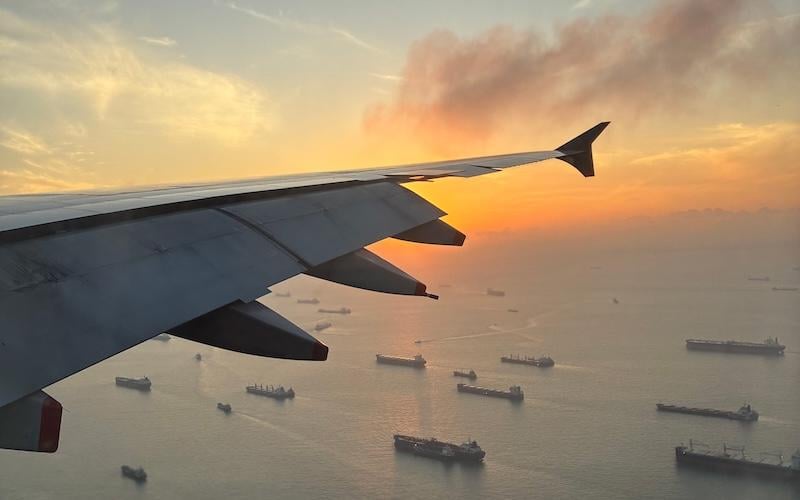
A380 wing
Credit: Aviation Week

SINGAPORE—Asia-Pacific airlines are once again proving their resilience and ability to adapt despite the supply chain crisis that has dealt the latest blow to the industry, according to the head of the region’s major airline group.

Association of Asia Pacific Airlines (AAPA) Director General Subhas Menon noted that the region’s airlines collectively achieved 11% growth in traffic and a 10.2% increase in capacity in 2025. 

“To do that in the middle of the supply chain crisis… means the airlines are being very creative, and are being very mindful of putting their fleets where the markets are really growing and where there is huge demand,” Menon told Aviation Week ahead of the Singapore Airshow.

“There have been quite a few extraneous crises affecting the industry over the past few years,” Menon continued. “But after every crisis, this industry has always bounced back very strongly and it looks like it will do so again after the supply chain crisis.”

Menon has led AAPA during some of the industry’s most challenging years, having taken over in 2020 just as the COVID-19 pandemic arrived. He is due to retire on March 31, although he will stay on for a month after that to assist the transition to his successor Wong Hong.

AAPA has increased its membership during Menon’s tenure as director general, having added carriers such as Air India, Lion Air and Vietnam Airlines. It has also added back former members Air New Zealand and Qantas.

The growing membership indicates that carriers in the region see the AAPA as “an organization that can help airlines achieve their objectives,” Menon said. He noted that the new members have expanded the geographical reach of the association, and it also now covers more business models with Lion Air becoming its first LCC member.

There are still some membership gaps, such as mainland China. AAPA needs to add mainland carriers as members, Menon said. “It might take a bit longer, but I think they will definitely come on board.” AAPA could also add more LCCs to its ranks and more Indian airlines, he said.

Asia-Pacific demand growth is likely to moderate slightly this year and align more with pre-pandemic growth rates, Menon said. Geopolitical tensions are restricting some traffic flows into and out of China, but overall Chinese demand has rebounded well.

Strong inbound travel to China has offset slower outbound growth, and Chinese traffic is back to its pre-pandemic share of 20% of Asia-Pacific international traffic, Menon said.

Rising interest in smaller narrowbody aircraft from Asia-Pacific carriers reflects the fact that the region’s largest growth in connectivity has been between secondary cities, Menon said. “So I think there is a big role” for smaller narrowbodies, regional jets and turboprops in this region.

Adrian Schofield

Adrian is a senior air transport editor for Aviation Week, based in New Zealand. He covers commercial aviation in the Asia-Pacific region.