This article is published in Air Transport World part of Aviation Week Intelligence Network (AWIN), and is complimentary through Oct 24, 2026. For information on becoming an AWIN Member to access more content like this, click here.

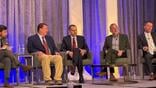
Endeavor Air CEO Timothy Wang (second from the right).
WASHINGTON—Artificial intelligence (AI) technology will be an important productivity tool for airlines but will not and should not replace humans, aviation experts believe.
Speaking as a panelist at the Regional Airline Association (RAA) Leaders Conference in Washington, D.C. on Sept. 23, Endeavor Air president and CEO Timothy Wang said he saw AI as not being about artificial intelligence but more about augmented intelligence.
Minneapolis-based Endeavor is a wholly owned subsidiary of Delta Air Lines, flying as Delta Connection. “We don’t see AI taking the human out of the loop in any critical operations, period, and that won’t change,” Wang said. “Technology and robots won’t do that work but they will help us do it better and faster.”
Wang said he saw the airline industry being perfect for AI use because the industry is data rich. “Real safety happens when all the data comes in and is synthesized. That’s what AI can do. It will connect the dots that we can’t see and recognize trends that humans can analyze.”
A separate panel of Wall Street airline industry analysts concurred. “This industry has always been forward leading in using technology and it’s heartening to see [the adoption of AI] happen,” Raymond James managing director, global airlines and AAM, Savanthi Syth said. “The airline industry is one of the top industries that will unlock the benefits.”
Deutsche Bank Securities managing director, airline equity research, Michael Linenberg said AI was a very powerful tool, and it would be up to the airline industry to figure out what works and what does not. He cited one example: AI helping to reset schedules in an hour or two versus it taking humans alone days to do after an operations issue.
But Linenberg also cautioned about using AI to bring in autonomy. “It’s one thing if an autonomous car crashes; it’s quite another thing if a plane crashes,” he said. “Autonomous technology has to be foolproof; the stakes are so much higher.”

Related Content