When GNSS Can’t Fail: Certifiable Navigation You Can Trust
While almost everyone understands accuracy, modern navigation systems must deliver integrity, continuity, and availability. Integrity describes the maximum navigation error that can be present, continuity means that navigation function can be delivered without any interruption, and availability means that the navigation is there when you need it.
While manned aircraft can rely on human intelligence to take action and compensate for failure in any one of these critical services, autonomous, unmanned aircraft rely on them. This is the concept of delivering assured performance for every phase of flight, this is the critical support any autonomous aircraft will rely on.
From commercial to military transport, from crewed to uncrewed systems operating in complex environments, an aviation GNSS receiver must deliver accuracy, integrity, continuity, and availability. Complex environments challenge assured performance with signal jamming and worse, signal spoofing. At CMC Electronics, complex environment resilience is being built on a foundation of proven systems, consistent architecture, decades of operational experience and bold, new, out-of-the-box solutions.
CMC’s GNSS product line is designed to address a wide range of operational needs—from standalone receivers supporting LPV approaches (SBAS) to systems compatible with GBAS architectures. This consistent, scalable approach enables integrators to deploy solutions across multiple platforms while maintaining commonality in design, certification, and support.
With more than 30,000 GNSS units delivered over the past 20 years and a with large percentage of them in continuous everyday operation, CMC solutions are embedded on high-value platforms where navigation performance is mission-critical. These systems support operations across all phases of flight, where reliability is not optional.
Field performance reflects this reality. Actual, reported mean time between failures (MTBF) exceeds 200,000 operating hours (Rotor-Wing) and 550,000 operating hours (Fixed-Wing). Just as critically, the product line has maintained a record of no Airworthiness Directives, reinforcing long-term operational confidence for operators and integrators alike.
A New Generation, Built for What’s Next
Building on this foundation, CMC has reached a major milestone in the development of its next-generation GNSS platform.
After more than two years of engineering, the first prototype units are now assembled and undergoing testing. Initial testing has already validated core system performance.
These units will be delivered to a key customer for laboratory evaluation, supporting the next phase of validation and qualification.
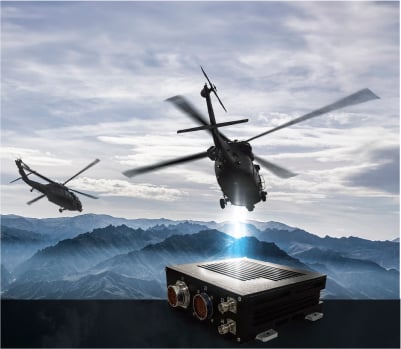
Designed for Certification. Ready for Integration.
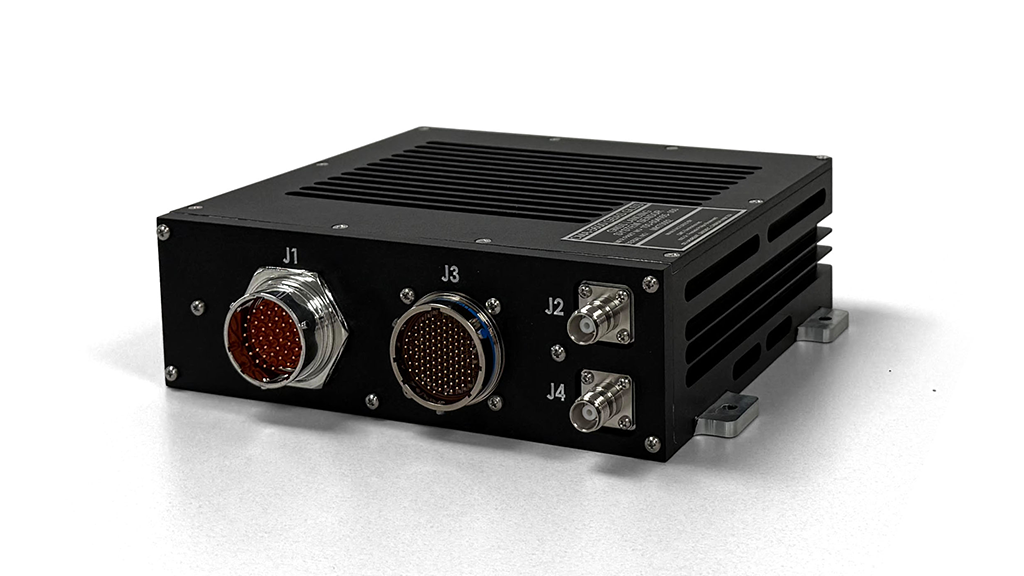
At the core of this evolution is the CMA-5500 / CMA-5600 white-label GNSS receiver platform.
Designed with dual-frequency, multi-constellation (DFMC) capability and aligned with the highest commercial certification standards (DAL-A, DO-254 / DO-178C), the platform supports accelerated integration without compromising compliance.
Equally important is its ability to integrate seamlessly with inertial reference systems, enabling enhanced navigation performance and continuity in degraded or contested environments.
The architecture also incorporates advanced internal features designed to improve resilience and recovery in the presence of GNSS interference, including jamming and spoofing. While no GNSS solution is immune to these threats, the system is engineered to maintain robust performance and recover rapidly when conditions allow.
This balance of certification readiness, integration flexibility, and operational resilience is increasingly critical for next-generation platforms, including advanced air mobility and uncrewed systems.

From Proven Reliability to Future-Ready Navigation
CMC’s approach is not about introducing a new concept—it is about extending a proven one.
A consistent product architecture, expanding deployment base, and continued production growth ensure that operators benefit from both maturity and forward evolution. Quantities in the field continue to increase, reflecting sustained demand across commercial and mission-critical applications.
For integrators, this translates into reduced program risk, streamlined certification pathways, and confidence in long-term support.
Explore What’s Next in GNSS
Discover how CMC’s next-generation GNSS solutions can support your platform—from certified aviation systems to advanced autonomous applications.
Learn more: https://cmcelectronics.ca/products/navigation/gnss-receivers/
Your Trusted Partner in Mission Ready Avionics Solutions
Related Content