Mission-Ready Avionics for Connected Operations

TacView: Mission-Ready Avionics for a More Connected Operational Environment
Across defense and aviation operations, mission complexity continues to increase. Operators today face expanding data streams, growing connectivity requirements, evolving software ecosystems, and the need to deliver critical information to crews faster than ever before and directly at the point of decision-making.
Whether supporting special operations missions, military transport operations, search and rescue, maritime surveillance, border security, helicopter tactical missions, training environments, or quick reaction operations, access to information alone is no longer enough—the challenge is making information operationally useful.
Yet many mission capabilities continue to rely on ruggedized laptops and commercial tablets repurposed through non-native integration for aviation environments. While these platforms improve portability, they were not originally designed to operate as part of an integrated aircraft avionics and mission ecosystem. The result can be disconnected workflows, integration challenges, increased workload during time-sensitive operations, and shortened technology lifecycles driven by commercial obsolescence.
As commercial technologies evolve outside traditional aerospace qualification and operational frameworks, operators increasingly require systems purpose-built for aviation and defense environments—platforms designed not simply to carry applications onboard, but to function as an integrated extension of the mission system itself.
This shift reflects a broader reality: mission success increasingly depends on connected systems capable of delivering synchronized information where and when crews need it most.
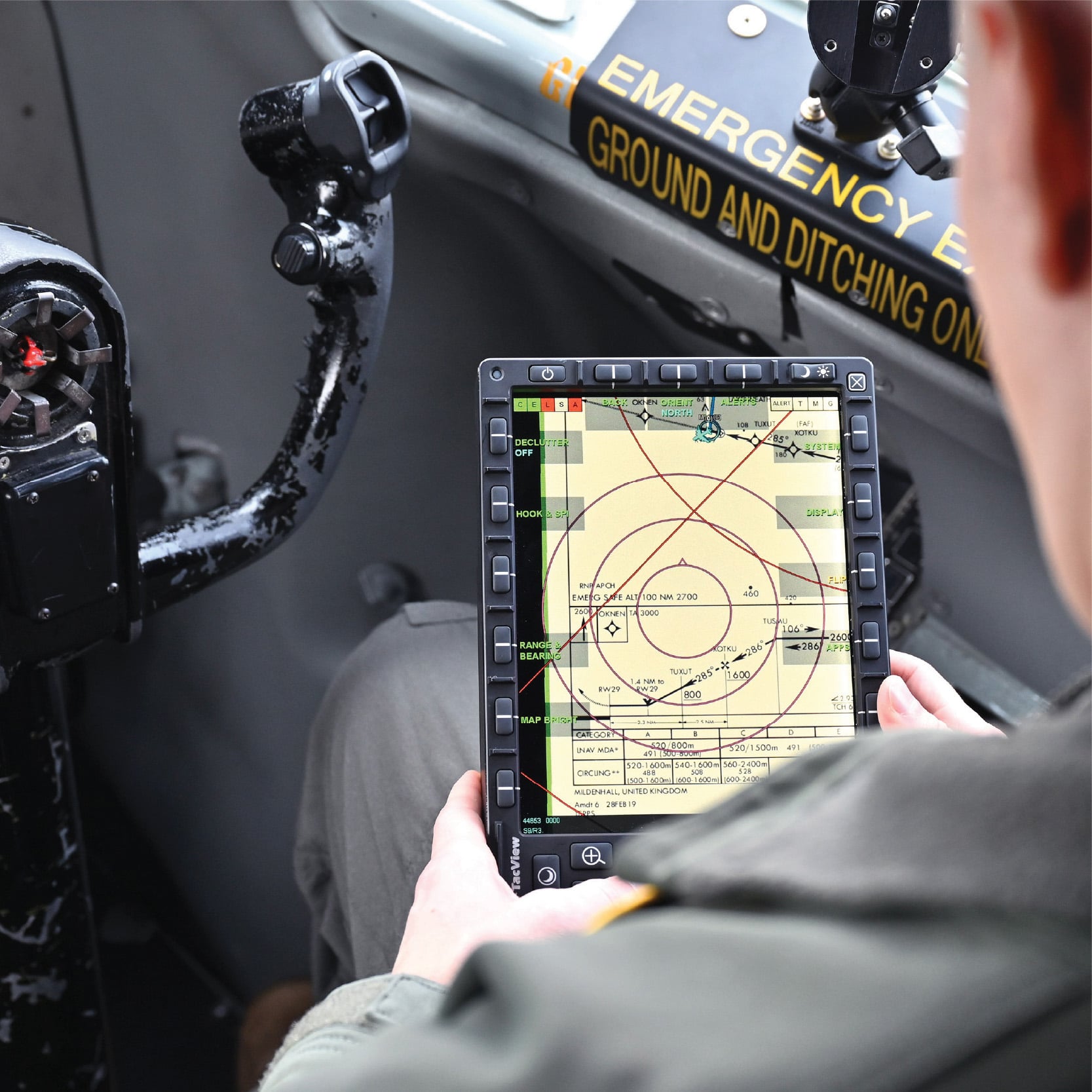
TacView was designed around this philosophy. Rather than functioning as a portable accessory, it acts as a mission-enabled, seamless extended avionics platform that preserves aircraft avionics integrity while combining portable mission display capability with integrated computing functionality. Designed to support government off-the-shelf mission software and tactical awareness applications, the system enables interaction across aircraft networks and mission systems while maintaining operational flexibility.
Integration becomes especially important in environments where timing matters. During high-workload phases of operation, crews require systems that respond predictably and behave consistently. Unlike consumer-derived architectures, TacView was engineered with low-latency, predictable performance for time-sensitive operational environments.
Equally important is the human interface.
Modern crews often operate under demanding conditions where rapidly interpreting and acting on information directly affects operational effectiveness. Interfaces developed for consumer environments can create friction in mission settings where workflows differ significantly. TacView applies aviation-grade human factors principles, combining integrated controls and optimized interaction methods designed to support heads-up operation and reduce workload. NVIS compatibility and operational features are built into the platform architecture rather than added as afterthoughts.
Security and long-term sustainability also play an increasingly important role in platform selection. Mission systems must support trusted computing environments, secure information handling, and architectures capable of evolving over extended operational lifecycles. Hardware-based zeroize capability, secure hosting functionality, and a stable long-term architecture help support these requirements while avoiding the rapid refresh cycles often associated with commercial technologies.
Scalability remains another key consideration. Mission requirements rarely remain static, and operators increasingly seek solutions that support incremental capability growth without requiring wholesale platform redesigns. TacView was developed with that flexibility in mind, enabling future mission expansion while maintaining a stable avionics baseline.
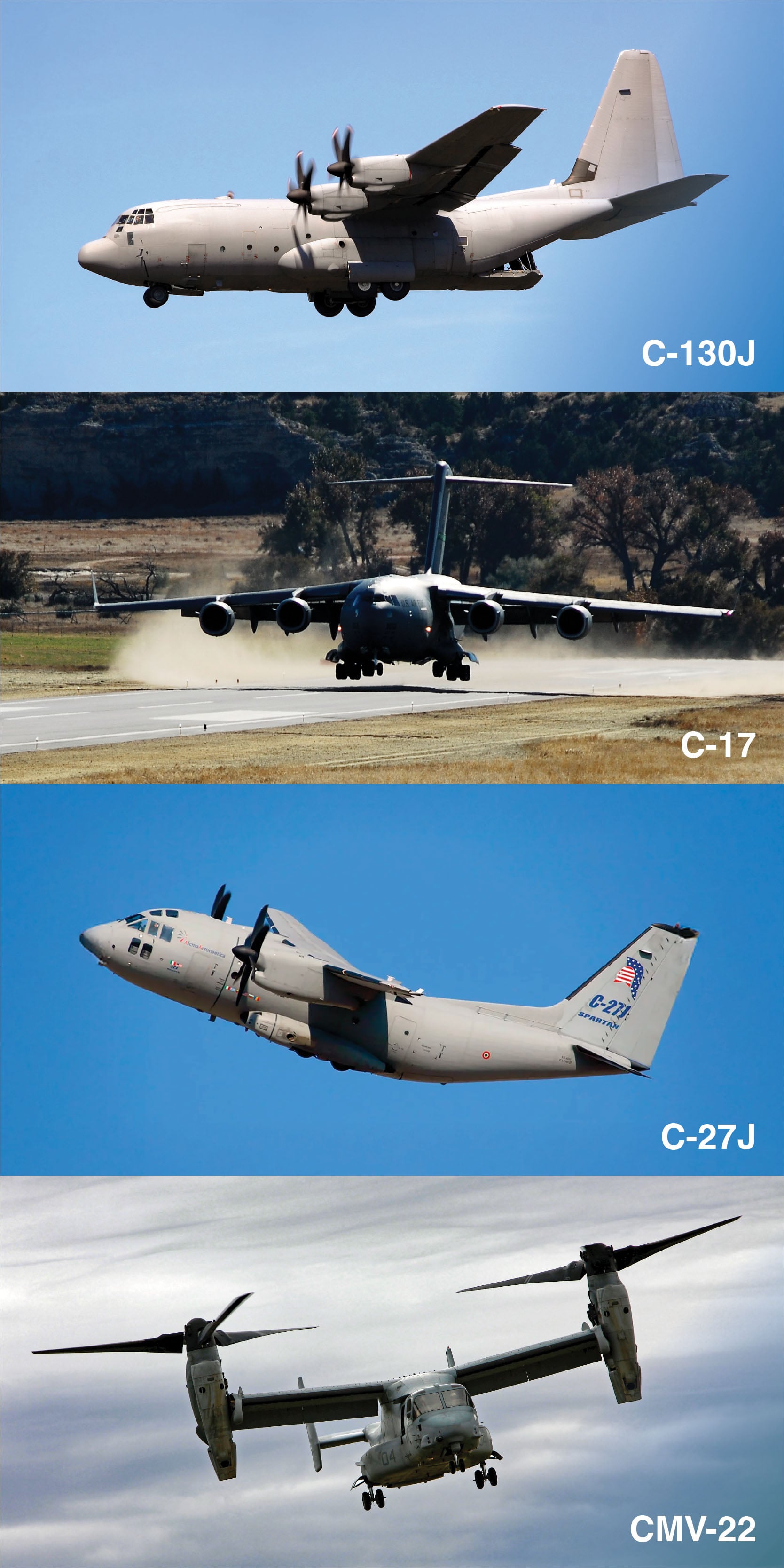
More than 3,000 systems have been fielded across transport, ISR, and multi-mission platforms, demonstrating the value of technology designed specifically for operational environments rather than adapted from commercial ecosystems.
As platforms become more connected and mission demands continue to evolve, operators are increasingly looking beyond portable devices toward integrated systems designed from the outset for operational use.
Because mission-ready capability is defined not by portability alone, but by integration, reliability, and the ability to deliver operational advantage when it matters most.
Enhance Mission Awareness and Connectivity
Learn how TacView helps operators access critical information, improve situational awareness, and support mission effectiveness in demanding operational environments.
Learn more: Portable Mission Display Solutions
Your Trusted Partner in Mission-Ready Avionics Solutions
Related Content