This article is published in Aerospace Daily & Defense Report part of Aviation Week Intelligence Network (AWIN), and is complimentary through Mar 19, 2026. For information on becoming an AWIN Member to access more content like this, click here.

Sikorsky Begins Building Upgraded S-92A+ Helicopters

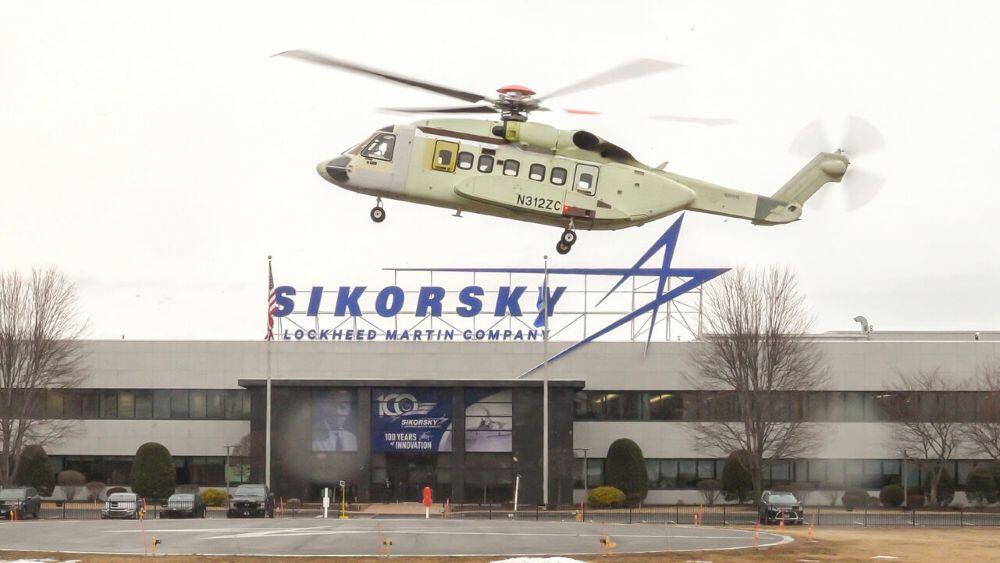
Sikorsky is targeting a production rate of 12 S-92s per year.  Credit: Sikorsky

Sikorsky is targeting a production rate of 12 S-92s per year.

Credit: Sikorsky

Sikorsky has launched production of the first batch of upgraded S-92A+ helicopters as it moves the twin-engine aircraft into a new production phase and ramps up manufacturing capacity.

The company plans to build at least five S-92A+ aircraft in 2026, ending a period of modest output that followed a wave of stored aircraft coming back into service. Sikorsky has produced only a small number of S-92s in recent years, typically one or two aircraft annually since 2021. The new batch includes two head-of-state aircraft for a 14th customer country and three additional aircraft built for future buyers.

Sikorsky is increasing production capacity because it expects the backlog to expand beyond VIP missions, with plans to ramp up to a rate of 12 per year. Leon Silva, who leads Sikorsky’s civil division, said demand is coming from increasing head-of-state interest, utility roles and offshore demand. “There are no S-92s sitting idle offshore,” he said. “Aircraft that were previously in storage are now back out there working.”

Sikorsky describes the upgraded S-92A+ as part of a broader effort to modernize an installed base while improving safety and performance. The most consequential upgrade is the Phase IV main gearbox, which is intended to sustain safe flight if the primary oil system is compromised, reducing pressure on crews to divert or land immediately. It also increases maximum takeoff weight (MTOW) by 1,200 lb. to 27,700 lb., allowing operators to carry more passengers, cargo or fuel. Longer inspection intervals and life-extension measures for certain gearbox components reduce downtime. The package also includes improved engine performance through an upgraded GE CT7-8A option.

“The S-92A+ helicopter is another example of how we are modernizing the fleet and transforming for the future, and we are building in surge capacity to meet expected demand,” Sikorsky CEO Rich Benton said. “The S-92 remains the aircraft of choice for head-of-state, offshore energy and search-and-rescue operators who want the highest available flight-time helicopter to perform long-range missions in any weather condition.”

Sikorsky is splitting work between Stratford, Connecticut, and Owego, New York, as it ramps up output. Stratford continues to produce the blades and drivetrain components, while final assembly will take place at Owego. In addition to the S-92A+ retrofit kits, Silva said production is now underway on new builds with lead times of about 36 months after receipt of order.

The emphasis on the Phase IV main gearbox reflects lessons from the 2009 crash of an S-92 off the coast of Newfoundland, where a loss of gearbox oil pressure led to a fatal ditching that killed 17 people.

“This next-level gearbox will set the standard for the industry,” Silva said, adding that certification is in its final stage. The remaining work centers largely on endurance testing. “We’re down to the last endurance test. It’s about 200 hours of testing and then we have to complete the efforts with the FAA to finish that certification,” he said.

Silva also described a lab demonstration of the backup lubrication system during an endurance test witnessed by the FAA. “We dropped the oil levels, dumped the main oil system and used the backup system with the gearbox operational for over seven hours,” he said, adding that Sikorsky stopped the test after about 7 1/2 hr. because the helicopter would run out of fuel long before reaching that limit in flight.

For operators, the change is expected to alter the pilot’s decision process after an oil pressure event. Silva said existing procedures can include steps that escalate to landing options that carry risk, particularly offshore. With the Phase IV design, the crew would be alerted to the backup system engaging and then shift into monitoring while continuing the planned mission. “The crew is made aware of conditions where the new backup system is engaging, and essentially goes into a monitoring mode, but is able to finish the mission as originally planned without having to select a different landing area or take any additional risk,” Silva said.

Sikorsky is pitching the S-92A+ as both an expansion of the S-92’s capabilities and a signal that it intends to keep the platform relevant for decades.

“The goal is to give operators confidence that this aircraft will continue to be supported well into the future,” Silva said.

Ben Goldstein

Based in Boston, Ben covers advanced air mobility and is managing editor of Aviation Week Network’s AAM Report.