This article is published in Aviation Week & Space Technology and is free to read until Jul 23, 2026. If you want to read more articles from this publication, please click the link to subscribe.

NASA-Funded Studies Yield Advanced Aircraft Concepts For The 2050s

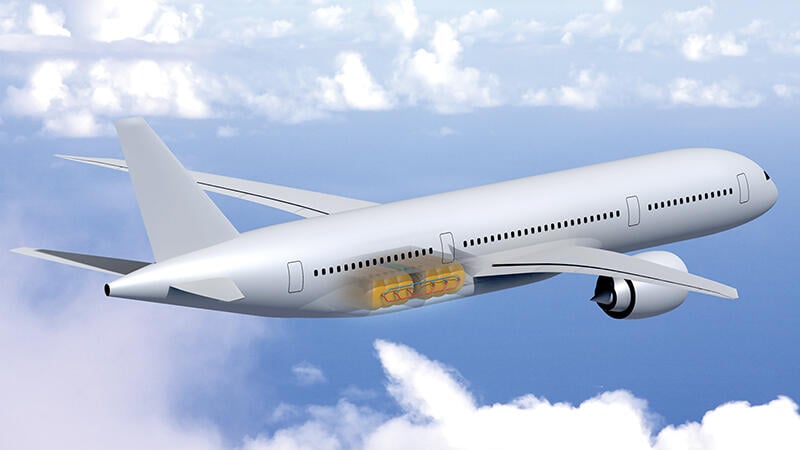
Aurora Flight Sciences' Single Fuel Methane concept

Aurora’s Single Fuel Methane concept has a laminar-flow wing and underfloor cryogenic fuel tanks.

Credit: Aurora Flight Sciences

In 2010, U.S. industry completed a series of studies that set NASA’s aeronautics research agenda for the next two decades: hybrid wing bodies, truss-braced wings, hybrid-electric propulsion and high-rate composites.

As industry prepares to select technologies for a next-generation single-aisle airliner to enter service in the mid-2030s, NASA has shifted its focus to the horizon to identify concepts and technologies for aircraft entering service in 2050 and beyond.

  • A common theme emerges from AACES studies about LNG’s potential as a fuel
  • Dual fuel could provide a pathway from SAF to LH2 in the long term

Among the contenders are laminar flow, cryogenic propulsion, stitched composites and unconventional configurations, according to a new round of industry studies completed this month.

Perhaps the biggest—and most controversial—surprise from these studies is the consensus that has emerged around the potential of liquefied natural gas (LNG) as a fuel for aviation—at least in the U.S.—and the possibility that dual-fuel propulsion could provide a bridge to a zero-emission future built around hydrogen.

The partnership between NASA and industry to develop technologies for the next-generation single-aisle stems from N+3 studies completed in 2010. The agency jump-started the next technology cycle in November 2024 with the award of 18-month study contracts to five teams under the initial phase of the Advanced Aircraft Concepts for Environmental Sustainability (AACES) 2050 program.

The teams—led by Aurora Flight Sciences, Electra.aero, the Georgia Institute of Technology, JetZero and Pratt & Whitney—previewed the study results at the American Institute of Aeronautics and Astronautics’ Aviation Forum in San Diego on June 8-12.

While surprising, the emergence of LNG as a focus makes sense in the wider context of the U.S. administration’s opposition to renewable energy and sustainability. In this environment, LNG is more politically palatable than liquid hydrogen (LH2), which Europe is pursuing as a pathway to decarbonizing aviation.

LNG is predominantly methane and is inexpensive and abundant in the U.S. The fuel is cheaper than Jet A and much less expensive and more available than sustainable aviation fuel (SAF), whether produced from biomass or by combining captured CO2 and green hydrogen to produce e-SAF.

LNG benefits from a well-established infrastructure for transport and delivery, bullish projections for growth in production and emerging renewable natural gas (RNG) pathways to produce biomethane or e-methane with lower life-cycle carbon emissions.

Inflight emissions from LNG are lower than for jet fuel, but there are drawbacks. LNG is 40% less dense than Jet A for the same heating value and must be stored at -162C (-260F), requiring large, heavy, insulated pressure tanks. These tanks increase aircraft size and drag. But the penalty is lower than that for LH2, which is 63% less dense than Jet A for the same heating value and must be stored at -253C.

Despite the challenges, under the AACES program, Aurora and parent Boeing identified a methane-based fuel dubbed Jet M as one of the two most promising technologies for further development. The other is next-generation laminar flow.

“Methane is promising, but choosing it was a complicated decision,” Aurora AACES Chief Engineer Aaron Kutzmann said at the forum. “There is a global infrastructure for LNG. Bio-RNG and e-RNG are less expensive to produce than SAF. It requires the same things as LH2 but in ‘easy’ mode, and it integrates better into the aircraft than LH2.”

With dual fuel—Jet A and Jet M on the aircraft—the bulky methane tanks do not need to be sized for the full mission, since commercial aircraft seldom fly routes anywhere near their maximum range. “You can do 80-90% of the missions on Jet M and do the design range on Jet A,” Kutzmann said. “The total package is lighter and cheaper.”

Aurora studied more than 50 concepts before selecting four for detailed analysis: Single-Fuel Methane (SFM), Transonic Truss-Braced Wing (TTBW), Cruise Slotted Wing (CSW) and the wing-integrated propulsor or M Wing.

The intent of the SFM concept was to integrate the cryogenic tanks to minimize weight and wetted area. This resulted in a two-lobe, noncircular fuselage cross-section, with a twin-aisle cabin and tanks in the lower lobe.

Having emerged from Boeing’s earlier N+3 studies for NASA, the single-aisle TTBW was evolved to incorporate laminar flow, cryogenic fuel and open-rotor propulsion. Full-span variable-camber Krueger flaps shield the wing leading edges from contamination and promote drag-reducing laminar flow.

A trailing-edge slot increases aft loading on the wing and reduces compressibility drag. This allows the high-aspect-ratio wing to have increased thickness and reduced leading-edge sweep, enabling significant laminar flow at the Mach 0.78 cruise speed.

Georgia Tech’s hybrid Athena
Georgia Tech’s Athena has a hybrid airframe that accommodates a twin-aisle cabin and LNG tanks. Credit: Georgia Institute of Technology

Fuel volume is limited in the TTBW’s thin wing. The dual-fuel Jet A/M variant addresses this constraint by installing the cryogenic tanks in the lower hold. Aurora identified strong synergies between the TTBW and open-fan propulsors, which offer higher propulsive efficiency.

Evaluated in both narrowbody and widebody variants, the M Wing aims to minimize the penalties of installing ultra-high-bypass-ratio engines under the wing. The inboard wing section is forward swept, and the airfoils and wing-body fairings are shaped to decelerate flow entering the engine, enabling a shorter nacelle and lower drag.

The large-diameter engine is tightly nestled beneath the apex of the M Wing, and local positive wing twist increases ground clearance. The change in sweep and torsion imparted by the aft-swept outboard wing does increase weight, but the penalty is small, Aurora said.

Overall, the M Wing reduced cruise fuel burn 2% compared with an equivalent conventional aircraft. In the dual-fuel variant, Jet M is stored in tanks in the lower hold, as in the TTBW concept.

The twin-aisle CSW concept exploits the trailing edge slot to unsweep the wing by about 9 deg. and enable increased laminar flow, which is also promoted by the high-aspect-ratio wing and leading-edge variable-camber Krueger flaps. Jet M is stored in tanks that span most of the aft lower lobe of the fuselage aft of the main landing gear.

Although the advanced configurations studied can reduce fuel burn up to 10% relative to a 2050 reference aircraft, adding dual fuel can dramatically reduce costs and emissions. “You can have your cake and eat it—it’s greener and cheaper,” Kutzmann said.

“Dual-fuel performance is better than single-fuel methane,” he added. Two independent fuel systems feed into a turbine engine with a common combustor. “Dual-fuel aircraft are bigger and heavier but save overall on fuel cost.”

In a narrowbody, dual fuel saves 29%; single-fuel methane, 18%. In a widebody, dual fuel saves 24%. “Our study shows dual fuel is not necessarily a steppingstone—it could be an end state,” Kutzmann said, but noted: “There’s a lot of work to do on how to mix Jet A and M.”

Electra’s goal was to use electrification to unlock new ways of integrating propulsion and airframe. “We are coming up against the limit of the tube and wing,” said Parker Vascik, director of product strategy. “We can use electrification to reopen the engine design space for significant emissions reductions.”

The point of departure for the AACES studies was a design with a “double-bubble” lifting fuselage, boundary layer ingestion (BLI) and blown lift using distributed turboelectric propulsion—a carryover from Electra’s planned nine-seat EL9, which uses an array of leading-edge propellers for ultra-short takeoff and landing.

This design evolved into a concept for a 178-seat, Mach 0.8 cruise, 3,500-nm-range airliner with conventional underwing engines that drive generators to power three electric ducted fans in the tail. These ingest and reenergize the boundary layer over the upper surface of the broad twin-aisle fuselage and reduce drag.

The lifting fuselage reduces wing and horizontal stabilizer area and weight, and the 118-ft. wingspan fits existing narrowbody gates. “The target level of electrification is not very high—just the BLI fans,” Vascik said. “There are no batteries in the baseline version.” Hybridization is 20% at takeoff, rising to 45% in cruise.

The three 1.2-megawatt tail fans, powered by 1.9-megawatt generators on the engines, provide a 7% increase in cruise propulsive efficiency, he said. The fans increase the effective bypass ratio while avoiding fratricide concerns with tail-mounted turbofans.

“There were concepts with higher efficiency gains, but this was a better balance of requirements and robustness to technology development,” Vascik said. Fuel-burn savings are 15-17% with superconducting electrics and 12-13% for conventional electrics.

JetZero stretched Z4 blended wing body airliner
JetZero stretched its Z4 blended wing body airliner design to accommodate LH2 tanks. Credit: JetZero


JetZero’s AACES study focused on introducing liquid hydrogen into a blended wing body (BWB) aircraft while striving to maintain the performance of its planned 250-passenger, 5,000-nm-range Z4 midmarket airliner.

“The conclusion is we can do a robust mission for a midsize aircraft without reducing payload or range,” said Marty Bradley, a sustainable aviation consultant on JetZero’s AACES team. “BWB does make it easier to integrate LH2 tanks.”

For propulsion, JetZero selected turbofans that burn hydrogen. The company also evaluated Pratt & Whitney’s Hydrogen Steam and Intercooled Turbine Engine (HySITE), a novel gas turbine designed to make the most efficient use of hydrogen.

“We started with cylindrical tanks in the [wing-body] blend, but we could not maintain performance with blend tanks only,” Bradley said. LH2 tanks were added in the rear fuselage, behind the pressurized cabin.

“We had to grow the BWB a few meters to accommodate these tanks,” he said. As a result, the lift-to-drag ratio, a key metric of efficiency and targeted at 22 for the Z4, dropped to 21, a penalty he described as “relatively small.”

JetZero subsequently moved to conformal LH2 tanks, shaped to make more efficient use of the volume available in the blend areas and rear fuselage. The concept design assumes conformal aluminum tanks with a gravimetric index (the ratio of fuel mass to full fuel system mass) of 55.5% and vacuum cellular multilayer insulation.

France’s SHZ Advanced Technologies joined JetZero’s program in 2025 to study conformal LH2 tanks and feed pumps. The company has developed tanks for maritime, rail and motorsport applications and has a program to demonstrate aviation tank technology.

JetZero also looked at dual-fuel SAF/LH2 propulsion. As the study progressed, “we realized we had to do more to look at LNG,” Bradley said. “It has really interesting potential.

“The LH2 version uses more energy than with Jet A—it’s a bigger aircraft,” he explained. “LNG is close to Jet A. We can use same basic platform with LNG and expect to get close to the same range. Cylindrical tanks lose a little range. Conformal tanks get it back.”

Under AACES, Georgia Tech investigated SAF, LH2 and LNG. LH2 offered the lowest well-to-wake energy, but e-methane promised the lowest life-cycle emissions. “No single fuel type wins, so we went ahead with LNG, as it is less well studied,” said Jai Ahuja, a senior research engineer at the university’s Aerospace Systems Design Laboratory.

The Athena concept is a hybrid of a tube and wing and BWB. The design has a noncircular cross-section with 150-178 seats in a twin-aisle layout, with fore and aft LNG tanks. The aft tank sits crosswise in a nonpressurized area, while the front tank is in the pressurized forward fuselage but can vent upward and downward to the atmosphere.

The engines are conventionally mounted under a high-set natural laminar flow wing with a span of 145 ft., which will require a fold to fit airport narrowbody gates. Overall, Athena offers 20-25% greater vehicle efficiency and 20-22% lower mission fuel burn, Ahuja said.

Pratt & Whitney analyzed a range of alternative engine concepts under AACES but ended up focusing on its hydrogen-fueled HySITE concept, because it performed best in future market scenarios that emphasized sustainability.

“HySITE could reduce CO2-equivalent emissions by three times versus power-to-liquid SAF,” said Simon Evans, manager of advanced concepts at Pratt. “It’s the most viable way to decarbonize.” He noted that LH2 requires less energy to produce than e-SAF.

Electra distributed electric propulsion concept
Electra evolved its distributed electric propulsion concept to combine underwing engines with electric tail fans. Credit: Electro.aero

Combusting hydrogen produces water vapor. In HySITE, water in the core exhaust is condensed using the cryogenic LH2 fuel, recovering waste heat. Some of the water is then used for intercooling in the compressor. The rest is evaporated and injected into the combustor as steam. This increases power density and reduces NOx production.

On the downside, Evans said, HySITE is a complex engine and a step change that will not be available before 2050, when it will require hydrogen infrastructure to be in place. But the concept promises a 20% reduction in block energy with a 99.5% reduction in NOx.

Pratt has studied a SAF-burning HySITE, but this would require a very large heat exchanger to produce enough water for the cycle to work, he said. A study into an LNG version of the concept has yet to be completed “but will be somewhere in between” SAF and LH2, Evans said.

So is a future for commercial aviation based on LNG as a fuel a realistic possibility? “While there are some traits that are appealing, there are other areas that are fraught with danger,” said Phillip Ansell, associate professor of aerospace engineering at University of Illinois at Urbana-Champaign. “LNG is easier to put on an airplane, is cheaper and can be made renewably—but currently in limited volumes, and renewable pathways are expensive.”

LNG could be more attractive economically and politically than SAF or LH2 in the U.S., but not elsewhere. On a dollar per gigajoule (GJ) basis, Ansell said, fossil LNG prices range from $3.07/GJ in the U.S. to $16.98/GJ in Europe, while Jet A is about $22.85/GJ.

“Already we are looking at a sizable cost reduction for fossil LNG on a per-energy cost basis versus the incumbent fuel,” he said, noting that the International Energy Agency forecasts the LNG market will expand dramatically in the next 10 years, driven by U.S. exports.

On emissions, methane combustion produces 20% less CO2 than Jet A. But liquefying natural gas requires energy, and the reduction in inflight emissions are directly offset by those from current approaches to liquefaction, Ansell said.

“For there to be an environmental appeal, we do need the emergence of RNG pathways,” he said. “These renewable production methods are technically viable but will eat into the cost benefits, while overall availability into the future is currently uncertain.”

Another key concern is fugitive emissions. Methane has almost 30 times the climate-warming potency of CO2, and a huge amount of fugitive emissions are produced by oil drilling and hydraulic fracturing as well as the transportation of LNG.

“Even just a few [percentage points] of losses in production, transportation and utilization on an aircraft can offset the emission benefits of the RNG production process,” Ansell said. “However, many of the fugitive loss mechanisms are known and are solvable. A lot of the climate viability of LNG and LH2 will hinge on the ability to mitigate leaks and boiloff losses.”

Although technology would have to be developed to use LNG in aircraft, “ground-based power gas turbines mostly burn methane, including aircraft engine derivatives,” said Alan Epstein, professor emeritus at the Massachusetts Institute of Technology and former vice president of technology at Pratt. “In the U.S., regulators require all units to have dual-fuel capability, so they can burn LNG and fuel oil, which is virtually the same as Jet A,” he added.

While methane offers lower flight emissions than Jet A, it poses challenges in aircraft design, Epstein cautioned. “By the time you resize the airplane, increasing weight and drag—and therefore increasing the amount of fuel needed—whether there is any net CO2 saving is an open question.”

For NASA, such questions add to the research appeal of LNG. “We need to figure out if it is better than what we have today,” said Nateri Madavan, director of the agency’s Advanced Air Vehicles Program. “That’s not just technical. It depends on a lot of other factors, but we need to find out more.

“As we look to transform airframes and propulsion for commercial aviation of the future, we need to look at a third piece, and that is transforming the fuel to get aviation away from kerosene,” he added. “Looking at the geo-sociopolitical-economic landscape around us, the fuel we would like to focus on is LNG. It is transformative, and yet it’s familiar.”

NASA has already identified some of the LNG-related technologies it wants to mature, such as using the cryogenic fuel to enable more efficient engine cycles and propulsors. But the agency acknowledges there will be barriers to overcome.

“I think the biggest challenge is kerosene inertia,” Madavan said. “We’ve become very comfortable with kerosene. It does amazing things for us. LNG has limitations, but I think the world will need to look at other fuels. It’s a bold bet, it’s a risky bet, but it is an exciting bet, and I think the time is right to do it now.”

Graham Warwick

Graham leads Aviation Week's coverage of technology, focusing on engineering and technology across the aerospace industry, with a special focus on identifying technologies of strategic importance to aviation, aerospace and defense.

Comments

1 Comment
Graham Warwick, thanks for that sweeping view of the potential future configurations of airliners!
The Aurora dual-fuel concept is quite convincing. The Jet A still fills the wing, with no extra bulk. And the cargo deck of modern stretch airliners often has plenty of unused volume, to handle bulky Jet M tanks. Most luggage is now in the overhead bins.
If the Jet M tanks were just behind and in front of the wing carry-through, they would be well protected from nose and tail crash damage. And Jet M would flow down, away from the main deck, if a tank ruptured. Previous LH2 concepts often located the tanks at the same level as the main deck, so they would flood the passengers with cryogenic liquid if ruptured, a very bad outcome.