This article is published in Aviation Daily part of Aviation Week Intelligence Network (AWIN), and is complimentary through Sep 22, 2026. For information on becoming an AWIN Member to access more content like this, click here.

JetZero Begins Engine Retrofit For Jet 1 BWB Demonstrator

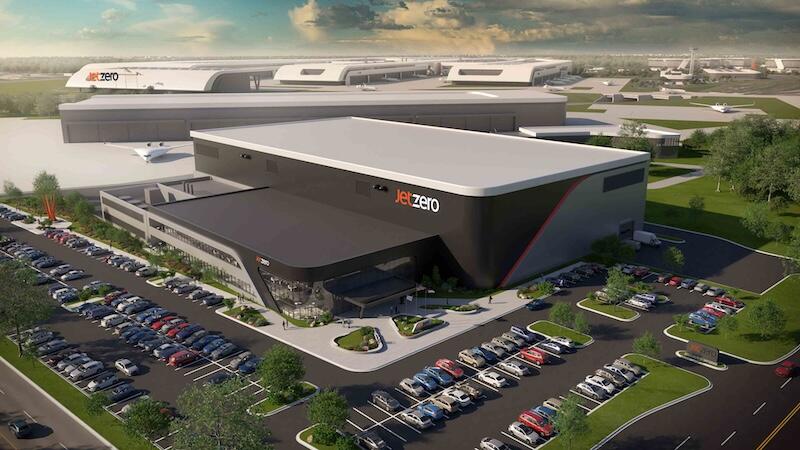
JetZero facility rendering

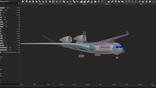
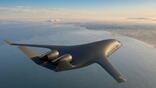
SYDNEY—Blended wing body developer JetZero is starting upgrade work on the Pratt & Whitney PW2040 engines that will power its “Jet 1” demonstrator aircraft for flight tests beginning in late 2027.

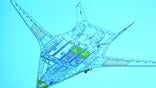
Progress on engine preparation comes as airframe assembly reaches the halfway point at Northrop Grumman’s Scaled Composites facility in Mojave Air & Space Port, California, and as studies of potential propulsion systems for the company’s Z4 production version continue with engine-makers through the U.S. Air Force.

“We are inducting the first engine in September, so this month we will really start retrofitting those used engines,” says Florentina Viscotchi, president of JetZero’s new Montreal engineering office and formerly chief of engineering and head of product development technology and innovation.

Donated by Delta Air Lines, the PW2040 engines formerly powered a Boeing 757, and require upgrades to bring them up to current airworthiness compliance standards. Following retrofit, the engines will be enclosed in the specially designed top mounted nacelle, says Viscotchi ,who was speaking at the International Council of the Aeronautical Sciences (ICAS) congress in Sydney,

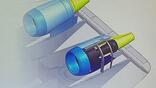
Designed by Collins Aerospace, the nacelle installation includes the inlet, fan cowl and fan duct, fairings and engine support structure. Loads will be carried from the engine support box on top of the PW2040, down through the inner fixed structures of the bypass duct to a single lower pylon attached to the BWB’s upper fuselage. A diverter channel under the nacelle will prevent boundary layer ingestion.

Studies of higher thrust engines beyond the power of Jet 1’s 40,000-lb. PW2040s continue with GE Aerospace, Pratt & Whitney and Rolls-Royce under the Air Force’s Commercial Solutions Opening (CSO) process. Organized by the Air Force Operational Energy Office with support from the 763rd Enterprise Sourcing Sqdn., which manages the JetZero contract, the CSO is now in its second phase, Viscotchi says.

“The Air Force partnership and their methodological process on the engine selection with this commercial solution opening process has been very key for us,” she says. Phases zero and one, covering engine requests for information and concepts respectively, are now complete. Phase two, focused on integration, started in July, and the final third phase is scheduled to begin in the first quarter of 2027.

“The Air Force is funding these engine companies to help mature their proposals and make sure that it informs our engine selection process. This is key, and this could not have happened without support from them,” Viscotchi says.

Prospective engines are thought to include refreshed versions of the GE CF6 and Pratt & Whitney PW4000, as well as—potentially—cropped fan derivatives of more modern higher-thrust engines such as the GEnx-1 and Rolls-Royce Trent 1000.

JetZero, which in August secured up to $100 million in additional financing, is also moving ahead with development of the first facility for its planned manufacturing campus in Greensboro, North Carolina. In the days following the groundbreaking ceremony in mid-June, JetZero held a design workshop for the “NC3” or North Carolina Composite Center.

“This is the first facility that we're going to build there,” Viscotchi says. “We are going to be doing some coupon testing and higher-level testing for the composites, and that entire site construction strategy has been drafted,” she adds.

Guy Norris

Guy is a Senior Editor for Aviation Week, covering technology and propulsion. He is based in Colorado Springs.