Discover How Space Florida Drives Growth With Patient Capital

Florida has spent two decades building an aerospace strategy that favors long-term partnerships over upfront cash incentives, betting that durable infrastructure and patient capital outcompete short-term deals. Aviation Week spoke with Rob Long about how the Florida Model works, and where aviation and the space economy are starting to converge.
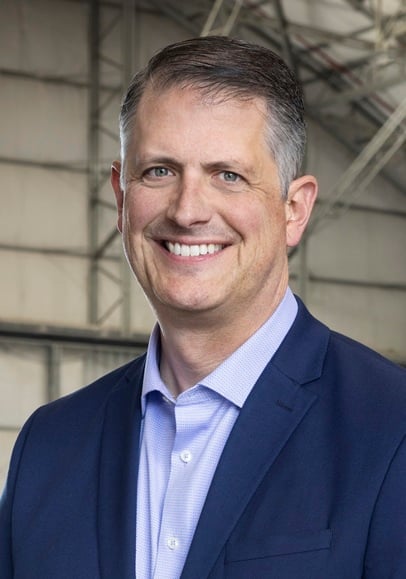
Aviation Week: How does the Florida Model work, and how is it different from how other states compete for aerospace investment?
Rob Long: The Florida Model is about matching and leveraging private capital to grow the industry, built on long-term partnerships. For every dollar we invest, we typically see five to seven dollars of private capital invested alongside it, funding jobs and local revenue. Creative financial structures, like tax-exempt spaceport bonds, pass savings to companies for the life of the partnership, not merely as a temporary abatement. And we do real due diligence on a company’s fundamentals before committing, because we want partners in it for the long haul.
AW: Where do you see aviation and space converging, not just coexisting?
RL: Florida’s aerospace statute is broad by design, and what were once distinct aviation and space verticals are now crossing over. The state treats space as an official mode of transportation, so those sectors intersect here naturally. That crossover is also showing up in supplier industries: semiconductor and quantum companies, data centers, battery makers. These tier-two suppliers increasingly service both aviation and space customers across the state, and that’s where Florida has really blossomed.
AW: Cecil Spaceport in Jacksonville runs commercial airport activity alongside rocket testing. Is that a preview of where Florida’s infrastructure is headed?
RL: We treat our spaceport network as a system. Cecil Spaceport and Space Coast Regional airport in Titusville are licensed for horizontal launch, and Cape Canaveral remains the system’s critical transportation node. Cecil makes sense for engine testing because it has the land for it, and that activity doesn’t need to compete with launch operations at the Cape. Deconflicting that way lets us put each activity where it makes the most sense, from the Panhandle to South Florida.
AW: As aviation and space draw on the same talent pool, how are you building that pipeline?
RL: Nationwide, demand for highly skilled aerospace labor outpaces supply, especially on the technical side. So, we built the Space Florida Academy Program with industry input, to understand both what our technical education programs are producing and what companies actually need. More than 40 counties partner with us on that now. We’re also fortunate that Florida has the number-one public university system in the country, producing more aerospace engineers than current demand requires. And we’re already seeing early success with direct hires straight out of high school technical programs.
AW: Looking five years out, do aviation and space stay separate but connected, or merge into one industry?
RL: I don’t think we’ll see full convergence in five years, but both industries will keep accelerating faster than people predict. Global economic value projections in the $1.5 to $2 trillion range don’t surprise me. Launch activity at the world’s busiest spaceport is a visceral indicator of that growth, and we hear daily from companies about their infrastructure needs. Private capital invested here, especially in space tech, keeps growing too. Convergence or not, the entire aerospace economy is going to keep expanding and we’re here to help it.
Related Content