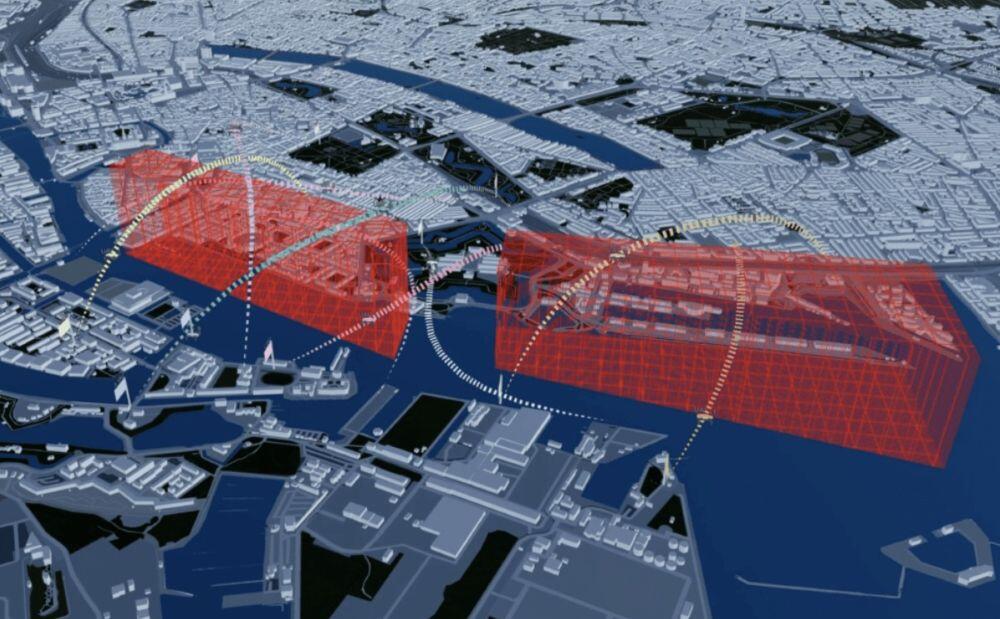
Skypuzzler is developing a “digital air traffic controller” that it says could provide the tactical deconfliction needed as drone operations scale beyond today’s relatively low-density operations.
The Danish startup’s software monitors traffic using data supplied to uncrewed aircraft system traffic management (UTM) infrastructure, identifies potential conflicts and generates resolutions without requiring additional hardware aboard the aircraft, co-founder and CEO Jesper Skou says.
Unlike systems that resolve conflicts between individual pairs of aircraft, Skypuzzler’s algorithm considers the wider airspace when proposing a resolution, seeking to ensure that maneuvering one aircraft does not create another conflict elsewhere.
“We are looking from a holistic perspective,” Skou says. “When we are coming up with a conflict resolution, we will make sure that we will not generate a new conflict.”
The capability is intended to complement strategic deconfliction, under which drone operators coordinate and separate flights before departure. That approach is being demonstrated by operators including Wing and Zipline in the Dallas-Fort Worth area, but Skou argues it will become insufficient as traffic density increases and unexpected events force aircraft to deviate from their planned operations.
“What you really need as the next step is a digital solution for tactical deconfliction,” Skou says. “Weather, emergencies or appearance of other airspace users can require changes after a drone is already airborne.”
Skypuzzler has built its system around a deterministic mathematical model rather than artificial intelligence (AI) or machine learning. Skou says that approach is important for a safety-critical application because the algorithm will produce the same result from the same inputs and its decisions can be traced and analyzed.
The company is integrating its technology with UTM providers and drone operators in Europe, including logistics company DSV. Skou says the technology could help enable a single remote pilot to supervise multiple drones by automating conflict management.
The regulatory environment is also evolving. In the U.S., the FAA’s proposed Part 108 would establish a framework for routine beyond-visual-line-of-sight operations, including requirements related to aircraft separation. Skypuzzler is also positioning its technology for integration into certified third-party UTM services.
Skou points to the Port of Rotterdam as an example of the challenge that higher-density operations could create. With numerous operators conducting drone missions around the port, he argues that reserving airspace on a first-come, first-served basis becomes increasingly restrictive.
“You have to have a more flexible and digital air traffic control where you are, in real time, on a tactical basis, deconflicting all the different flying drone operators.”

Related Content