Bye’s eFlyer 2 Electric Trainer Gets FAA Approval To Begin Flight Testing
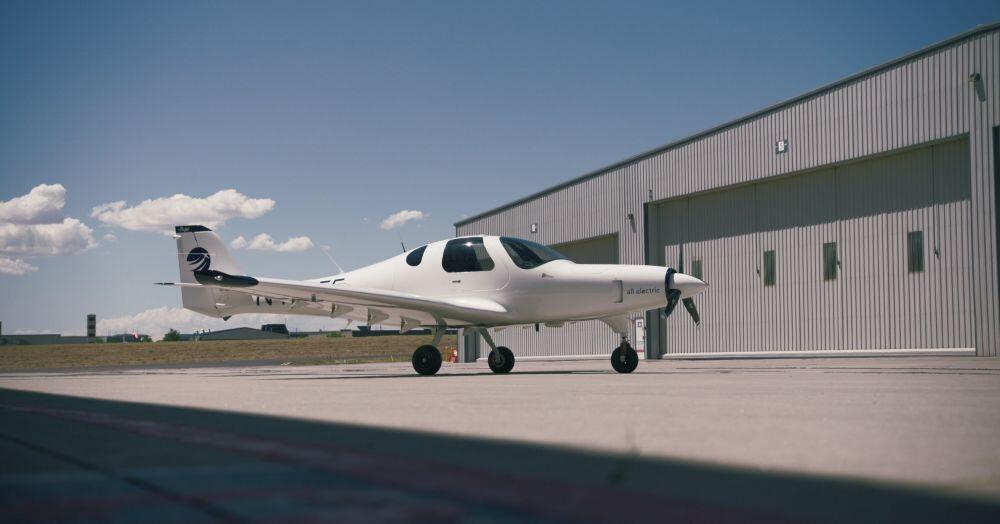
Bye's eFlyer 2 prototype is powered by a Safran electric motor and MagniX battery system.
Bye Aerospace has received a special airworthiness certificate from the FAA for its eFlyer 2 full-scale prototype, clearing the way to begin flight tests of the electric training aircraft.
The FAA awarded the first eFyer 2 its experimental ticket following a detailed inspection of the completed two-seat aircraft at Bye’s facility at Centennial Airport near Denver.
Bye completed the structural build of the nonconforming prototype in July, following several months of structural testing of the composite wing, fuselage and flight controls.
The company has also completed validation testing on the complete propulsion system, including the Safran ENGINeUS 100 electric engine and MagniX Samson battery system, using a truck-mounted testbed called the “Beast,” CEO Rod Zastrow says.
“The functional testing has been completed,” he says. “We’re just doing a few confirmatory checks with our partners to ensure all of us are satisfied we’ve addressed and mitigated all the risks, not only as independent systems, but as a combined electric propulsion system. I would say we are very close to first flight.”
Bye has been working with the FAA since 2016 to advance the framework for certification of the eFlyer 2 under existing Part 23 airworthiness regulations for light aircraft, but now plans to begin with approval under the new Part 22 rule for light-sport category aircraft.
The FAA’s revamp of rules for light sport aircraft, also known as Mosaic, now allows electric propulsion. Part 22 allows manufacturers to self-certify their aircraft using industry consensus standards to demonstrate compliance with the airworthiness regulation.
“Now that Part 22 is available to us we believe our aircraft can meet the criteria in terms of speed and weight, subject to confirmation by flight test,” Zastrow says. “Our intent is to swiftly meet the consensus standards. But we still intend, over the longer term, to take everything we learn in Part 22 and apply it to Part 23 [certification].”
Bye holds letters of intent for more than 1,000 eFlyer 2s and planned four-seat eFlyer 4s from customers that include major flight training schools. Part 22 allows light sport aircraft to be used for flight training, and Zastrow says a survey of customers indicates they are willing to take a Part 22 aircraft to meet training demand and benefit from lower costs.
Zastrow says the outer mold line of the prototype is close to conforming with the type design of the production aircraft, while the Safran motor and Garmin avionics are already certified. But the rest of the electrical system is likely to evolve as a result of flight testing.
“We’re going to learn a lot from the flight-test program, and we’re likely to take that and do a maximum conforming prototype after that,” he says.
Development of the eFlyer 2 has been paced by funding, but first flight is typically a defining moment for a company aspiring to be aircraft manufacturer, and Bye believes flying the prototype will spur financial interest, Zastrow says. “We are cautiously optimistic.”
Bye is planning a test program that will explore the full flight envelope and gather data on the electric propulsion system’s functionality and reliability. Flight testing will be supported by a charging station at Centennial supplied by Australian company Electro.Aero.
Zastrow says Bye is also modifying the Beast propulsion testbed into a mobile charging vehicle to support cross-country test flights of the eFlyer 2. The truck-mounted rig was used for propulsion testing at Pikes Peak International Raceway south of Colorado Springs.
This included the ability to articulate the rig to test low-speed, multiple-angle-of-attack scenarios to assess whether the cooling provided by the annular air intake was sufficient. “All the test data came back favorably. We have not had to redesign anything,” he says.

Related Content