This article is published in Advanced Air Mobility part of Aviation Week Intelligence Network (AWIN), and is complimentary through Dec 17, 2025. For information on becoming an AWIN Member to access more content like this, click here.
Archer Selects Karem’s Optimum-Speed Tiltrotor Tech For Defense eVTOL

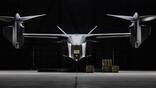
Karem developed an optimum-speed tiltrotor concept for an uncrewed aircraft in 2014 under DARPA’s VTOL X-Plane project.
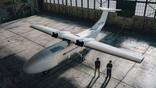
Archer Aviation is to use Karem Aircraft’s optimum-speed tiltrotor technology in the uncrewed hybrid-eVTOL aircraft it is developing with Anduril Industries for the defense market.
Archer describes the exclusive collaboration with Karem as a “significant addition” to its strategy to deliver a dual-use, multimission aircraft that combines autonomy, long-range hybrid-electric and advanced aeromechanics for both commercial and military missions.
Anduril and Archer announced a strategic partnership in December 2024, with the first planned product to be a hybrid-eVTOL aircraft targeting a potential program of record with the U.S. Defense Department.
In the first outcome of the partnership, unveiled at the Dubai Airshow in November, Archer is supplying its electric powertrain technology for the Omen tailsitting eVTOL uncrewed aircraft developed by Anduril and the United Arab Emirates’ Edge Group.
Archer is developing the Midnight eVTOL for the commercial air taxi market. This aircraft has a lift-plus-tilt configuration with 12 propellers for lift, six of which tilt to provide forward propulsion.
Karem originally entered the commercial eVTOL market by spinning out Overair as a startup developing an aircraft with four tilting rotors using the company’s optimum-speed tiltrotor (OSTR) technology.
Overair completed a full-scale uncrewed prototype of its Butterfly eVTOL in December 2023, but the aircraft never flew and the startup ceased operations in 2024. In August, Archer acquired Overair’s patent portfolio, followed in October by acquiring the patents of failed German eVTOL developer Lilium.
“Archer’s vision for a dual-use hybrid VTOL platform aligns perfectly with our belief that the next leap in vertical lift requires both advanced aeromechanics and modern autonomy,” Karem Aircraft founder Abe Karem said in a statement.
Before founding Karem Aircraft in 2004 to pursue the OSTR, Karem founded Frontier Aircraft to develop and fly optimum speed rotor technology on the DARPA-funded A160 Hummingbird long-endurance uncrewed helicopter. Frontier was acquired by Boeing in 2004.
The optimum speed rotor allowed rotor speed to be varied, reducing the power required and increasing flight endurance. Further developed with U.S. Army and DARPA funding support, the OSTR extended the concept to tiltrotors.
Karem initially studied large transport aircraft with dual tiltrotors but later developed designs for smaller uncrewed aircraft. Overair’s Butterfly extended the concept to an all-electric quad-tiltrotor design providing redundancy for commercial air taxi operations.
In the OSTR, the speed of the rigid proprotors varies by as much as 50% between hover and cruise flight to optimize efficiency. The variable rotor speed is enabled by stiff, lightweight composite blades and a rigid, hingeless hub. The OSTR also features individual blade control. Collective and cyclic control is via electromechanical actuators in the hub that move the blades in pitch.