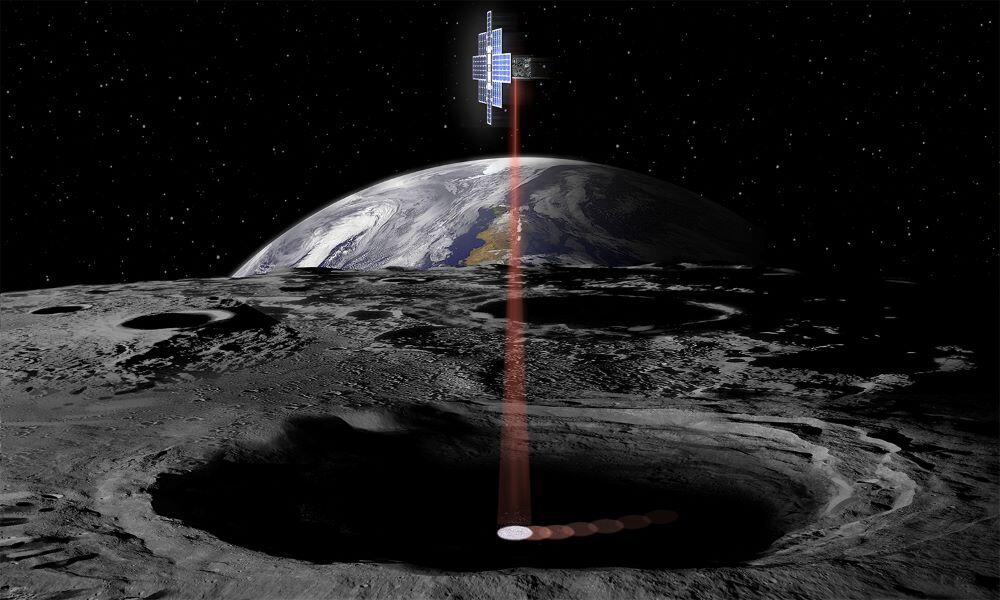
Artist's concept of NASA’s Lunar Flashlight, a CubeSat that will use lasers to look for water ice, in a position over the Moon's south pole.
Credit: NASA
HOUSTON—Among the challenges faced by NASA in establishing a sustainable human presence at the Moon is the generation of electrical power required over the frigid, two-week lunar nights as well as during exploration of permanently shadowed areas. Nuclear and solar with batteries for power storage...

Subscription Required
Orbiting Laser Power Seen As Lunar Exploration Asset is published in Aerospace Daily & Defense Report, an Aviation Week Intelligence Network (AWIN) Market Briefing and is included with your AWIN membership.
Already a member of AWIN or subscribe to Aerospace Daily & Defense Report through your company? Login with your existing email and password.
Not a member? Learn how you can access the market intelligence and data you need to stay abreast of what's happening in the aerospace and defense community.
Related Content