This article is published in Aerospace Daily & Defense Report part of Aviation Week Intelligence Network (AWIN), and is complimentary through May 15, 2026. For information on becoming an AWIN Member to access more content like this, click here.
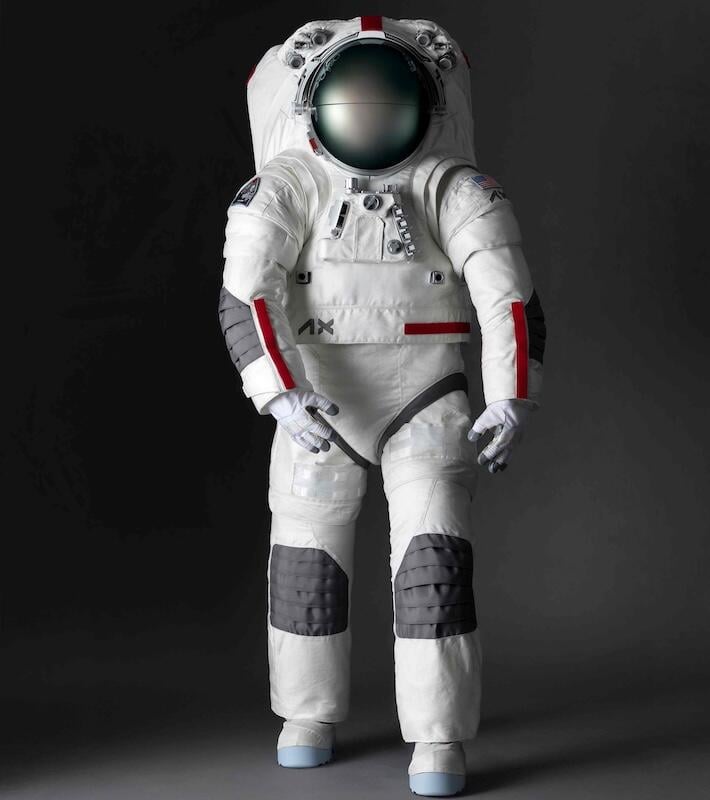
COLORADO SPRINGS—Spacesuit developer Axiom Space is close to completing the critical design review (CDR) of the suit design that will be used by astronauts on the Moon and says the spacesuit will fly in space for the first time in 2027.
Updating progress at the Space Symposium, being held here April 13-16, Jonathan Cirtain, president and CEO of Axiom Space, says: “The agency has made it clear we’re going to fly a suit next year. Is that to the International Space Station [ISS]? Is that with the Human Landing System [HLS] providers? To be determined, but we’re flying a suit.
“We’re going to learn something no matter what,” Cirtain says. “If we get to go to the [ISS] to do a spacewalk, that’s an amazing opportunity for us, because, frankly, we plan on using the suit when we have our own space station, so we need to derisk that activity for those reasons.”
A flight on one of the HLS providers—either Blue Origin or SpaceX as part of next year’s planned Artemis III mission—would entail a different series of tests of the spacesuit, which is called the Axiom Extravehicular Mobility Unit, or AxEMU.
“The launch loads, the configuration of the suit into the launch vehicle, into the HLS and what we’ll learn from those, is all important information for us. That’s the most stress the suit is going to see—on the way up. So, we’re looking forward to the agency deciding how it wants to proceed with the launch, but we’re certainly excited about the opportunity to put our suit in space next year,” Cirtain says.
Axiom’s immediate priority is completing suit qualification. “But we’re already building five suits,” Cirtain says. “We’re already making the necessary preparations for the suits that we’d use on Artemis IV. Those are in manufacturing today. Coming through qualification and completing [CDR] put us in a posture where we can go from development to strictly manufacturing, and we’ve been prepping for this opportunity. So, an increase in launch cadence, low-rate production, is what we’re all about with these suits,” he says.
Assembly of the qualification suit is underway, says Russell Ralston, senior vice president and general manager of extravehicular activity at Axiom. “Some of the tests will include vibration tests to basically put the suit on a stand and shake it like it would for launch. There will be human-in-the-loop thermal vacuum chamber tests, where we put someone inside the suit, inside a thermal vacuum chamber, and we simulate the pressures and temperatures of spaceflight. That’s about as close as we can get to actual spaceflight on the ground. So that’s a very important test for us,” he said.
Other tests will check the communication systems “and ensure all the telemetry and communication is being passed properly through,” Ralston adds.